
Is a 3 kW Solar System Enough for a Terrace Home? Check the Inputs
In this guide
Start with measured use, not the bill’s RM total
Collect bills that represent normal use and record the kWh and billing days. Separately note which appliances run during the day, which run at night and whether usage is likely to change. An RM total does not show how much electricity is used at the times a system would generate.
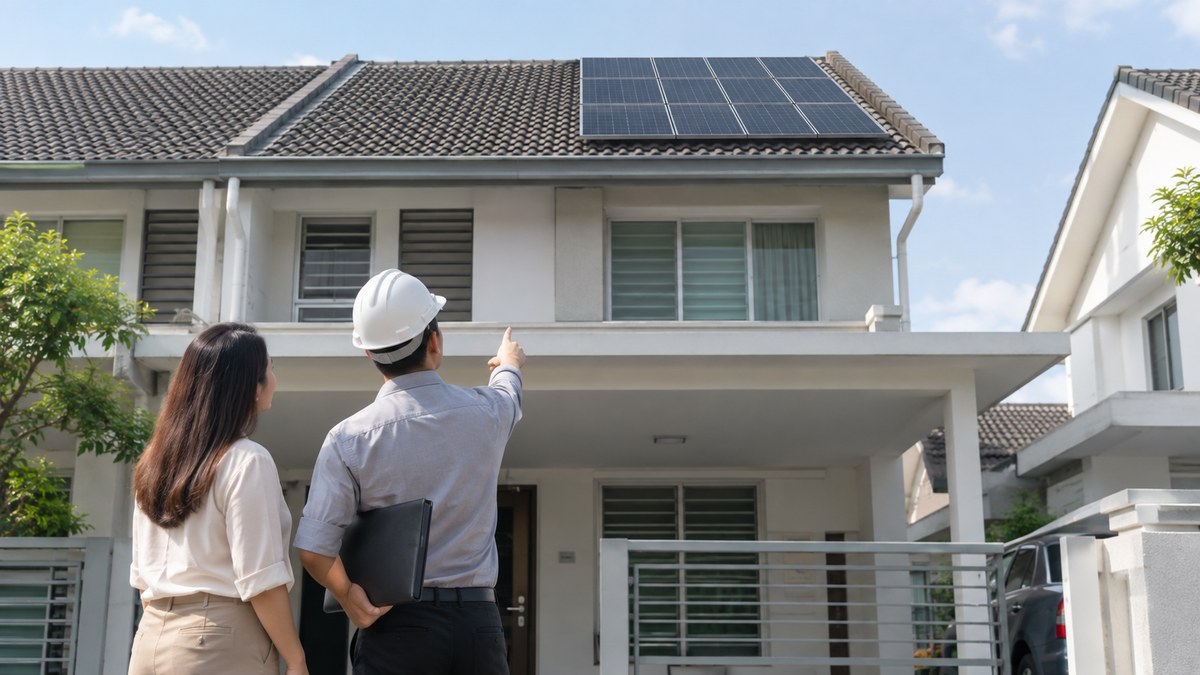
Ask for a site review of roof sections, shading, obstructions, access and any structural assumptions. The provider should state what it observed and what needs separate confirmation. Do not use an online panel count or the phrase “3 kW system” as a substitute for site-specific inputs.
Ask for a written explanation of the proposed design
For each offer, ask the provider to list the bill periods and kWh used, major daytime loads, roof/site assumptions, panel and inverter model numbers, panel capacity, inverter output, and estimated generation by month. Ask it to separate expected self-use from exports and state the rule used to value exports. Keep installation work, exclusions, fees and warranty responsibilities visible in the same document.
Compare offers using the same bills and assumptions. If an item is missing, request it in writing before comparing totals. A higher capacity label does not by itself prove greater suitability, savings or a particular payback period.
If you may add to an existing system
Do not assume spare roof space means spare system capacity. Have the exact inverter, panel configuration, wiring and connection documents reviewed before changing a system. Ask what approvals, equipment changes and warranty effects may apply; this guide does not confirm that a proposed expansion will work or be approved.
For general questions about which information to compare, use the contact channel provided on this page. Read also how to read a TNB bill and the solar quotation guide.
Inputs a written proposal should show
| Input | Record | Ask the provider to explain |
|---|---|---|
| Electricity use | Actual kWh, billing days and daytime/night-time loads | Which periods support the generation and self-use estimate? |
| Roof and site | Orientation, shade, obstructions and access | What was observed and what still needs inspection? |
| Equipment | Panel model/capacity and inverter model/output | List kWp and kWac separately with string assumptions |
| Offer | Generation, self-use, export, work scope, fees and warranties | State exclusions and export-credit assumptions in writing |
Frequently asked questions
Is a 3 kW system enough for my terrace home?
The label and house type alone cannot answer that. Ask a provider to use actual bill kWh, daytime load, roof conditions and connection details, and to explain its assumptions in writing.
My electricity bill is low. Does that mean I need a smaller system?
The RM amount alone is not enough to size a system. Use the bill's kWh and billing days, then add load timing and site details. Do not treat this guide as a system-size or payback estimate.
Should I choose a string inverter or microinverters?
Do not choose by trend or a general claim that one type is always better. Ask the proposal to explain the selected model for your roof layout, shading, wiring, monitoring, service access and warranty.
Can an existing system be expanded later?
That depends on the installed equipment, spare capacity, roof and connection requirements. Ask the original provider or a qualified designer to review the exact model and documents before adding equipment; this page does not confirm compatibility or approval.