
Solar for Livestock Sheds: Loads and Site Checks
Decision details
Fits if: Operators able to provide equipment nameplates, schedules, bills and critical-load information.
Main drawback: No farm-wide bill-zero or payback outcome is established; tariff alone does not establish project savings.
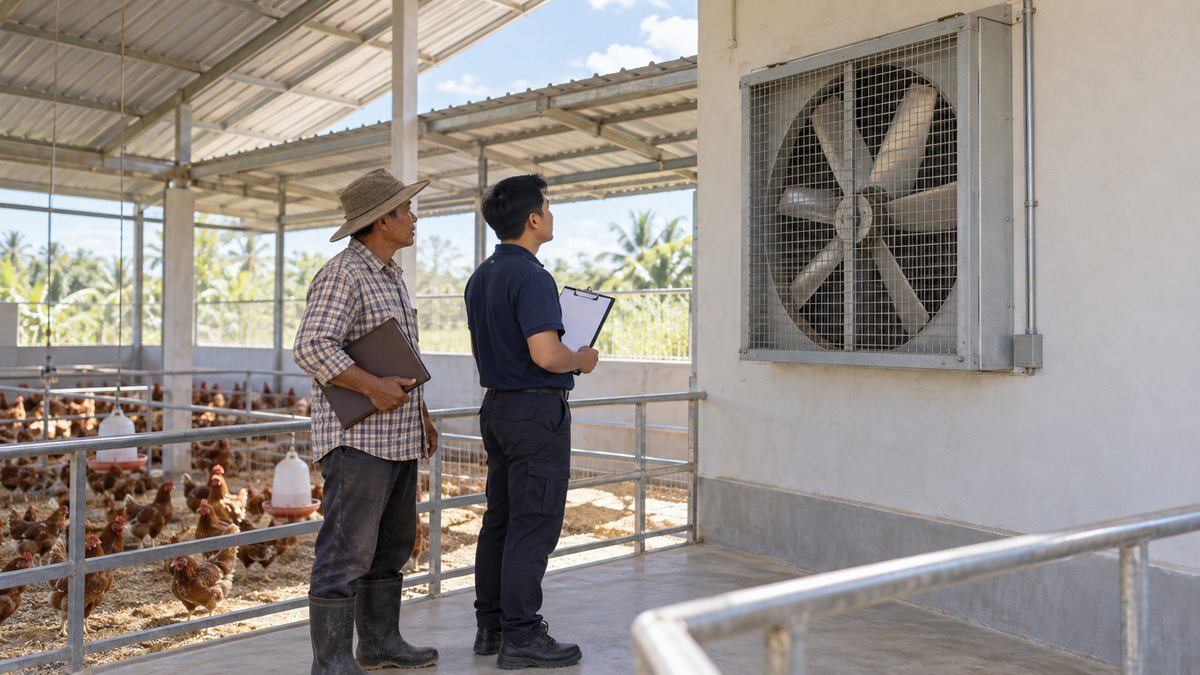
Compare: fan/pump/cooling load, nameplate and starting current, operating hours, grid connection, critical-load backup, autonomy target, tariff class and written scope.
In this guide
Check the account tariff
The cited agricultural low-voltage tariff for Peninsular Malaysia includes energy, capacity, network and retail-charge components. Confirm the account class and current tariff on the actual bill before modelling [source].
Battery and backup checks
If storage is proposed, ask where it will be installed, how it is ventilated and protected, how faults are detected and what emergency plan applies. The cited BESS safety guideline recommends outdoor installation with IP54 or higher; unavoidable indoor installation requires suitable fire protection and applicable authority compliance [source]. A site-specific design remains necessary.
Payback cannot be inferred from the tariff alone. It depends on load timing, installable capacity, export rules, connection and actual cost. Request written with/without-storage scenarios with their assumptions shown; do not treat a scenario as a guarantee.
Compare grid-connected and off-grid proposals
Start with whether the farm has grid service and which circuits cannot stop. Ask each provider to compare options against the same measured loads and operating schedule. For a grid-connected design, request the export assumptions and written explanation of what happens to the system and named critical loads during a utility outage. For an off-grid design, ask for the full load list, starting loads, day/night and low-generation assumptions, required autonomy, storage or generator scope, maintenance and cost. If only critical equipment needs continuity, ask for that backup scope separately from a whole-farm off-grid design. Do not compare totals when the two proposals serve different loads or outage periods.
What to provide
Prepare recent bills, location, tariff class, maximum demand if applicable, roof/site plan, equipment list and operating hours, plus required backup duration. Ask for a proposal that shows its assumptions, self-consumption, export, price and maintenance scope.
| Check area | Record to gather | Question for the provider |
|---|---|---|
| Ventilation fans | Number, nameplate power, starting current, operating hours | Continuous or weather-dependent operation? |
| Water pumps | Power, starting current, hours and season | Must the pump run during an outage? |
| Cooling or processing | Interval load and operating schedule | How much use overlaps with solar generation? |
| Controls and lighting | Critical circuits and required backup duration | What happens if supply is interrupted? |
| Tariff class | Account class and current tariff confirmed on the actual bill (energy, capacity, network and retail-charge components) | Which tariff components apply to this account? |
| Storage, if proposed | Installation location, ventilation and protection, fault detection, emergency plan; outdoor installation at IP54 or higher is the cited recommendation | What fire protection and authority compliance apply if indoor installation is unavoidable? |
| Payback check | Written with-storage and without-storage scenarios with assumptions shown | Which inputs (load timing, capacity, export rules, connection, cost) drive the difference? |
Does a 12 kW proposal cover the whole poultry shed?
The number alone cannot answer that. One operator asked whether an off-grid 12 kW system could serve a two-storey, 40 × 100 ft shed with heaters and lights, plus an office/worker residence and CCTV original question. The question gives no measured loads or operating schedule, so it does not show that the proposed system is sufficient—or insufficient.
Ask the provider to define exactly what “12 kW” refers to in the design—panel capacity, inverter output or another rating—and show the calculation against the actual equipment:
| Load | Record to provide | Check in the design |
|---|---|---|
| Fans and heaters | Count, nameplate power, starting current if stated, operating hours and temperature controls | Loads running at the same time and how long they run |
| Water pumps | Nameplate power, starting current, hours and season | Whether the pump must run during an outage |
| Lights, CCTV, office and worker housing | Equipment list, day/night schedule and critical circuits | Daily energy use and load priority when supply is limited |
| Off-grid or backup operation | Required time without grid supply and loads that cannot stop | State design assumptions and backup options; do not infer battery needs from the kW figure alone |
Compare concurrent load with the proposed output limit, and operating-period use with the daily-energy estimate. If nameplates, meter records or operating schedules are missing, have the proposal mark those assumptions and request measurement or confirmation before choosing capacity.
Frequently asked questions
What should be listed before a shed-solar assessment?
List fan count, nameplate power, starting current and operating hours; add pump, cooling, lighting and control loads, bill/tariff and which circuits need backup.
Does a solar system guarantee a zero bill?
No. Usage timing, system size, tariff components and export rules can leave charges on the bill.
How long is payback for a livestock shed?
There is no supported figure without the site's bills, load profile, design and written quote.
Off-grid or grid-tied solar: which should a farm compare?
Start with whether the site has grid service and which loads cannot stop. Ask providers to compare designs using the same measured loads and operating schedule: state the grid-connected option's export treatment and outage behavior, and show the off-grid option's full load scope, nighttime/low-generation assumptions, autonomy target, storage or generator scope, maintenance and costs. If only critical circuits need backup, ask for that scope separately from a whole-farm off-grid design. No label alone establishes fit, cost or reliability.