
Dengue Mosquito vs Normal Mosquito Size: Identification, Biting Habits & Prevention Guide
Affiliate links: we may earn a commission. Disclosure
Decision details
Fits if: Crucial for Malaysian households seeking to identify potential dengue vectors and implement targeted weekly breeding source destruction.
Main drawback: Do not rely on visual size alone to gauge risk; eliminate clean stagnant water containers where Aedes larvae develop.
Compare: Physical striping contrast, daytime biting pattern recognition, and adherence to MOH 10-minute weekly inspection guidelines.
In this guide
Dengue mosquito vs normal mosquito size and physical markings
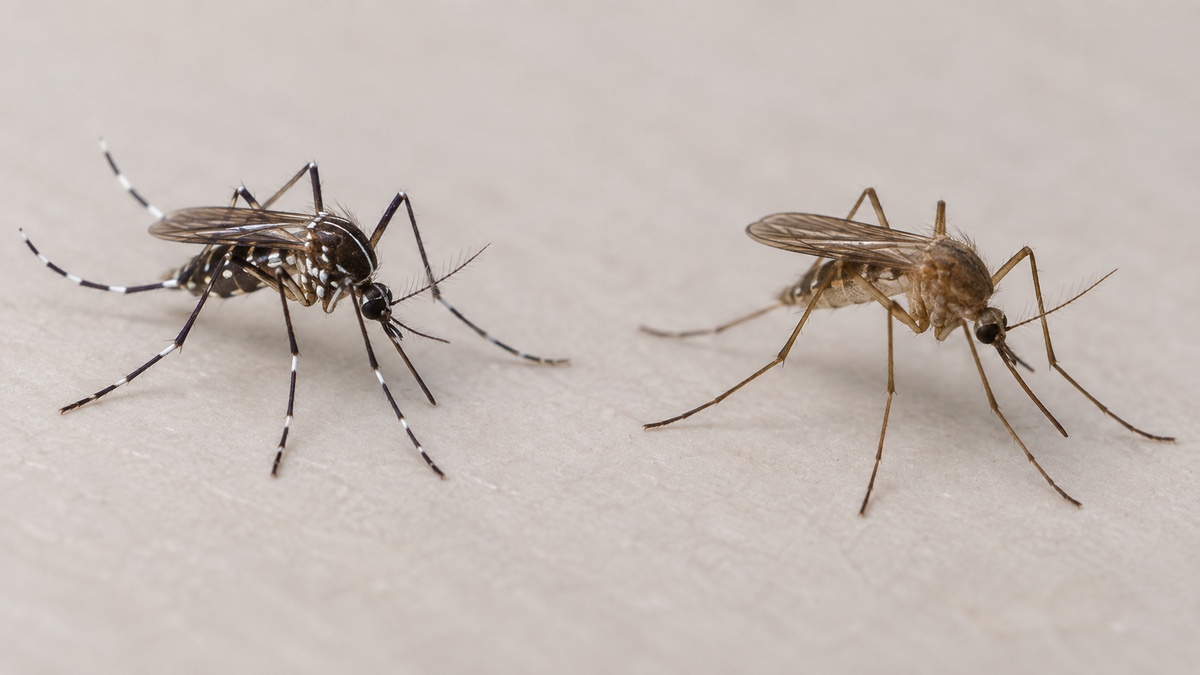
In Malaysia, homeowners frequently ask whether the mosquito they just spotted is an Aedes vector. While both Aedes and Culex mosquitoes share a comparable body length of 4 to 7 mm, closer inspection reveals unmistakable physical markers:
- Aedes aegypti / albopictus: Features a dark black body accented with distinct silvery-white bands across its legs. Aedes aegypti displays a white lyre-shaped pattern on the dorsal surface of its thorax, whereas Aedes albopictus has a single longitudinal white stripe running down the centre of its thorax.
- Culex quinquefasciatus (Common House Mosquito): Displays a dull brownish or yellowish-brown colouration without bold contrasting stripes on the legs or body.
- Anopheles (Malaria Vector): Rests at a characteristic 45-degree angle to the surface with its abdomen tilted upwards, unlike Aedes and Culex which rest parallel to surfaces.
Globally, dengue remains a major public health challenge, with WHO recording over 14.6 million cases and more than 12,000 deaths in 2024 [source]. In Malaysia, Ministry of Health (KKM) surveillance reported 58,079 cumulative dengue cases by Epidemiological Week 32 of 2026 [source].
Biting habits and disease transmission comparison
Understanding the behavioural differences between mosquito species is vital for personal protection and vector management:
| Feature | Aedes (Dengue Vector) | Culex (Common House Mosquito) | Era & Source |
|---|---|---|---|
| Physical Size | 4 – 7 mm (black & white stripes) | 4 – 7 mm (uniform brownish) | disemak 2026, entomology standards |
| Peak Biting Time | Daytime (early morning & late afternoon) [source] | Night-time (dusk to dawn) | disemak 2026, WHO fact sheet |
| Breeding Habitat | Clean, clear artificial stagnant water | Organic, polluted or stagnant drain water | disemak 2026, public health guidelines |
| Key Diseases | Dengue, Chikungunya, Zika | Japanese Encephalitis, Filariasis | disemak 2026, WHO medical records |
Under Malaysian regulations, commercial pest products must not claim medical dengue prevention or treatment under Act 290 [source], nor mislabel general devices as registered pesticides under Act 149 [source].
Dengue virus infection presents with high fever, severe headache, retro-orbital pain, muscle and joint pains, and rash [source]. Warning signs of severe dengue that require urgent medical attention include severe abdominal pain, persistent vomiting, mucosal bleeding, and fluid accumulation [source].
Aedes breeding cycle and environmental control measures
The Aedes lifecycle progresses through four distinct stages: egg, larva (jentik-jentik), pupa, and winged adult. In tropical conditions, this development cycle from egg to biting adult takes approximately 7 days in stagnant water [source].
To break the reproduction cycle, public health authorities advise targeted environmental sanitation:
- Weekly 10-Minute Inspection: Spend 10 minutes every week inspecting and eliminating clean water-holding containers around the home and garden [source].
- Container Sanitation: Empty, scrub, and invert flower pot trays, pails, roof gutters, and water storage drums [source].
- Physical Barriers: Install mesh window screens and wear protective long-sleeved clothing when outdoors during peak biting hours.
- Protective Accessories: Verified physical protection tools and repellents can be sourced through standard channels like Shopee [source].
Baca juga: hub nyamuk · is aedes mosquito dangerous — owner guide · dengue CPG guide
Frequently asked questions
Is a dengue mosquito bigger than a normal house mosquito?
No. An Aedes mosquito measures approximately 4 to 7 mm in length, which is roughly identical to the size of a common Culex mosquito.
When are dengue-carrying mosquitoes most active?
Aedes mosquitoes are primarily daytime biters, with peak activity occurring during early morning after sunrise and late afternoon before dusk.