
Playground & Community Park Mosquito Control: Child-Safe Repellents, Drain Audits & Park Safety
Affiliate links: we may earn a commission. Disclosure
Decision details
Fits if: Parents, Joint Management Bodies (JMB), residents associations, preschool operators, and local council park administrators in Malaysia.
Main drawback: Never apply chemical insecticide sprays directly onto children's play equipment, slides, or swings where hands and mouths can make contact. Settle treatments when the park is closed.
Compare: Child and toddler safety, zero toxic residue on play equipment, Act 154 legal compliance, and daily water drainage checks.
In this guide
Community playgrounds and neighbourhood parks are vital outdoor spaces for childhood development, yet humid tropical surroundings can transform shaded play areas into vector hotspots. Parents, Joint Management Bodies (JMB), and local councils must coordinate safe, effective pest management that shields children without exposing them to harmful chemical residues on slides and swings.
Identifying hidden mosquito breeding sites in playground structures
Play equipment often features crevices, hollow joints, and rubber surfaces that catch rainwater after sudden tropical downpours:
- Tire Swings & Rubber Edging: Discarded or suspended rubber tires naturally trap stagnant water inside their inner rings, forming prime breeding spots where eggs hatch into adults in approximately 7 days[source]. Drill drainage holes at the lowest point of each tire.
- Slide Footings & Tunnel Curves: Plastic tunnels, spiral slide bases, and sunken rubber safety flooring can hold shallow puddles if gradient drainage is blocked by sand and leaves.
- Perimeter Shrubbery & Dense Grass: Overgrown bushes bordering playground fences offer daytime shade and humidity where adult mosquitoes rest.
- Trash Bins & Drink Containers: Discarded beverage cups, plastic bags, and unemptied public rubbish bins collect rain and breed hundreds of larvae within days.
Child-safe repellent options and bite protection during outdoor play
When taking infants and young children to neighborhood playgrounds, proper bite prevention avoids itchy swellings and vector transmission:
- Clothing Barriers: Dress children in loose-fitting, light-coloured, long-sleeved cotton shirts and long pants to reduce exposed skin area.
- Picaridin / Icaridin Lotions (10–20%): Highly recommended for children over 6 months old; non-greasy, odourless, and does not dissolve synthetic sportswear or plastic toys[source].
- Botanical Citriodiol / Oil of Lemon Eucalyptus (OLE): Plant-derived formulations offer 4 to 6 hours of reliable protection for children aged 3 and above.
- Repellent Patches & Clip-On Badges: For babies and toddlers in strollers, attaching essential oil repellent stickers to the stroller frame or outer clothing adds a protective aroma shield without direct skin contact.
- Sourcing Trusted Child Protection: Quality insect repellent patches, soothing bite roll-ons, and stroller mosquito mesh nets are conveniently ordered from authorized shops on Shopee[source].
Integrated park management for neighbourhood JMBs and local councils
Managing community recreational grounds requires structured, long-term environmental strategies rather than reactive chemical spraying:
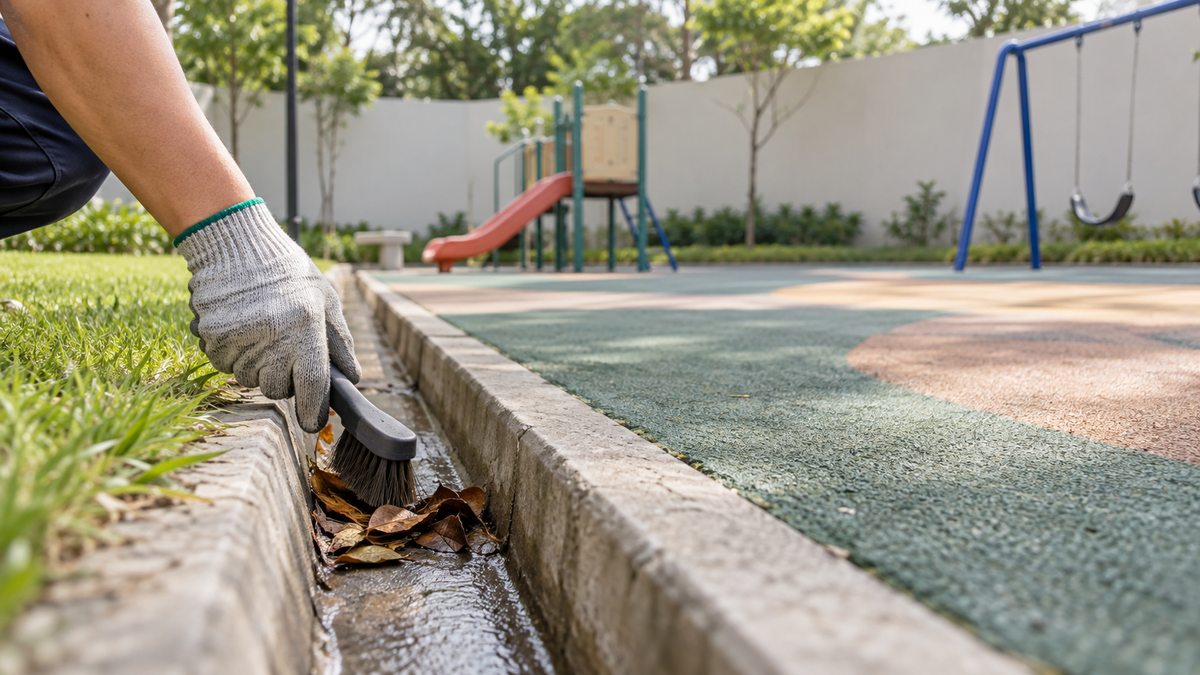
- Drainage Network Maintenance: Ensure perimeter stormwater drains are clear of mud, fallen tree branches, and rubbish to guarantee free water flow.
- Targeted Biological Larviciding: Use Bacillus thuringiensis israelensis (BTI) dunks in retention ponds or permanent culverts, which destroys larvae without harming birds, pets, or play equipment.
- Scheduling Chemical Interventions Safely: If fogging or barrier misting is necessary due to active local health advisories, schedule treatments early before park opening hours or late at night, ensuring playgrounds are fully ventilated and dry before children arrive.
Legal duties under Act 154 and community prevention protocols
Residential committees and park operators in Malaysia carry formal legal responsibilities for public health: [source]
- Destruction of Disease-Bearing Insects Act 1975 (Act 154): Premise managers, managing agents, and facility operators are legally required to prevent conditions favoring insect vector breeding, subject to official enforcement and compounding[source].
- Weekly 10-Minute Routine Check: Community maintenance crews should conduct a 10-minute sweep of park equipment, drain outlets, and garden plant pots every 7 days[source].
- Responsible Health Communication: Park notice boards should promote preventive measures clearly without making unlawful guarantees of 100% disease eradication[source].
| Playground Feature / Area | Risk Level & Mechanism | Child-Safe Control Action | Inspection Frequency |
|---|---|---|---|
| Tire Swings & Play Structures | High (rainwater pooling in hollows) | Drill drainage weep holes; clear leaf debris | Weekly routine check |
| Perimeter Shrubs & Hedges | Moderate (daytime adult mosquito resting) | Trim lower branches; clear leaf litter | Bi-weekly landscaping |
| Stormwater Perimeter Drains | High (silt buildup & stagnant water) | Clear silt; apply BTI biological larvicide | Weekly maintenance |
| Children's Sandboxes | Low to Moderate (damp sand moisture) | Cover when not in use; rake to aerate | Daily before opening |
| Public Bins & Seating Benches | Moderate (discarded cups & cans) | Provide lidded bins; daily trash collection | Daily park maintenance |
Baca juga: hub nyamuk · mosquito-killer-review · taman-garden-keluarga-en
Frequently asked questions
When are children at greatest risk of mosquito bites in public playgrounds?
Peak play hours between 7:00 AM – 9:00 AM and 5:00 PM – 7:00 PM coincide with maximum biting activity of diurnal Aedes mosquitoes.
How can community park managers prevent mosquitoes in playground equipment?
Drill drainage weep holes in tire swings, clear leaf litter from slide catch basins, and inspect perimeter perimeter perimeter drains weekly for standing water.
What mosquito repellent is safest for toddlers playing outdoors in Malaysia?
Lotions or patches containing low-concentration Icaridin/Picaridin or botanical Oil of Lemon Eucalyptus (OLE) applied to clothing provide safe, proven outdoor defence.