
CO2 Mosquito Trap Malaysia: Specs, Operating Mechanics & Realistic Placement Guide
Affiliate links: we may earn a commission. Disclosure
Decision details
Fits if: Suitable for landed garden compounds, semi-outdoor patios, and open alfresco areas experiencing regular mosquito activity.
Main drawback: Traps must be placed upwind in shaded perimeter zones away from seating areas; they do not replace standing water source reduction.
Compare: Continuous 24/7 runtime reliability, lure consumable replacement cycles, and clear separation from human gathering spots.
In this guide
Co2 mosquito trap malaysia: mechanism and how it attracts host-seeking mosquitoes
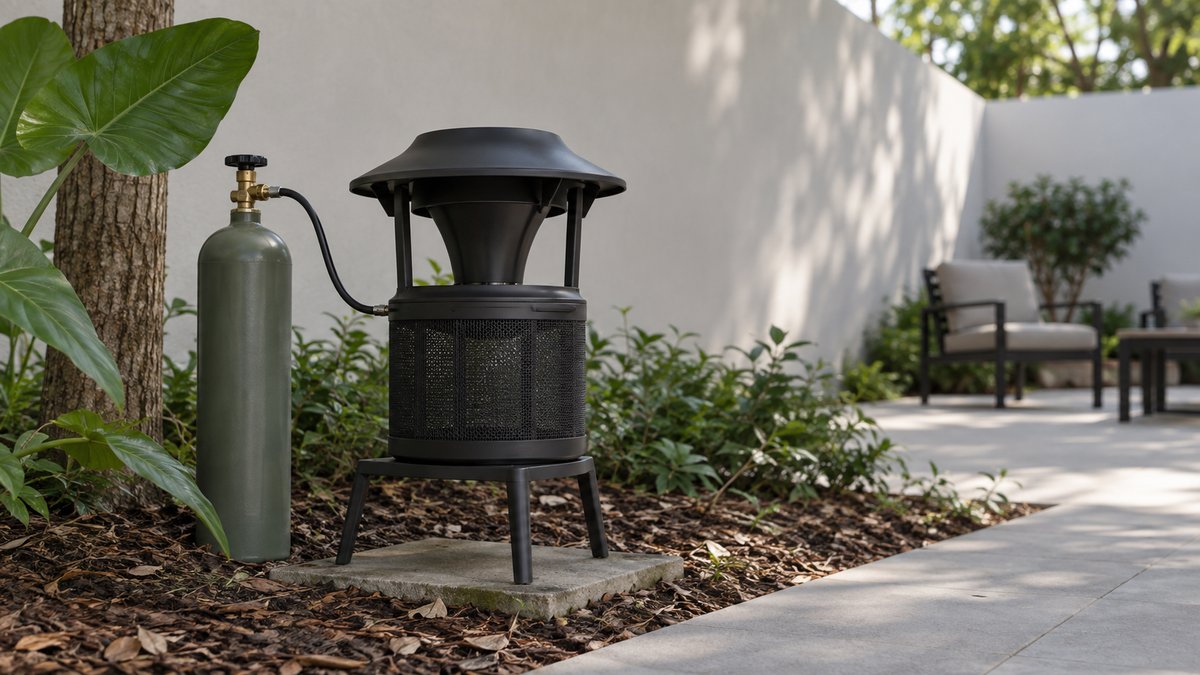
Mosquitoes locate human hosts primarily by tracking carbon dioxide plumes exhaled in breath, followed by body heat, moisture, and skin volatile scents. Standard UV light traps capture non-target insects but often fail to attract blood-seeking female mosquitoes:
- Carbon Dioxide (CO2) Dispersion: Traps generate or release controlled CO2 plumes that simulate human breathing patterns, attracting mosquitoes from wider garden distances.
- Thermal & Visual Contrast: Dark trap bodies combined with gentle heating elements mimic the warmth of mammalian skin.
- Suction or Sticky Retention: Powerful, quiet fans generate downward airflow, pulling approaching mosquitoes into a capture chamber or mesh container where they dehydrate.
Under Malaysian statutory frameworks, pest management devices must comply with s.45A of the Pesticides Act 1974 (Act 149), which prohibits unapproved self-labelling of mechanical hardware as chemical pesticides [source]. Furthermore, commercial product marketing cannot assert direct medical dengue cure or complete disease prevention under Act 290 [source].
Placement guidelines and outdoor coverage considerations
Placement geometry determines the performance of any outdoor CO2 capture device. Traps placed directly next to dining tables or patio chairs draw mosquitoes closer to people rather than intercepting them.
| Parameter | Recommended Setup | Operating Notes | Era & Source |
|---|---|---|---|
| Trap Location | Shaded, sheltered garden perimeter (10–15 m from seating) | Upwind from mosquito resting vegetation | disemak 2026, outdoor vector guidance |
| Operating Schedule | Continuous 24/7 operation | Intercepts daytime Aedes [source] and night Culex | disemak 2026, entomology best practices |
| Lure / CO2 Replacement | Monthly consumable refresh | Maintain scent plume consistency | disemak 2026, supplier operating manual |
| Maintenance Interval | Bi-weekly catch basket emptying | Clean fan intake mesh regularly | disemak 2026, device care protocol |
Operating discipline, maintenance, and realistic efficacy ceiling
While CO2 traps significantly reduce adult mosquito biting pressure in residential gardens and alfresco venues, they represent one component of an integrated management strategy.
Because the Aedes mosquito completes its life cycle from egg to biting adult in approximately 7 days within stagnant water containers [source], physical environmental sanitation remains indispensable:
- Source Destruction: Conduct a 10-minute weekly inspection to empty and scrub clean water containers where larvae breed [source].
- Environmental Barriers: Maintain window screens and eliminate overgrown brush where adult mosquitoes shelter during high midday heat [source].
- Consumable Sourcing: Authentic replacement lures, consumable attractants, and mesh accessories can be acquired through online marketplaces like Shopee [source].
Baca juga: hub nyamuk · co2-trap-vs-fogging-vs-repellent · fogging-alternative-hotels-alfresco
Frequently asked questions
How does a CO2 mosquito trap attract mosquitoes compared to a simple UV zapper?
While simple UV zappers rely solely on light, CO2 traps emit carbon dioxide, subtle warmth, and organic scent lures to mimic human breath and body odours that attract female biting mosquitoes.
Can a CO2 trap eliminate all mosquitoes in my garden?
No trap provides complete elimination. CO2 traps reduce adult mosquito population density over time when maintained continuously alongside routine breeding site sanitation.