
How to stop mosquito larvae in pool: Complete Malaysia Guide
Affiliate links: we may earn a commission. Disclosure
Decision details
In this guide
Why are there larvae in my pool in the first place?
A female mosquito looking for a blood meal afterwards needs a quiet water surface to lay on. She avoids clean moving water and picks stagnant, shaded, organically rich water. So when you see wrigglers hanging off the pool surface:
- The pump has been off for a stretch — days, not hours.
- Water treatment has lapsed, so the water no longer discourages breeding.
- Debris on the surface (leaves, pollen scum) gives larvae shelter and food.
- Or the “pool” is actually a cover, a folded tarp, or an unused kids’ pool holding rainwater.
Each of these has a direct fix below. None of them requires draining a functioning pool.
How to get rid of mosquito larvae in a swimming pool
- Restore circulation. Run the pump on its normal schedule so the water moves; larvae need still water.
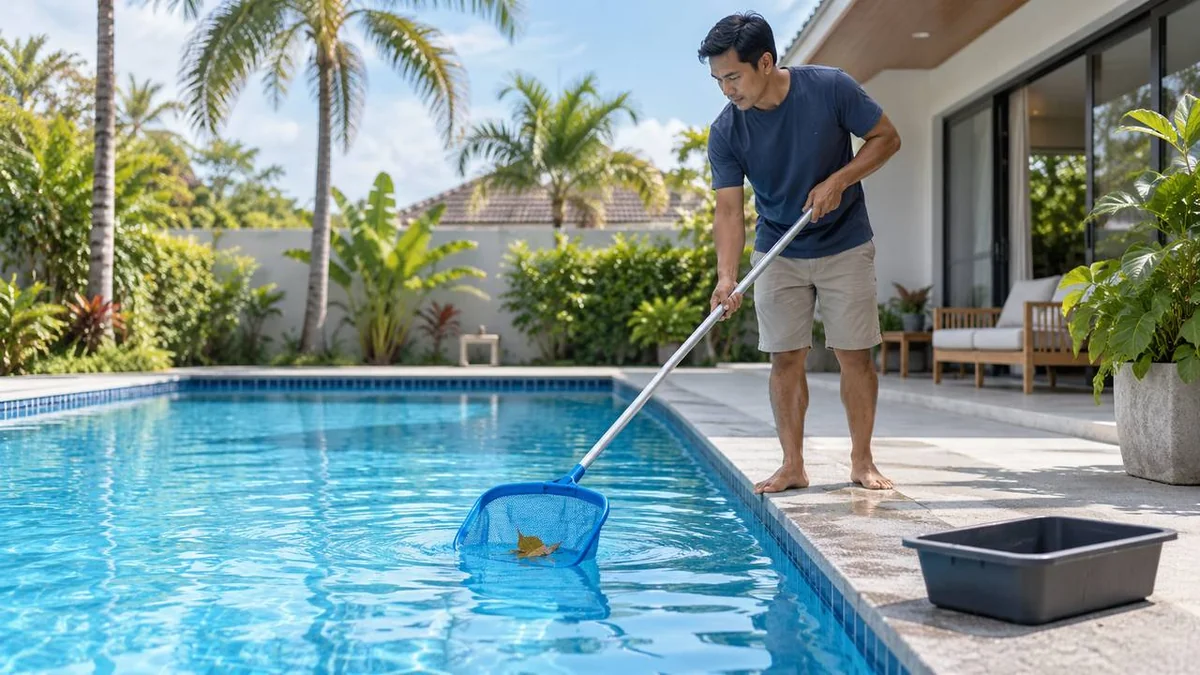
- Clean and treat the water. Vacuum the floor, skim the surface, and bring the water back to its normal sanitizer balance following your pool chemical instructions. A properly maintained pool is not a mosquito habitat.
- Clear the surroundings. Trim overhanging branches for sun and airflow, and remove containers near the pool that hold rainwater.
- If the pool is abandoned or under renovation, cover it taut so water cannot pool on the cover, or keep a small circulation going. A sagging cover full of rainwater is worse than an open pool.
What about the kids’ pool?
Small inflatable and paddle pools are the classic backyard breeder because they are filled, used once, and forgotten. The rule is simple: empty and dry them after every session, and store them under cover, upside down. For ornamental water features and fish ponds nearby, keep the water moving with a small pump or fountain — moving water breaks the still-surface requirement; fish also feed on larvae where the pond design allows them.
Poolside protection for people
Larvae are the supply line; adult mosquitoes are the nuisance. Around the pool deck, the measures that hold up: airflow from fans at seated areas, registered skin repellents during the dusk period, and light-coloured loose clothing. Devices follow the usual honesty tier — CO2-based traps have the supported mechanism, UV lamps are weak on mosquitoes, and ultrasonic repellers have no evidence behind them. Nothing here is a disease shield; these steps reduce bites and reduce the population when coverage is sufficient.
Quick reference
| Aspek | Butiran |
|---|---|
| Swimming pool | Circulation plus sanitation; larvae only appear when water goes still and untreated |
| Kids' and inflatable pools | Empty and dry after every use; store upside down under cover |
| Covers and tarps | Keep taut so rainwater cannot pool on top |
| Ornamental water | Keep it moving; avoid dead corners where the surface is still for days |
| Poolside comfort | Fans, repellent and clothing at dusk; CO2 traps over UV or ultrasonic devices |
Baca juga: hub nyamuk · kolam renang panduan BM · anak nyamuk di air
Frequently asked questions
Do mosquitoes breed in a well-kept swimming pool?
A circulating, sanitized pool is a hostile place for larvae and is not the usual breeding site. Problems start when a pool is abandoned, uncovered for long stretches, or its pump and water treatment lapse — that is when wrigglers appear.
What can I put in the pool to stop mosquitoes?
For a real swimming pool the answer is maintenance, not additives: run circulation, keep the water treated and the surface skimmed. For small ornamental or unused water bodies, larvicides used by health programmes exist, but any chemical choice should follow the product label for that exact water use.
How do I keep mosquitoes out of a kids' paddle pool?
Empty it after every use, wipe it dry, and store it upside down. Even a small pool left overnight with water in it can start the breeding cycle.