
Aplikasi pricecatcher kpdn
Decision details
Fits if: Consumers comparing retail grocery prices, market vendors auditing local retail competitors, and farmers monitoring retail price spreads for fresh produce.
Main drawback: PriceCatcher data reflects retail consumer prices collected by price monitoring officers; it does not represent wholesale or farmgate purchase rates.
Compare: KPDN official price monitoring database, daily mobile app updates, district-level geolocated pricing, and fresh vegetable retail tracking.
In this guide
What is the KPDN PriceCatcher application and how does it work?
Developed by KPDN, the PriceCatcher app serves as a national price-transparency mechanism. It allows users on iOS and Android devices to search for everyday essential goods and discover where items are sold at the lowest price within a designated radius (e.g., within 5 km to 20 km of their current location).
The application categorizes monitored items into several practical groupings:
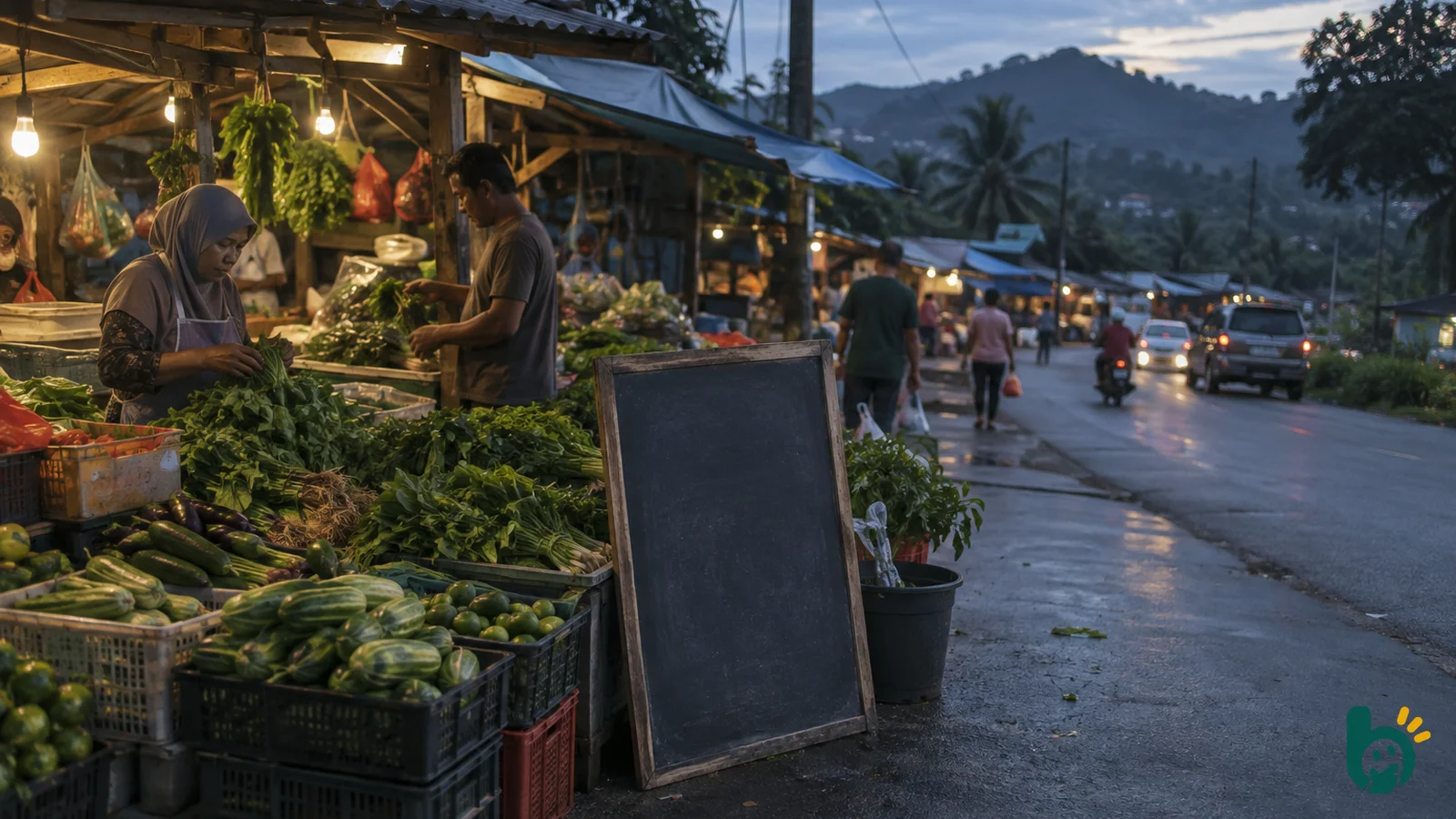
- Fresh Produce: Green vegetables (sawi, kangkung, bayam), chillies, tomatoes, cucumbers, and root vegetables.
- Wet Market Proteins: Fresh chicken, beef, eggs, and seafood items.
- Dry & Packaged Goods: Cooking oil, rice, sugar, flour, and household seasonings.
How does PriceCatcher collect and verify fresh produce prices?
Unlike commercial crowdsourcing apps that rely on unverified user submissions, PriceCatcher relies on field enforcement officers:
- Daily Field Audits: KPDN price monitoring officers (Pegawai Pemantau Harga) visit selected public wet markets, grocery stores, supermarkets, and hypermarkets across every administrative district daily.
- Standardized Units: Produce prices are logged per standard measurement unit (e.g., RM per kilogram for fresh vegetables or RM per tray for eggs).
- Database Syncing: Audited prices are uploaded directly to KPDN’s centralized database, making updated rates available on the public mobile app every morning.
Comparison: KPDN PriceCatcher vs FAMA market price reports
Both platforms serve vital price-information functions in Malaysia, but address different stages of the value chain:
| Feature / Dimension | KPDN PriceCatcher | FAMA Daily Price Guide |
|---|---|---|
| Primary Focus | Consumer retail price comparison at retail stores and wet markets | National wholesale and retail agricultural benchmark indicators [source] |
| Target Users | Households, smart shoppers, and local retail stall operators | Commercial farmers, wholesale distributors, and agro-exporters |
| Granularity | Premise-specific (individual hypermarkets and market stalls) | State and national averages by commodity grade |
| Platform Access | Mobile application (iOS & Android) | Official agency web portal and Power BI dashboard |
How can farmers and market vendors use PriceCatcher data strategically?
While designed primarily for retail consumers, agricultural entrepreneurs can extract practical commercial value from the app:
- Tracking Retail-to-Farmgate Spreads: By observing retail prices of leafy vegetables in nearby wet markets, growers can calculate the margin captured by intermediary wholesalers and retail sellers.
- Benchmarking Direct-to-Consumer Pricing: Farmers running farm-gate sales, weekend Pasar Tani stalls, or subscription vegetable boxes can price their produce competitively below hypermarket retail rates while retaining higher margins than wholesale middlemen.
- Identifying High-Demand Micro-Markets: District-level price disparities highlight urban areas where vegetable supplies are constrained and retail prices command premium returns.
What are the limitations of PriceCatcher for commercial agricultural trading?
Users should keep key operational boundaries in mind:
- Retail Only: The app does not display farmgate procurement prices or bulk wholesale crate rates.
- Grading Variations: Retail outlets may display mixed grades under a single product entry, whereas wholesale transactions require strict Grade A/B sorting.
- Lag in Rapid Wholesale Moves: Intraday price spikes caused by morning auction dynamics at wholesale hubs (such as Pasar Borong Selayang) may take up to 24 hours to reflect on retail shelves.
Step-by-step: How to check and compare vegetable prices on PriceCatcher
- Download and open the official PriceCatcher app from the Google Play Store or Apple App Store.
- Enable device location services or manually select your target district and state.
- Select the Barangan Segar (Fresh Goods) or Sayur-sayuran (Vegetables) category.
- Filter by specific items (e.g., Sawi Hijau, Cili Merah, or Timun) to view price rankings from lowest to highest across nearby stores.
Baca juga: hub kebun · agricultural-land-lease-malaysian · how-to-sell-vegetables-to-famaily-en
Frequently asked questions
What is KPDN's PriceCatcher app used for?
PriceCatcher allows users in Malaysia to track and compare daily retail prices of essential goods, fresh vegetables, poultry, and household groceries across nearby wet markets, supermarkets, and grocery stores.
How often is data updated on the PriceCatcher app?
Price monitoring officers from the Ministry of Domestic Trade and Cost of Living (KPDN) record and update retail prices daily across designated retail premises nationwide.