
Collector Listing Conventions in Malaysia: What Buyers Ask, What Good Sellers Show
In this guide
Every collector market builds a listing contract — the set of things a listing is expected to carry before anyone trusts it. In Malaysia’s plant and crystal groups, that contract is real and enforceable, because the enforcement is social: reputation, do-not-buy threads, blacklist sharing across groups. This page writes the contract out for both sides. Buyers: here is what to demand. Sellers: here is what to show — and if you run a shop, this is a checklist you can adopt line by line.
What buyers ask before money moves
The research capture of Malaysian collector commerce (2026-10-01) documents the standard seller-side conventions: for rare plants, stating exact foliage dimensions, presence of corms or active growth nodes, and photographic evidence of the mother plant; for crystals, unedited video under UV 365nm light to prove natural fluorescence, plus raw unboxing footage of wholesale shipments to establish provenance. These are not optional courtesies — they are what experienced buyers treat as the entry ticket.
The most practical advice in the whole bank is also the simplest. An Indonesian collector commenting on a Malaysian variegata video (the same scene plays in MY groups): “Jangan tertipu sama picture tanaman,kalo mau beli onlinee👍 Makasih ka tikam tips untuk beli tanaman tuk di ukur pake penggaris” — don’t be fooled by the picture; when buying online, measure with a ruler (rid agvx-mw-mon-0082). Photos lie by angle; rulers don’t.
Why the anxiety is rational — a buyer’s story from the bank: “it was listed on Facebook as a half moon, so I just assumed it was one. The leaves are really pretty, but when I saw it in person, I was surprised by how small it was.” (rid agvx-mw-mon-0109). The listing said half moon; reality said small. Dimensions and leaf count in the listing would have closed that gap before money moved.
The listing convention table (both sides, adopt verbatim)
| Element | Buyer asks | Seller shows | Seen in the wild |
|---|---|---|---|
| Dated photos | “Boleh tengok gambar hari ini?” | Recent photo with date; mother plant for cuttings | Research capture 2026-10-01 (plant listing conventions) |
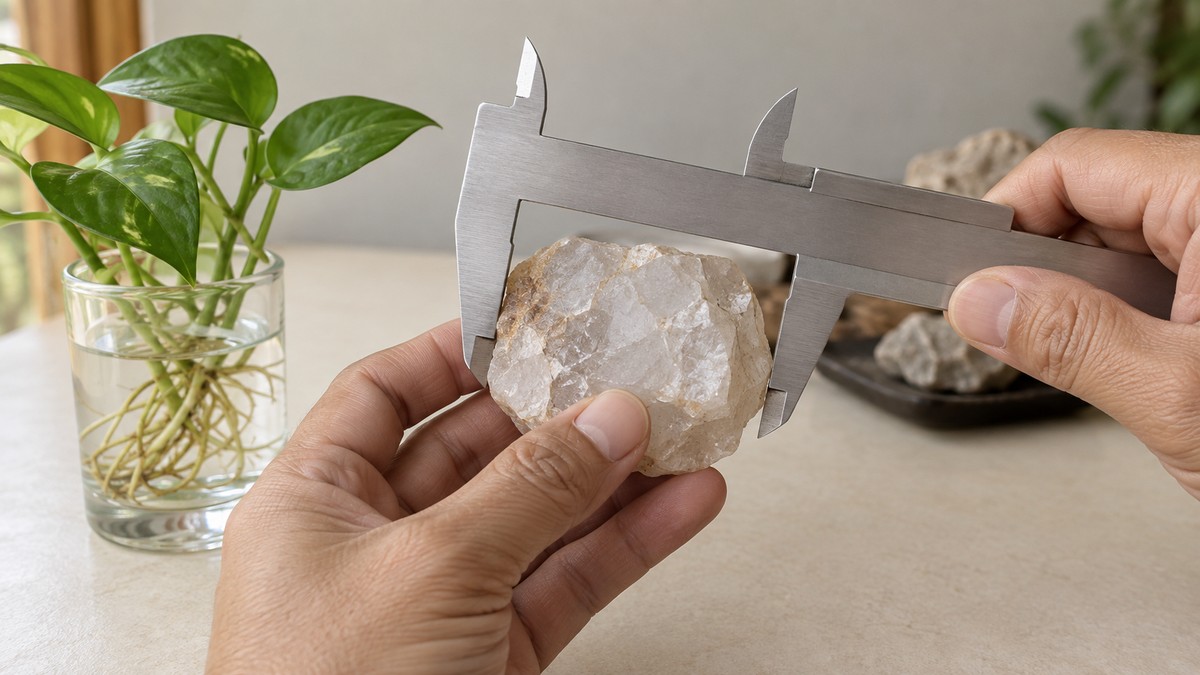
| Exact dimensions | Ruler on the plant / caliper on the stone | cm + leaf count for plants; mm for crystals | 「尺寸 : 18mm x 27mm x 10mm」 — MY crystal group listing (rid agvx-cry-0188) |
| Node/root evidence | Root photo, node close-up, rot check | Untreated root photos; squish test on request | Research capture 2026-10-01; plant trade-convention rows |
| Video proof | Turning video, UV 365 for fluorescence | Unedited clip, no cuts | Research capture 2026-10-01 (crystal authenticity) |
| Price basis | Is this asking or transacted? | State the basis + date | Ask-vs-transacted is a separate literacy — see the asking-vs-transacted page |
The high-ticket end of the market confirms the pattern: the research capture of RM1k–6k display-specimen sales found buyers demand scientific provenance, exact physical dimensions, unedited HD visual evidence — and completed sales correlate with photography angles, weight disclosure, dimensions and provenance statements [source].
What sellers should know: reputation is the payment rail
The informal market runs on group reputation. Communities maintain seller do-not-buy threads, and word travels across groups. From the bank: “I agree with the fb groups! They have a thread of sellers to NOT buy from to prevent this sort of thing.” (rid agvx-mw-mon-0128). And where do people actually find reputable sellers? Local groups and second-hand platforms: “Have you checked local second hand platforms, plant swaps, community organized plant events? The reason these are so cheap here is because people are propagating them like crazy and selling them privately.” (rid agvx-mw-mon-0116). Private propagation is the supply base; the groups are the marketplace; your name is your storefront.
And the patient-buyer advice sellers themselves give: “I’d say take your time because albos are in people’s homes now anyways. Lots of people also struggle with the white parts browning and then give the plants away for VERY cheap, sometimes even for free.” (rid agvx-mw-mon-0117). Scarcity pressure is mostly theater at the entry level — the plant is already in everyone’s homes.
The shop-side adoption
If you sell (we do), the conventions compress into one sentence: show everything the buyer would have checked in person. Dated photos, ruler/caliper numbers, node and root evidence for plants, turning and UV video for crystals, and a stated price basis with a date. It costs one extra minute per listing and deletes the entire “surprised by how small it was” class of disputes.
Read next: DT deposit etiquette, both sides · COD, meetup and delivery · Crystal buyer’s evidence checklist · Asking vs transacted prices
Frequently asked questions
What should I ask a seller before buying a variegated plant online?
Root photos, a node close-up (for cuttings), the exact leaf count and dimensions, and a recent dated photo of the actual plant — not a stock image. Community buyers learned this the hard way: one bought a Facebook-listed half moon that arrived far smaller than expected ('when I saw it in person, I was surprised by how small it was' — mined comment).
I'm a seller — what makes buyers trust my listings?
Show what buyers ask for before they ask: dated photos, exact measurements (mm for crystals, cm/leaf count for plants), mother-plant or provenance evidence, and video on request. The research capture of high-ticket collector sales found completed sales correlate with exact dimensions, weight disclosure and provenance statements [source].
Do Malaysian collectors really blacklist bad sellers?
Yes — community groups keep do-not-buy threads. A mined comment on plant groups: 'I agree with the fb groups! They have a thread of sellers to NOT buy from to prevent this sort of thing.' Reputation is the real payment rail in the informal market.