
Fertigation Nutrient Tanks: A/B Stock, EC and Clean-System Checks
In this guide
A fertigation nutrient tank is where fertilizer dissolves before the solution travels through drip lines to the crop. A workable setup starts with fully soluble products, clean water and a measured mix based on the label. The BM source does not establish a crop-specific dose or mixing schedule, so this guide focuses on tank decisions and checks rather than prescribing a rate.
| Check | What to look at | When | Limit |
|---|---|---|---|
| Mixing basis | Fully soluble fertilizer, clean water and label-measured quantities | Each mix | More fertilizer does not automatically improve the crop [source] |
| Product choice | A complete formula labelled for fertigation and the stated crop or system | Before buying | For imported fertilizer, ask the seller for the relevant Certificate of Analysis (CoA) [source] |
| Water quality | Look for visible silt or algae; filter water before it enters the tank | Before mixing | Particles can obstruct emitters |
| Stored solution | Keep the tank covered and shaded; inspect for an unusual smell or visible sediment | During storage | If the solution changes, check the product instructions before using it; mix fresh solution when needed |
| Cost and source | Record the product, amount used and actual purchase cost | Each cycle | A reported single fertilizer-fraud case is not evidence of market prevalence; check the label and seller details [source] |
Chilli fertigation: what can a general guide establish?
Nutrient needs can change with the crop and its growing conditions. Without a matched field programme, do not treat one mix as a universal recipe. Start with a product specifically labelled for fertigation, follow its instructions and observe the crop. The Department of Agriculture’s 4R principle emphasizes the right source, rate, time and place; adding more fertilizer does not necessarily make plants better [source].
A and B stock: are they the final feed tanks?
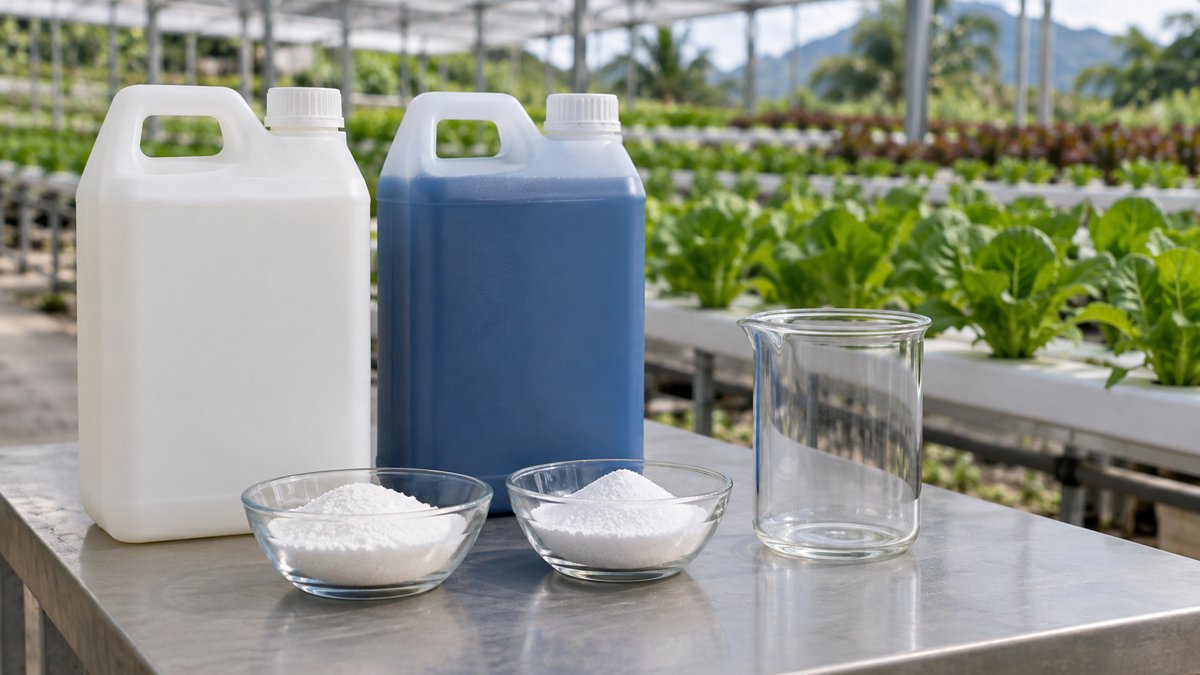
Concentrated stock A and stock B are prepared separately, then diluted into water to make the solution supplied to plants. UPM’s example distinguishes the concentrated stocks from the final diluted nutrient solution [source]. Two stock containers do not necessarily mean two final-feed tanks. Follow the product instructions and your system layout; keep a record of what was mixed and any monitoring readings you use.
What should a single-fertilizer product label tell you?
A single fertilizer ingredient is not automatically a complete nutrient formula. The Department of Agriculture’s ginger fertigation package describes A/B formulas made from soluble single-fertilizer sources. When comparing a ready-mix, one-part product or A/B set, check whether it is concentrated stock or ready-to-use solution, which crop or system the label names, how dilution works and whether every required component is included. Compare the cost of preparing the final solution using the product’s own directions, not the price of one bottle alone.
For imported fertilizer, the cited KPKM import page describes a Certificate of Analysis (CoA) requirement for each consignment [source]. A cited market report described fertilizer prices as having risen by more than 120% since 2025 and projected that prices could reach RM350 per 25 kg bag [source]. Treat those dated source claims as market context, not today’s quote for your product.
What makes a fertilizer suitable for fertigation?
Check that the product is fully soluble and that its instructions fit your system. A product that settles can obstruct pipes or emitters. Organic matter added to growing media is a separate practice; the cited review discusses soil-enzyme activity and nutrient cycles [source], but it does not replace the nutrient solution delivered through the tank.
Practical tank habits include measuring rather than guessing, keeping the tank covered, mixing as instructed, and cleaning the system regularly. A specific product’s cleaning or storage directions take priority over a generic routine.
A simple home hydroponic setup
A small bottle or container can serve as a first reservoir, but the same checks still matter: use clean water, measure a soluble nutrient product according to its label, and observe how the plants respond. Start with a small number of plants and keep notes before expanding. This is general system guidance, not a crop-specific dose schedule; check the label and local Department of Agriculture advice for a crop programme [source].
Read also: A/B fertilizer for hydroponics and fertigation · Fertigation guide