
Mustard Greens & Mustard Seeds Guide: Botanical Tree Myth, Sowing & Home Growing
Decision details
Fits if: Home gardeners, hydroponic growers, and culinary enthusiasts seeking fast-growing leafy greens in Malaysia.
Main drawback: Do not let container potting soil dry out completely, as water stress triggers premature bolting and bitter leafy textures.
Compare: Botanical taxonomy distinction, seedling emergence speed, organic compost enrichment, and rapid crop turnover.
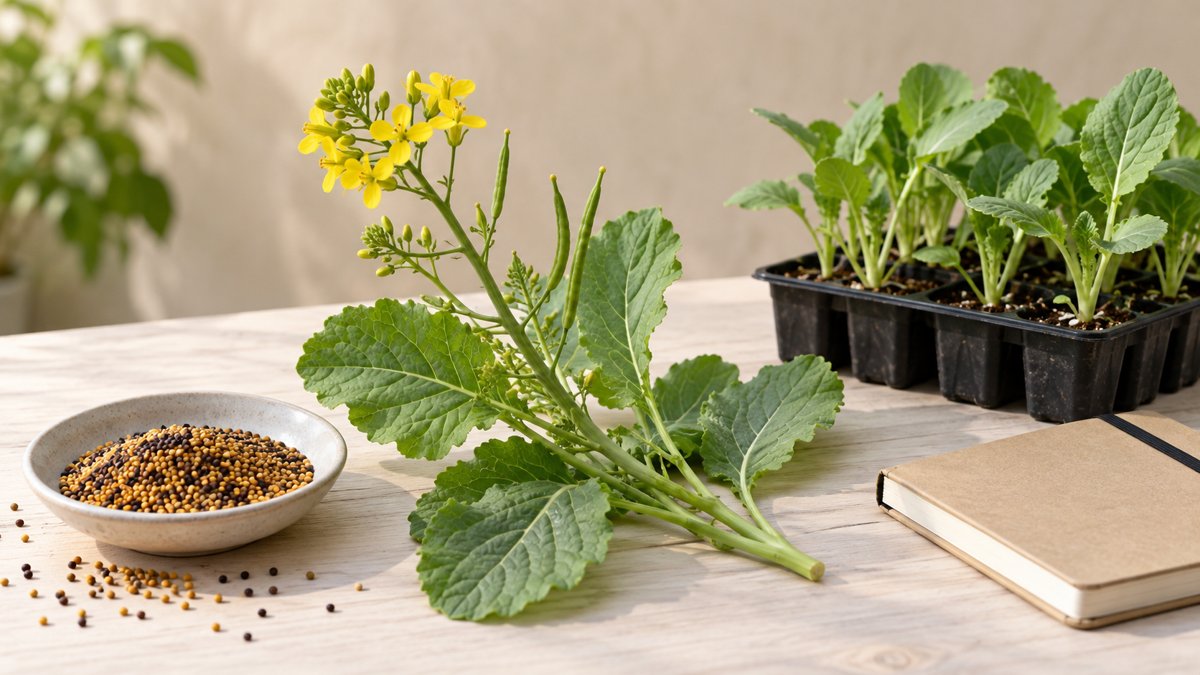
biji sesawi dan pohon sesawi
Clarifying the botanical identity of mustard seeds, distinguishing historical metaphors from horticultural reality, and mastering container cultivation:
- Botanical Identity of Mustard (Brassica): Agricultural mustard seeds (biji sesawi) originate from annual herbaceous plants such as black mustard (Brassica nigra), brown Indian mustard (Brassica juncea), or white mustard (Sinapis alba). Under favorable conditions, these plants develop into dense, branching herbaceous shrubs reaching 1 to 2 meters in height with bright yellow flowers, but they do not form true woody tree trunks.
- The ‘Mustard Tree’ Historical Metaphor: Ancient Middle Eastern parables describing the “tree of mustard” in which birds nest often refer to either overgrown wild Brassica nigra bushes or the Salvadora persica (the toothbrush tree / pokok kayu sugi), an unrelated evergreen desert shrub that produces tiny pungent seeds.
- Malaysian Sawi Cultivars: In the Malaysian agricultural context, the term sawi primarily refers to tender green vegetables:
- Sawi Hijau / Choy Sum (Brassica rapa var. parachinensis): Slender stems with yellow flowers, perfect for quick stir-fries.
- Sawi Pak Choy / Bok Choy (Brassica rapa subsp. chinensis): Thick, spoon-shaped white or light green crunchy stalks.
- Sawi Pahit / Kai Choy (Brassica juncea): Pungent, mustard-flavored ruffled leaves prized for pickling (sayur masin) and duck soup.
- Step-by-Step Home Cultivation:
- Sowing: Sow seeds lightly in nursery trays using fine compost or coco-peat. Seeds sprout in 2 to 4 days.
- Transplanting: Move robust seedlings to polybags or raised garden beds spaced 15 cm apart after 10 to 12 days.
- Watering & Fertilizing: Maintain steady moisture. Apply balanced organic fertilizer or foliar nitrogen weekly according to 4R guidelines [source].
- Harvesting: Harvest by uprooting the whole plant or cutting outer leaves at 28 to 32 days before flowering occurs.
| Plant Category | Botanical Taxon | Growth Habit & Height | Key Use & Malaysian Context |
|---|---|---|---|
| Mustard Seed Plant (Sesawi) | Brassica nigra / juncea | Herbaceous annual bush (1–2 m) | Mustard seeds, spices, condiment oils |
| Malaysian Leafy Sawi (Choy Sum) | Brassica rapa var. parachinensis | Upright leafy green (20–35 cm) | Staple wok vegetable; harvested in 25–35 days |
| Desert Mustard Tree (Pohon Kayu Sugi) | Salvadora persica | Woody evergreen shrub/small tree (3–6 m) | Historical miswak tree; desert shrub |
Baca juga: hub baja · apa-saja-jenis-sawi-en · biji-sesawi-dan-pohon-sesawi
Frequently asked questions
Does the mustard seed grow into a large woody tree?
No, true mustard seeds (Brassica nigra or Brassica juncea) grow into vigorous herbaceous annual bushes reaching 1 to 2 meters high, while ancient references to 'mustard tree' typically describe Salvadora persica.
How long does sawi take to harvest from seeds in Malaysia?
Leafy sawi greens (choy sum and pak choy) grow extremely fast in Malaysia's tropical heat, reaching prime harvest readiness within 25 to 35 days after sowing.
Can sawi be grown in hydroponic or polybag systems at home?
Yes, sawi thrives in simple deep-water culture (DWC) hydroponics or in 10-liter polybags filled with compost and cocopeat under at least 4 to 6 hours of daily sunlight.