
Controlling Green Mustard Caterpillars & Oil Palm Black Bagworms Guide
Decision details
Fits if: For vegetable growers facing loopers and diamondback moth, and plantation handlers managing bagworm or nettle caterpillar outbreaks.
Main drawback: Biological controls need correct timing against larval stages; keep natural predators intact and avoid broad-spectrum sprays that reset the balance.
Compare: Pest species and larval stage, crop canopy condition, predator presence, and spray-to-harvest safety interval.
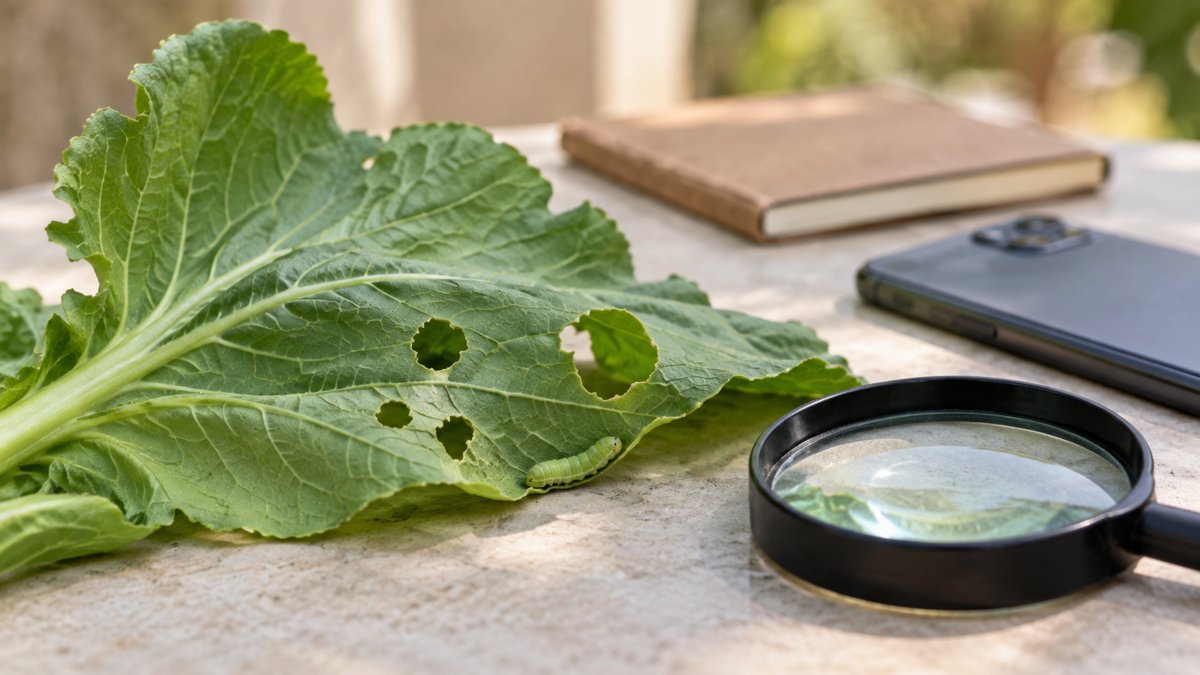
How to identify and control green caterpillars on mustard greens (sawi hijau)?
Smallholder vegetable growers frequently encounter green caterpillar infestations on Chinese mustard (sawi hijau), kailan, and pak choy. These larvae typically belong to the Diamondback Moth (Plutella xylostella) or Cabbage Webworm (Hellula undalis):
- Feeding Damage Symptoms: Young larvae scrape the underside of leaves, creating small translucent window panes before chewing irregular holes right through the leafy canopy.
- Biological Sprays with Bacillus thuringiensis (Bt): Spraying biological Bt formulations at dusk ensures that active larvae ingest the natural microbial protein while preserving predatory spiders and beneficial insects.
- Optimizing Soil Organic Health: Incorporating compost and balanced organic inputs promotes soil microbial and enzymatic activity, enhancing the plant’s natural immune defences against mechanical foliage damage [source].
| Pest Classification | Target Host Crop | Primary Damage Characteristic | Recommended Management Approach |
|---|---|---|---|
| Green Mustard Caterpillar (*Plutella*) | Sawi hijau, kailan, pak choy | Perforated leaf holes, damaged growing tips | Evening Bt spray, physical insect netting |
| Black Bagworm (*Metisa plana*) | Oil palm (*kelapa sawit*) fronds | Cone-shaped silk cases, skeletonized foliage | Trunk injection, beneficial nectar plants (*Turnera*) |
| Nettle Caterpillar (*Setora nitens*) | Oil palm canopy | Rapid leaf stripping, venomous stinging hairs | Biological microbial sprays, light trapping |
How to manage black bagworms and nettle caterpillars on oil palm (ulat sawit)?
In Malaysian oil palm estates and smallholdings, bagworms (Metisa plana) and black nettle caterpillars represent severe defoliation threats that demand systematic monitoring:
- Establishing Beneficial Nectar Plants: Planting Turnera subulata and Antigonon leptopus along roadside verges provides nectar sources that sustain parasitic wasps, naturally suppressing bagworm populations.
- Trunk Injection on Severe Outbreaks: When frond damage crosses economic threshold levels, registered systemic trunk injections provide targeted control without broadcast canopy spraying.
- Disciplined Palm Nutrition & Economics: Frond loss reduces photosynthetic capacity, compounding the impact of rising commercial input expenses [source]. Growers should maintain certified agronomic schedules and verified input standards [source], adhering strictly to the Department of Agriculture 4R nutrient principle (Right Source, Right Rate, Right Time, Right Place) [source] to accelerate canopy recovery.
Baca juga: hub baja · baja-sawit-emas-price · baja-sawit-yang-sesuai-untuk-tanah-gambut-en
Frequently asked questions
What is the most effective biological control for green caterpillars on mustard greens?
Applying Bacillus thuringiensis (Bt) sprays during the evening targets leaf-eating larvae without harming beneficial pollinators or leaving chemical residues on harvestable leaves.
Why are black bagworms and nettle caterpillars dangerous to mature oil palms?
Unchecked bagworm infestations can rapidly defoliate palm canopies, causing severe leaf loss that reduces fresh fruit bunch yields over consecutive harvesting seasons.