
How to Grow Sawi and Pak Choy in Malaysia: Planting Guide, Fertilizer & Cost Management
Decision details
Fits if: Commercial vegetable growers, smallholders seeking short-cycle cash crops, and home gardeners cultivating pak choy and mustard greens in raised beds or polybags.
Main drawback: Over-applying nitrogen fertilizer without adequate calcium or magnesium causes soft succulent leaves vulnerable to fungal leaf rot during heavy tropical monsoon downpours.
Compare: Seedling vigor in plug trays, soil organic matter and enzyme conditioning, 4R fertilization timing, and rapid 25-to-30 day harvest turnaround.
In this guide
cara tanam sawi pak choy
Leafy brassicas like sawi (mustard greens) and pak choy (bok choy) represent essential high-turnover vegetable crops across Peninsular Malaysia, Sabah, and Sarawak. Because these crops mature rapidly, proper soil preparation and precise fertilizer timing directly determine final market weight and crispness.
1. Seedling Nursery and Sowing
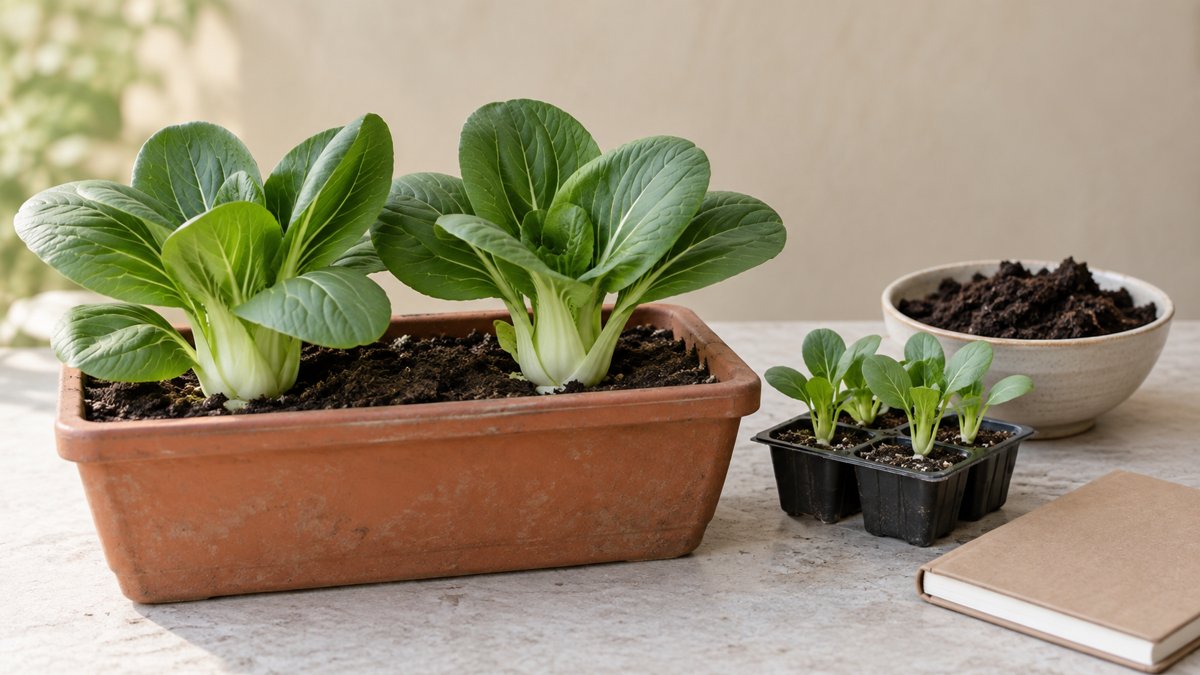
Start seeds in plastic plug trays containing fine peat moss or an aged organic potting mix. Sow one to two seeds per cell at a shallow depth of approximately 0.5 centimeters. Keep the nursery under 50 percent shade netting and water with a fine mist twice daily. Healthy seedlings develop three to four true leaves within 7 to 10 days and are ready for field transplanting.
2. Bed Preparation and Organic Conditioning
Construct raised planting beds 20 to 30 centimeters high and 1 meter wide with clear drainage furrows to prevent waterlogging during tropical thunderstorms. Incorporate well-rotted compost or animal manure into the top 15 centimeters of soil to enhance soil enzyme activity and water retention capacity [source]. If soil tests show high acidity, apply agricultural dolomite lime at least two weeks before planting.
3. Field Spacing and Transplanting
Transplant seedlings during late afternoon to minimize transplant shock. Space plants 15 to 20 centimeters apart within rows and 20 to 25 centimeters between rows. This spacing allows ample sunlight penetration, encourages compact rosette development, and maintains airflow to discourage foliar fungal infections.
4. Nutrient Application and the 4R Stewardship
Leafy vegetables require steady nitrogen for foliage development, balanced by phosphorus for root establishment and potassium for cellular firmness. In light of recurring chemical fertilizer cost increases, such as historical surges from RM95 to RM205 per mature compound bag [source] and recent market spikes over 120 percent [source], growers should adhere to the Malaysian Department of Agriculture 4R nutrient principle: Right Source, Right Rate, Right Time, and Right Place [source].
- Basal Dressing: Mix organic compost and a light dose of compound 15:15:15 into the bed before planting.
- Top Dressing (Day 7-10): Apply a light side-dressing of balanced NPK granules or a foliar spray along the root drip zone.
- Booster Dressing (Day 18-20): Repeat a small split dose to sustain vegetative bulk before harvest.
5. Irrigation and Weed Control
Sawi and pak choy possess shallow root systems that require consistent soil moisture. Irrigate using overhead sprinklers or drip tape early in the morning and late afternoon. Maintain shallow manual weeding around the base to prevent weed competition for soil nutrients.
6. Harvesting and Market Value
Harvest pak choy and sawi between day 25 and day 30 after transplanting, when leaves are crisp, dark green, and the base stems are firm. Harvest early in the morning by slicing at the soil level or uprooting with roots intact for washing. Fresh greens are traded daily across Malaysian wet markets and wholesale centers, where high-grade highland greens provide valuable benchmark returns [source].
| Growth Phase | Timeline (Days) | Key Technical Practice | Agronomic & Economic Purpose |
|---|---|---|---|
| Nursery Propagation | Day 0 – 10 | Sow in peat moss plug trays under nursery shade netting | Ensures uniform seedling germination and strong initial taproots. |
| Bed Preparation | Pre-Planting | Build 20-30 cm raised beds; incorporate compost | Activates soil enzymes and ensures optimal root aeration [source]. |
| Transplanting & Establishment | Day 10 – 12 | Plant at 15 x 20 cm spacing in late afternoon | Minimizes heat shock and establishes balanced canopy density. |
| 4R Vegetative Nutrition | Day 17 – 22 | Split application of compound 15:15:15 fertilizer | Prevents nutrient leaching while managing input costs [source] [source]. |
| Harvest & Market Distribution | Day 25 – 30 | Harvest whole heads before flowering stage | Secures fresh quality matching daily market standards [source]. |
Baca juga: hub baja · cara-tanam-sawi-pak-choy-en · sawi-kailan
Frequently asked questions
How many days does pak choy and sawi take from planting to harvest in Malaysia?
Pak choy and sawi have a fast turnaround of 25 to 30 days after transplanting 7-to-10 day-old seedlings into fertile, well-drained raised beds.
What is the best fertilizer routine for growing pak choy?
Incorporate well-composted organic matter into the beds prior to planting to activate soil enzymes, followed by split applications of balanced compound 15:15:15 fertilizer following 4R nutrient guidelines.
How can growers handle high chemical fertilizer prices when planting leafy vegetables?
Growers can reduce input dependency by recycling farm biomass, enriching soil with matured compost, and preventing nutrient leaching through split applications rather than single heavy doses.