
Types of Sawi (Mustard Greens): Malaysian Cultivars, Pest Control & Fertilizer Guide
Decision details
Fits if: Vegetable growers, urban farmers, and commercial market gardeners cultivating brassica greens across Malaysia.
Main drawback: Do not exceed recommended nitrogen feeding rates; combine physical insect mesh netting with organic matter to prevent pest surges.
Compare: Cultivar growth cycle, pest susceptibility, physical netting barriers, and cost-effective nutrient management.
In this guide
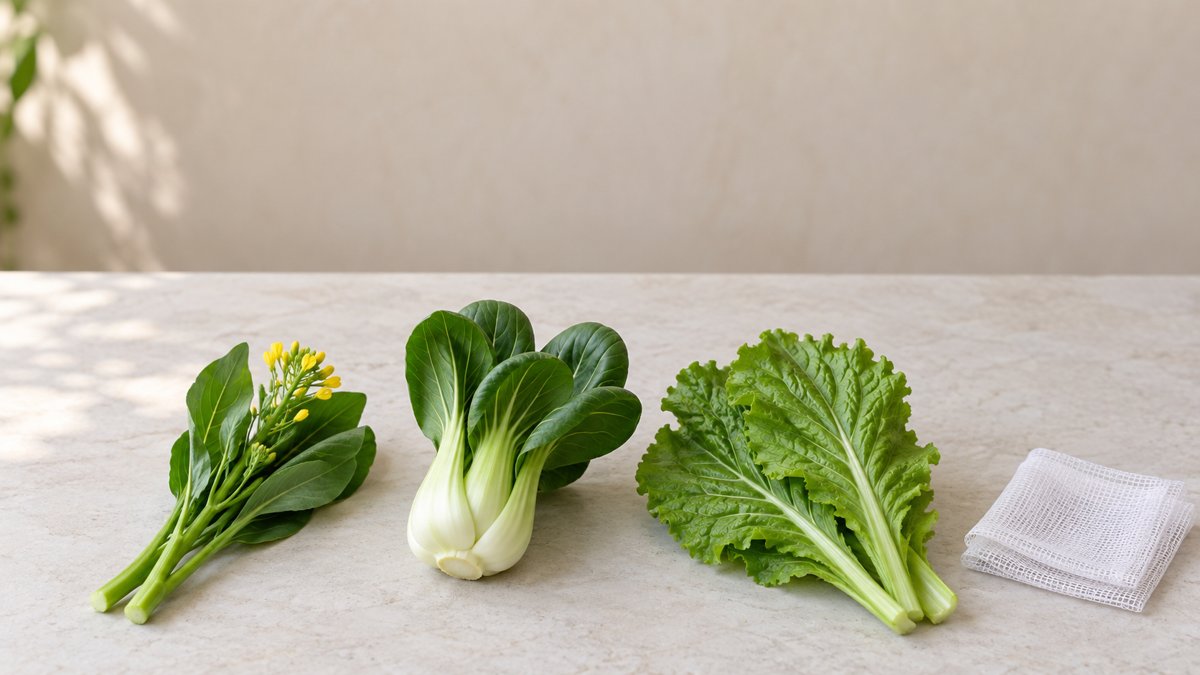
Types of mustard greens (sawi) cultivated in Malaysia: varieties and growth traits
Brassica leafy greens are among the fastest-growing commercial vegetables in Malaysia, suited for lowland open beds, rain shelters, and hydroponic systems:
| Cultivar Category | Key Morphological Traits | Harvest Cycle & Use | Pest & Cultural Management |
|---|---|---|---|
| Sawi Hijau (Choy Sum) | Erect stems, medium-green oval leaves, yellow floral buds at maturity | Fast cycle for stir-fry market; wholesale benchmark guide recorded at RM5.39 per kg for highland sawi [source] | Fine mesh insect netting to prevent flea beetle pinholes and stem borers |
| Pak Choy (Sawi Senduk) | Thick spoon-shaped succulent white or green petioles, compact rosette | Highly popular for quick cooking and urban hydroponic vertical setups | Incorporating organic compost to activate soil enzymes and fibrous root growth [source] |
| Sawi Pahit (Mustard Cabbage) | Broad crinkled leaves with distinct pungency, robust fibrous ribs | Used for salted vegetable pickling (sawi jeruk) and clear soups | Adhering strictly to Department of Agriculture 4R nutrient guidelines [source] |
| Sawi Bunga (Flowering Sawi) | Slender crunchy flowering shoots, tender leaves, sweet aftertaste | Premium restaurant demand with strict cosmetic grading standards | Managing farm input budgets prudently amid fertilizer price increases exceeding 120% [source] |
Common sawi foliar pests: flea beetles (kutu loncat) to caterpillars
The most damaging pest attacking young sawi beds is the flea beetle (Phyllotreta spp., locally known as kutu loncat). These tiny jumping beetles chew small circular “shot-hole” perforations across tender leaf surfaces, rendering greens unmarketable.
Other frequent pests include diamondback moth larvae (Plutella xylostella) and cluster caterpillars that feed voraciously on leaf undersides. Severe infestations during the early seedling stage can destroy entire nursery batches within days if left unmonitored.
Integrated cultural protection: physical netting and bio-controls
Sustainable management of sawi pests prioritizes non-chemical barriers and biological balance:
- Installing fine 32-mesh to 40-mesh insect netting over raised nursery beds to physically exclude adult flea beetles and egg-laying moths.
- Placing yellow sticky board traps along field perimeter walkways to monitor and reduce adult insect vectors.
- Spraying cold-pressed botanical neem oils or microbial formulations during early morning hours to disrupt larval molting.
Balanced fertilization and market price economics for leafy brassicas
Rapidly growing brassicas require steady nitrogen and potassium availability without excessive vegetative forcing. Excessive soluble nitrogen creates watery, thin-walled leaf cells that are highly attractive to sucking insects and prone to rapid post-harvest wilting.
The Department of Agriculture Malaysia emphasizes that applying more fertilizer does not automatically result in better crop performance, following the 4R framework of Right Source, Right Rate, Right Time, and Right Place [source]. With sharp fertilizer inflation pushing commercial fertilizer prices up by more than 120% [source], growers optimize margins by blending organic compost into the soil bed. Organic matter stimulates soil enzyme activity, such as cellulase and protease, promoting biological decomposition and steady nutrient uptake [source], ensuring consistent farm produce that commands official market benchmark prices such as RM5.39 per kg for highland sawi [source].
Baca juga: hub baja · biji-sesawi-dan-pohon-sesawi-en · apa-saja-jenis-sawi
Frequently asked questions
What are the main types of sawi grown in Malaysia?
Common varieties include sawi hijau (choy sum), pak choy (sawi senduk), sawi pahit (mustard cabbage), and sawi bunga.
How do growers control flea beetles (kutu loncat) on sawi without heavy chemicals?
Using fine mesh insect netting, yellow sticky traps, and biological neem formulations protects tender foliage effectively.
Why is balanced fertilization critical for fast-growing leafy greens?
Excess chemical nitrogen produces soft watery leaves that attract insect pests and shorten post-harvest shelf life.