
Nettle Caterpillars on Rambutan Trees in Malaysia: Pest Control, Trunk Diseases & 4R Fertilizer Guide
Decision details
Fits if: Commercial rambutan orchardists, tropical fruit smallholders, and residential backyard tree growers.
Main drawback: Do not brush against rambutan foliage with bare skin during caterpillar outbreaks; venomous setae cause acute dermatitis and painful burning swelling.
Compare: Pest monitoring frequency, selective biological spray timing, trunk moss scraping, and 4R balanced compound nutrition.
In this guide
What Is Ulat Api (Nettle Caterpillar) on Rambutan Trees and Why Is It Dangerous?
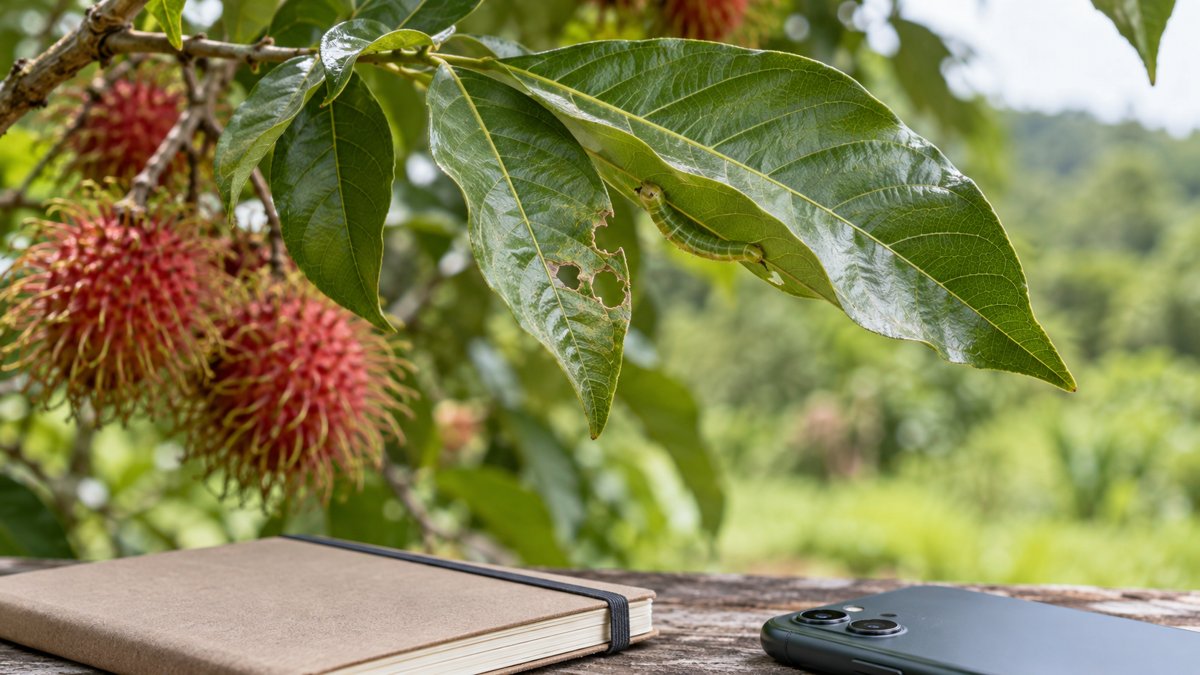
The term ulat api rambutan refers to stinging cup moth larvae of the family Limacodidae that inhabit tropical fruit trees across Peninsular and East Malaysia:
- Stinging Venomous Spines (Setae): Nettle caterpillars possess clusters of hollow urticating spines connected to subcutaneous venom glands. Physical contact fractures the spine tips, releasing acetylcholine and histaminergic toxins into the skin that cause sharp burning sensations, localized swelling, and dermatitis.
- Voracious Canopy Defoliation: Large populations can strip mature rambutan trees of their leaves within weeks, reducing photosynthetic capacity, stalling floral initiation, and exposing developing fruit to sunscald.
- Common Species Identified: Setora nitens (large slug caterpillar with bright green and blue dorsal markings), Darna trima (smaller dark brown slug caterpillar with orange stripes), and Thosea asigna.
Major Pests and Diseases of Rambutan Trees: Borers, Mildew & Pink Disease
Beyond stinging nettle caterpillars, rambutan orchards in Malaysia encounter several key phytosanitary challenges:
- Rambutan Fruit Borer (Conopomorpha cramerella): Tiny larvae bore into the fruit rind and feed around the seed aril, causing premature fruit drop and unmarketable clumping.
- Pink Disease (Corticium salmonicolor / Penyakit Cendawan Angin): Fungal infection forming a distinctive pinkish-white crust along branch forks during rainy seasons, eventually girdling the vascular bark and causing canopy dieback.
- Powdery Mildew (Oidium nephelii): Whitish powdery fungal coating covering flower panicles and young rambutan fruitlets, resulting in blackened, stunted, and distorted fruits.
Comparative Breakdown: Rambutan Pests, Pathogens & Integrated Field Treatments
Implementing precise diagnostic identification ensures targeted orchard treatments while preserving beneficial predators:
| Pest / Pathogen Threat | Affected Tree Structure | Visual Symptoms in the Orchard | Recommended IPM & Cultural Control |
|---|---|---|---|
| Nettle Caterpillar (Setora / Darna) | Foliage & young canopy flush | Leaves chewed to central midribs, stinging caterpillars on undersides | Foliar spray with Bacillus thuringiensis (Bt); conserve parasitoid wasps |
| Fruit Borer (Conopomorpha) | Developing rambutan fruit clusters | Entry pinholes near stalks, frass extrusion, premature fruit drop | Sanitize fallen fruit, prune canopy interior, hang pheromone traps |
| Pink Disease (Corticium) | Main branch forks & bark | Pinkish-white crust on bark, gum bleeding, branch dieback | Prune diseased limbs 10 cm below infection; brush with copper fungicide |
| Powdery Mildew | Flower panicles & young fruit | White powdery dusting, flower blighting, dark scarred fruit rinds | Apply sulfur-based foliar wash or potassium bicarbonate ahead of bloom |
| Leaf Spot & Anthracnose | Mature leaves & fruit tips | Concentric circular brown lesions with yellow chlorotic halos | Maintain open canopy airflow; apply bio-fungicide during wet spells |
Accelerating Canopy Recovery via 4R Nutrition and Soil Enzymes
Following pest defoliation or heavy fruiting harvest, rambutan trees require structured nutritional rehabilitation:
- DOA 4R Fertilizer Principles: Practicing the Right Source, Right Rate, Right Time, and Right Place [source] around the outer canopy dripline ensures prompt nutrient absorption without causing root fertilizer burn. Rationalizing chemical doses also shields growers from inflated input costs [source].
- Rhizosphere Enzyme Bio-Enhancement: Applying matured organic animal compost and microbial bio-fertilizers stimulates native soil enzyme mechanisms [source], unlocking insoluble phosphorus and improving moisture retention in orchard soils.
- Seasonal Fertilizer Staging: Post-harvest rehabilitation requires balanced NPK
15:15:15to drive new vegetative flushes, followed by high-potassium NPK12-12-17+2MgOduring pre-flowering and fruit swelling stages to maximize rambutan pulp sweetness and aril thickness.
Orchard Canopy Pruning and Worker Safety Checklist
To protect orchard workers and maximize annual rambutan yield:
- Protective Field Gear: Harvesters and pruning crews should wear long sleeves, heavy gloves, and wide-brimmed hats when entering orchards with known caterpillar presence.
- Canopy Aeration & Light Penetration: Prune water shoots (tunas air) and overcrowded interior branches annually to allow sunlight to penetrate the inner canopy, discouraging damp conditions favored by pink disease and mold.
- First Aid for Stings: If stung by ulat api, apply adhesive tape to extract broken spine fragments immediately, wash with soap and running water, and apply calamine lotion or an ice pack to soothe inflammation.
Baca juga: hub baja · harga-rambutan-1kg-sekarang-en · harga-rambutan-anak-sekolah-en
Frequently asked questions
What is 'ulat api' (nettle caterpillar) on rambutan trees and why does it sting?
Ulat api refers to limacodid moth larvae (such as Setora nitens and Darna trima) covered in venom-filled stinging spines (setae) that inject toxins upon contact, causing intense burning pain, redness, and skin blisters.
What are the common fungal diseases affecting rambutan trunks and fruit?
Major diseases include Pink Disease (Corticium salmonicolor) causing branch dieback with pink crusts, powdery mildew on young fruit clusters, and anthracnose leaf spot.
How should rambutan trees be fertilized after a caterpillar outbreak?
Apply balanced NPK with organic compost around the drip-line following DOA 4R guidelines to stimulate new flush leaves without causing excessive salt stress to the roots.