
How Long Does Cut Papaya Last in the Fridge? Storage Guide
Decision details
Fits if: Home cooks, meal preppers, and backyard fruit gardeners in Malaysia.
Main drawback: Refrigerating hard green papayas halts natural enzymatic ripening and causes chilling injury, while potted seedlings die quickly if overwatered.
Compare: Ethylene ripening speed, cold storage shelf life, hygienic cutting protocol, and soil drainage for seed germination.
In this guide
How to ripe papaya at home
Papayas are climacteric fruits that continue to ripen after being harvested, provided they are kept in a warm, ambient environment. Cold temperatures arrest the production of ripening enzymes and cause chilling injury, leading to rubbery flesh and lack of sweetness.
To accelerate ripening at home:
- Room temperature countertop placement: Place green or partially yellow papayas stem-down on a kitchen counter away from direct harsh sunlight. The ambient Malaysian warmth allows natural conversion of starches into sugars.
- Brown paper bag technique: Place the papaya inside a breathable brown paper bag and loosely fold the top. Papayas release ethylene gas as they mature; enclosing the fruit traps this natural plant hormone, cutting ripening time by half.
- Ethylene companion fruit: Adding a ripe banana, apple, or mango into the paper bag significantly boosts ethylene concentration, turning a firm green-tinged papaya into a fully golden fruit in one to two days.
- Assessing ripeness: The fruit is ready when eighty percent of the rind turns golden-orange and the skin yields gently to light thumb pressure near the stem.
How to prepare fresh papaya
Preparing papaya properly ensures clean flavor and prevents bitter enzyme transfer from the skin and seed cavity:
- Wash the outer rind: Rinse the exterior under cool running tap water to remove dust and surface debris before slicing, preventing knife contamination into the flesh.
- Trim both ends: Slice off a thin disc from the stem base and blossom top to create stable flat surfaces on your cutting board.
- Halve lengthwise: Cut the papaya straight down the middle from stem to base to expose the internal seed cavity.
- Scoop out seeds and placenta: Use a stainless steel spoon to gently scrape away all dark round seeds along with the pale fibrous inner membrane. Removing this pale lining is crucial because it contains concentrated carpaine alkaloids that cause bitter off-notes.
- Peel and portion: Either peel the skin off with a sharp chef’s knife while resting the flat half on the board, or slice the halves into boat wedges and slice the flesh away from the rind.
How to cut and store papaya
Proper post-cut storage prevents papaya from absorbing refrigerator odors and turning watery:
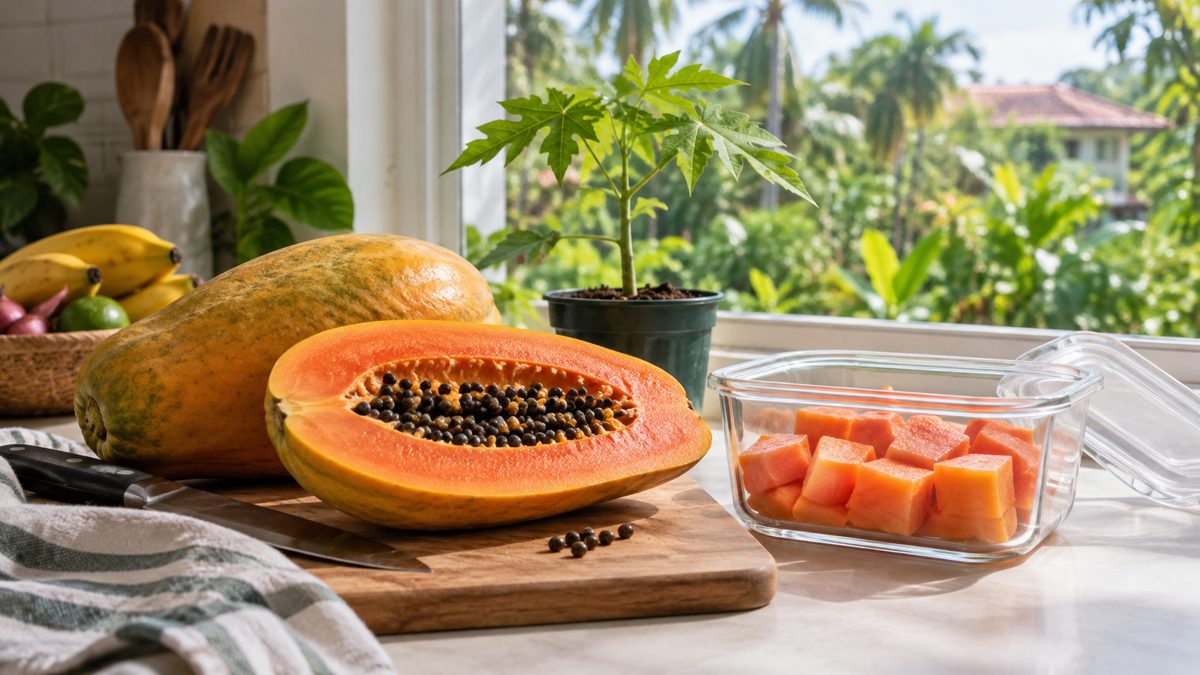
- Airtight food-grade containers: Place prepared cubes or slices into clean glass or BPA-free plastic containers with tight-sealing silicone lids.
- Moisture barrier paper lining: Place a clean dry paper towel at the bottom of the container or over the top of the fruit before sealing. Papaya releases surface juices after cutting, and absorbing this liquid keeps the bottom cubes firm instead of soggy.
- Citrus preservation: Lightly tossing the cut cubes with a tablespoon of fresh calamansi or lemon juice helps maintain bright fruit color, inhibits surface bacterial growth, and enhances natural tropical sweetness.
- Avoid open plate chilling: Storing cut papaya uncovered on an open plate in the fridge dries out the surface edges and causes rapid absorption of ambient odors like garlic and cooked food.
How long can papaya stay in refrigerator
The shelf life of papaya depends directly on whether the fruit is whole or sliced, and the stage of ripeness at the time of chilling:
| Fruit Form & Stage | Storage Location | Typical Fresh Shelf Life | Recommended Storage Protocol |
|---|---|---|---|
| Unripe green whole papaya | Room temperature counter | 3 to 7 days (until yellow) | Keep dry at ambient air; never refrigerate before ripening |
| Fully ripe whole papaya | Refrigerator crisper drawer | 5 to 7 days | Store whole and unpeeled to slow overripening |
| Cut slices / cubes in container | Refrigerator main shelf | 3 to 4 days | Seal in airtight container lined with paper towel |
| Half fruit with seeds intact | Refrigerator crisper | 2 to 3 days | Cover cut surface tightly with cling film; leave seeds in place |
| Frozen papaya puree / chunks | Deep freezer (-18°C) | 2 to 3 months | Flash-freeze on tray then store in freezer bag for smoothies |
If refrigerated cut papaya develops a sour alcohol odor, slippery surface slime, or brown liquid pooling at the bottom, discard it immediately.
How to grow a papaya plant
Papayas are among the fastest-growing fruit trees in Malaysia, often flowering within six to eight months and yielding ripe fruit within ten to twelve months from seed:
- Seed collection and cleaning: Scoop dark, mature seeds from a delicious ripe papaya. Place seeds in a fine strainer under running water and rub them gently between your fingers to pop and wash away the translucent jelly-like outer coating (sarcotesta), which contains natural germination inhibitors.
- Drying and sowing: Spread washed seeds on paper towels in a shaded, ventilated spot for two days. Sow three to four seeds per nursery polybag filled with a 2:1 mix of topsoil and rich compost.
- Germination and sun exposure: Keep the seedling soil consistently moist but never soggy. Seeds sprout in ten to fourteen days under warm tropical conditions. Once seedlings reach fifteen centimeters with four true leaves, thin to the single strongest plant per pot.
- Field planting on raised mounds: Papaya roots rot rapidly in stagnant water. Transplant into an open area receiving full day sunlight, digging a hole enriched with organic compost and planting on a thirty-centimeter raised earth mound to ensure rapid surface drainage during monsoon downpours.
Baca juga: hub baja · how-to-know-if-papaya-is-bad-en · why-does-papaya-taste-so-bad-en
Frequently asked questions
How long does cut papaya last in the refrigerator?
Cut papaya stored in an airtight container with excess moisture removed stays fresh in the refrigerator for up to three to four days before softening and fermenting.
Can you ripen a green papaya by putting it in the fridge?
No, cold temperatures halt the enzymatic ripening process and cause chilling injury; green papayas must be kept at ambient room temperature until the skin turns mostly yellow.
How do you germinate papaya seeds from fresh fruit?
Scoop fresh seeds, rub away the gelatinous outer sarcotesta sac under running water, dry the seeds, and sow them in well-draining potting soil under warm tropical sunlight.