
How to Fix Okra: Troubleshooting Growth, Yellow Leaves, Tough Pods & Cooking Sliminess
Decision details
Fits if: Ideal for home growers, community gardeners, and allotment farmers cultivating lady's finger (bendi) in tropical Malaysian soils.
Main drawback: Never delay pod harvesting past the tender green stage; once pods develop fibrous ridges, the plant redirects energy toward seed maturation and halts new flowering.
Compare: Pod tenderness test (tips snap crisply), well-drained organic root beds, and 4R fertilizer stewardship.
In this guide
By applying organic soil conditioning to activate root enzymes and harvesting pods while tender, growers maintain vigorous multi-month pod production.
How to fix okra: diagnosing garden and kitchen problems
Resolving okra issues starts with pinpointing whether the defect originates in the soil, during growth, or during kitchen preparation. The matrix below outlines common symptoms and direct remedies:
| Problem Area | Visual Symptoms | Root Cause | Corrective Action |
|---|---|---|---|
| Harvest Quality | Woody, stringy pods that resist cutting | Delayed harvesting; pods overgrown | Pick pods small while tips snap cleanly |
| Kitchen Preparation | Excessive thick slime in stir-fries | Cutting wet pods; low cooking heat | Dry pods fully; sear quickly over high flame |
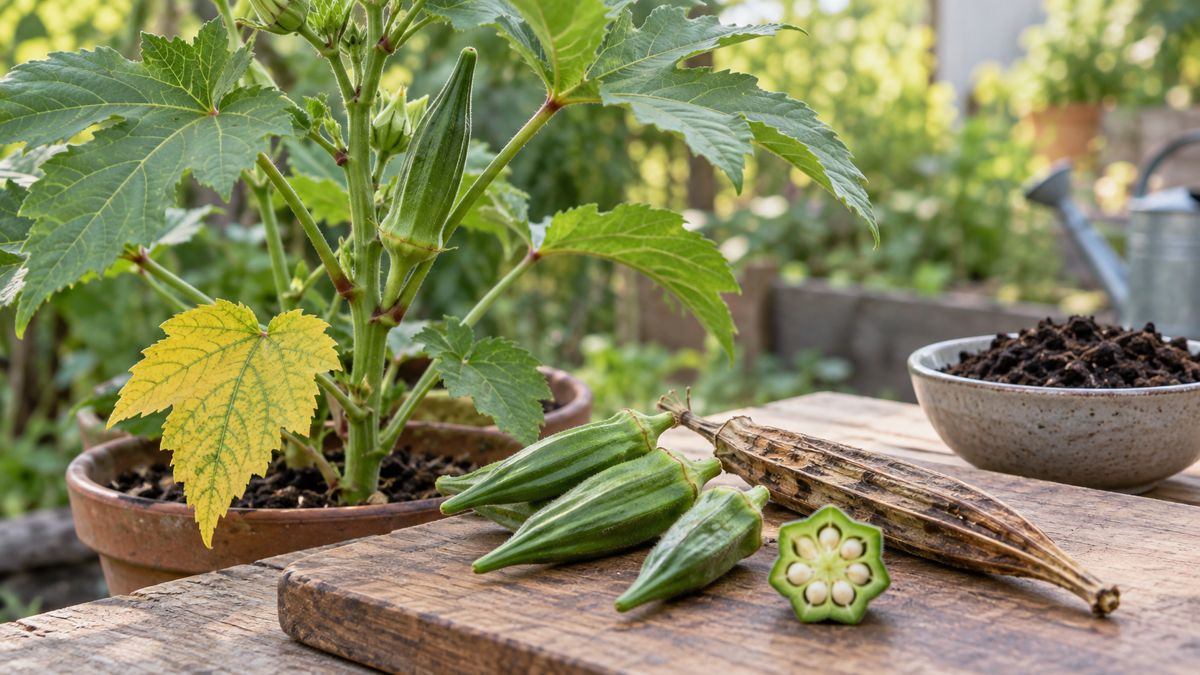
| Plant Foliage | Pale yellow lower leaves with stunted growth | Waterlogged soil or nitrogen shortfall | Aerate soil beds; apply cured organic matter [source] |
| Flowering & Yield | Drop in flower buds; bare upper stem | Over-mature pods left on branch | Strip old seed pods; apply balanced 4R nutrition [source] |
| Produce Freshness | Blackened tips, slimy skin, mold spots | Moisture trapped in refrigerator bag | Store dry in ventilated paper wrap |
How to tell if okra is bad
Fresh okra pods should feel firm, vibrant green, and snap crisply when the tip is bent. Signs that harvested okra has spoiled include:
- Surface Discoloration: Dark brown or black sunken patches along the ridges indicate fungal decay or cold injury from overly damp refrigeration.
- Slimy Exterior Texture: If the outer skin feels slippery or sticky before washing, bacterial breakdown has begun.
- Soft and Leathery Feel: Okra that bends completely without snapping has lost cellular turgor and developed internal breakdown.
- Off Odors: A sour, fermented smell indicates rotting tissue; discard these pods immediately.
Is okra slimy when cooked
Okra contains soluble mucilage composed of polysaccharides that release readily when plant cell walls are sliced and exposed to liquid. While this natural mucilage is prized as a thickener in traditional curries, soups, and stews, many home cooks prefer a crisp, slime-free texture.
To minimize slime in stir-fries and dry dishes:
- Keep Pods Completely Dry: Wash okra hours in advance and dry each pod thoroughly with a towel before cutting. Slicing wet pods instantly activates surface mucilage.
- Cook with High, Quick Heat: Flash-frying or roasting at high heat sears the cut surfaces and coagulates the mucilage before it spreads.
- Use Acidic Ingredients: Cooking okra alongside tamarind juice (air asam), diced tomatoes, vinegar, or calamansi lime juice breaks down mucilage strands chemically.
- Leave Pods Whole: When grilling or blanching for ulam, keep the stem cap intact to prevent moisture from entering the seed cavity.
Okra leaves turning yellow
Yellowing leaves (chlorosis) on okra plants typically indicate cultural stress rather than fatal disease:
- Drainage Stress and Root Suffocation: Heavy tropical rains can saturate compacted garden soil, depriving roots of oxygen. Elevating planting beds and blending coarse compost restores drainage.
- Nitrogen Deficiency: When older lower leaves turn uniformly pale yellow while upper leaves remain light green, the plant requires organic nitrogen. Incorporating cured compost stimulates soil enzyme activity—including protease and urease—which frees organic nitrogen for root absorption [source].
- Sucking Pests: Check the undersides of yellowing, curled leaves for whiteflies or aphids that sap plant sugars; wash off with mild horticultural soap sprays.
When does okra stop producing
Under equatorial growing conditions, okra is a prolific producer that continues flowering and fruiting across multiple months. Okra plants only stop producing when triggered by specific environmental or biological cues:
- Seed Maturation Feedback: If even two or three pods are left to mature and dry on the branch, the plant shifts its hormonal balance toward seed production and shuts down new flower formation.
- Root Exhaustion & Compaction: Over time, unmulched soil bakes and compacts under heavy rain, starving feeder roots.
- Severe Drought or Waterlogging: Extreme moisture fluctuations cause premature bud drop.
To extend the production cycle, harvest every two to three days and adhere to the Department of Agriculture Malaysia 4R nutrient stewardship framework (Right Source, Right Rate, Right Time, Right Place) [source].
Why is my okra tough
Tough, stringy okra is almost always the result of harvesting late rather than a defect in the plant variety. As okra pods expand beyond their optimal harvest window, lignin and tough structural cellulose rapidly deposit along the pod walls.
To ensure tender okra every harvest:
- Harvest by Length and Feel: Pick pods when they are short and tender to the touch.
- The Snap Test: Gently bend the tip of a pod while still on the plant; if it snaps crisply with minimal pressure, it is prime for eating. If it bends like rubber, it has turned fibrous.
- Frequent Picking: During peak summer growth, check plants daily because pods can transition from tender to fibrous within forty-eight hours.
Baca juga: hub baja · how-to-grow-and-care-for-okra-en · okra-plants-not-growing-en
Frequently asked questions
How do you fix tough, woody okra pods after harvesting?
Woody okra cannot be tenderized by boiling once fibrous structural cellulose hardens; repurpose tough pods in slow-simmered broths for flavor or harvest younger pods next round.
What is the best way to prevent okra from becoming slimy when cooked?
Wash and dry pods thoroughly before slicing, saute over high dry heat, or incorporate mild acidic ingredients like tamarind, tomatoes, or calamansi lime juice.
Why are my okra plant leaves turning yellow?
Yellowing lower foliage is typically caused by waterlogged roots or nitrogen deficiency; improve bed drainage and apply cured compost to stimulate beneficial soil enzyme activity.
When does an okra plant stop producing in Malaysian gardens?
Okra plants produce continuously for several months in tropical conditions as long as mature pods are harvested every few days and soil moisture is maintained.