
How to Grow Mango from Seed to Fast Sprouting in Malaysia: Husk Extraction, Potting & NPK Schedule
Decision details
Fits if: Commercial orchardists preparing rootstocks, Harum Manis and Chokanan enthusiasts, and home fruit gardeners.
Main drawback: Planting the entire intact fibrous husk slows germination by weeks and promotes internal fungal rotting; always extract the clean bean.
Compare: Embryo bean integrity during husk splitting, polybag soil porosity, sun acclimatization, and 4R nutrient adherence.
In this guide
How to extract the inner embryo bean from the mango seed husk?
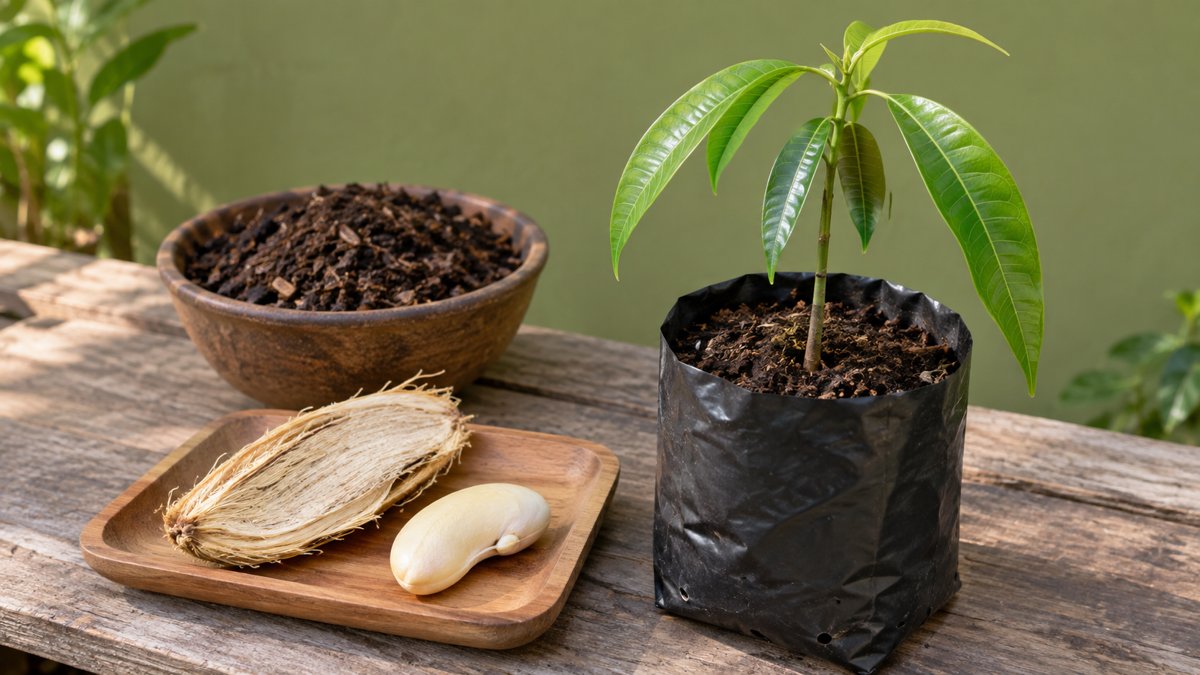
The hard, fibrous outer shell (endocarp) of a mango seed acts as a physical barrier that delays water penetration and encourages fungal mold. Removing the husk speeds up germination substantially:
- Pulp Cleaning:
- Scrape remaining fruit pulp off the seed using a kitchen brush, rinse under tap water, and allow the husk to dry in the shade for 12 hours so it is not slippery.
- Husking the Outer Shell:
- Carefully snip the thin concave edge of the fibrous husk using sturdy kitchen scissors or pruning shears, taking care not to nick the soft inner bean.
- Pry the two halves of the shell apart with your fingers and remove the kidney-shaped embryonic bean. Discard any shriveled, blackened, or insect-damaged beans.
- Pre-Soaking and Sprouting Wrap:
- Soak the healthy white or creamy bean in lukewarm water for 6 to 12 hours, or wrap it in a damp paper towel placed inside a sealed plastic container in a warm, shaded spot until the radicle root emerges.
How to pot mango seeds in polybags and manage nursery soil?
Once the root tip initiates growth, potting the mango bean into deep seedling containers ensures undisturbed taproot elongation:
- Deep Nursery Polybags: Mangoes produce long, vigorous taproots early. Use deep polybags (minimum 15cm x 30cm) to prevent taproot coiling at the bottom.
- Potting Media Composition: Combine 2 parts topsoil, 1 part cured organic compost, and 1 part coarse river sand or burnt rice hull to provide high aeration and drainage.
- Orientation and Planting Depth: Place the bean concave (curved arch) side facing upward, with the root tip pointing downward, buried approximately 2cm to 3cm below the soil surface.
- Shade and Watering: Keep the media evenly moist (never soggy) under partial nursery shade netting until green shoots and true leaves expand.
What is the stage-by-stage fertilizer schedule for young mango trees?
Young seed-grown mango seedlings require consistent compound nutrition to build sturdy main stems and healthy root structures:
| Growth Stage & Plant Age | Recommended Fertilizer Formulation | Dosage per Sapling | Application Timing & Placement |
|---|---|---|---|
| Potting Mix Basal Prep | Organic Compost + Rock Phosphate | 500g compost + 20g rock phosphate | Mixed thoroughly into polybag soil |
| Early Leaf Flush (M1–M3) | NPK 15:15:15 (Dissolved or granules) | 10g per polybag | Applied monthly 5cm away from seedling base |
| Active Vegetative Growth (M4–M8) | NPK 15:15:15 + Organic pellets | 25g NPK + 100g organic pellets | Every 6 weeks around container rim |
| Field Transplanting (M9–M12) | Compost + Dolomite + NPK 15:15:15 | 5kg compost + 100g NPK | Applied in 60x60x60cm field hole |
| Field Juvenile Tree (Year 2–3) | NPK 15:15:15 / NPK 16:16:16 | 250g–500g per tree | Split into 3 applications per year under dripline |
Polyembryonic vs monoembryonic mango seeds: True-to-type vs grafting
Understanding mango seed genetics helps growers anticipate fruit characteristics:
- Polyembryonic Cultivars (Chokanan, Harum Manis, Waterlily): Seeds contain multiple genetic embryos formed from maternal tissue (nucellar embryos). Seedlings grown from these seeds reproduce the exact sweetness, aroma, and fruit quality of the mother tree.
- Monoembryonic Cultivars (Indian & Western types): Contain a single zygotic embryo resulting from cross-pollination. Seedlings will vary in fruit taste and size, making them ideal as vigorous rootstocks for bud-grafting certified scions.
- Grafting Window: Seedlings grown from extracted beans reach the ideal pencil-thick stem diameter (8mm to 10mm) within 6 to 9 months, ready for cleft or top-wedge grafting.
Fertilizer input economics and quality assurance in Malaysia
With agricultural compound fertilizer prices climbing by more than 120%[source] and standard 25kg compound bags reaching RM350[source], orchard managers and nurserymen practice efficient resource utilization:
- DOA 4R Stewardship: The Malaysian Department of Agriculture advocates applying the Right fertilizer at the Right rate, Right time, and Right place, preventing costly leaching during heavy monsoonal rain events [source].
- Soil Microbial Activation: Mulching young tree basins with organic matter enhances microbial cellulase and protease enzyme mechanisms, fostering robust root rhizosphere biology [source].
- Market Price Awareness: Monitoring fruit market valuation through official benchmarks such as FAMA daily market guide prices helps growers evaluate the economic returns of cultivar cultivation [source].
By extracting the embryo bean, using deep well-drained polybags, and maintaining a disciplined NPK fertilization schedule, growers in Malaysia can achieve rapid seed germination and develop healthy, productive mango trees.
Baca juga: hub baja · mempelam · baja-khas-mangga-en · harga-mempelam-harum-manis-en
Frequently asked questions
How long does a mango seed take to sprout after husk extraction?
An extracted mango embryo bean planted in warm, moist potting soil sprouts vigorously within 7 to 14 days, compared to 4 to 6 weeks for an unopened seed.
Can a seed-grown mango tree produce sweet fruit identical to the mother tree?
Polyembryonic mango varieties (such as Chokanan and Harum Manis) produce true-to-type seedlings from nucellar embryos, while monoembryonic varieties vary and are best grafted.
What is the best fertilizer schedule for young seed-grown mango saplings?
Apply balanced NPK 15:15:15 granules every 4 to 6 weeks around the canopy dripline to encourage stem thickness and root development.