
Mangosteen Tree Caterpillar (Ulat Pohon Manggis): Pest Control & Orchard Care
Decision details
Fits if: Orchardists and smallholders cultivating mangosteen trees in Malaysia dealing with foliage damage or leaf-eating larvae.
Main drawback: Do not resort to indiscriminate chemical spraying that wipes out natural predators; focus on tree sanitation and disciplined fertilizer rates.
Compare: Pest identification, leaf loss evaluation, cultural and biological control methods, and soil fertility management.
In this guide
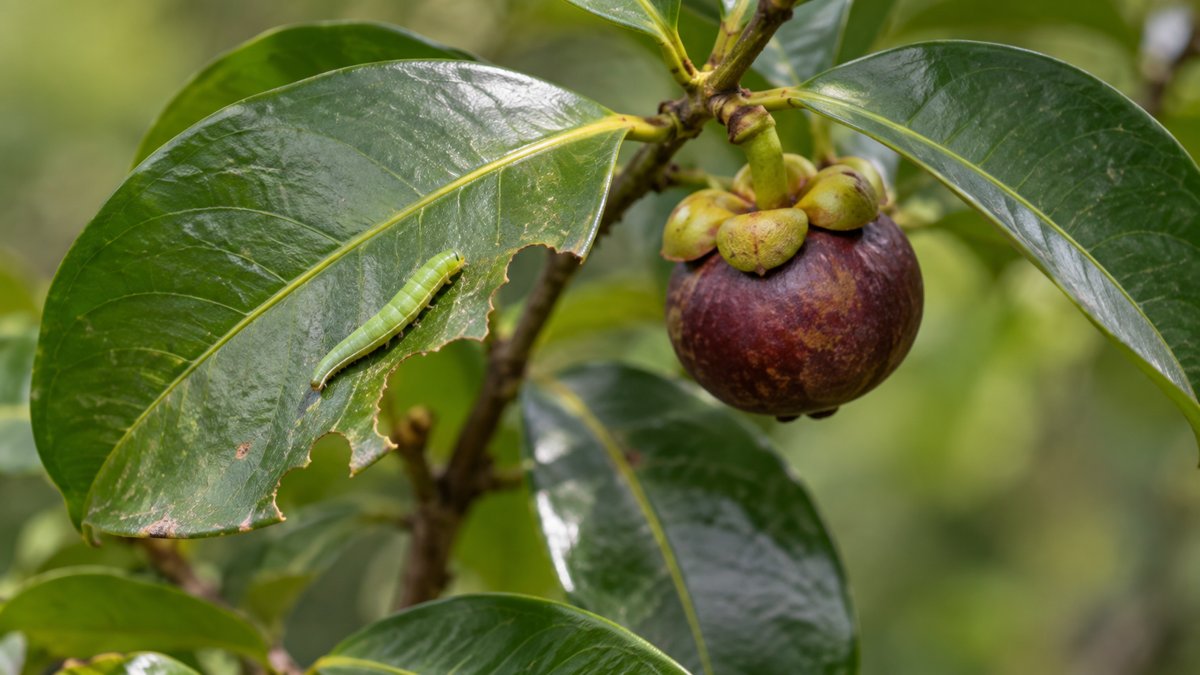
Mangosteen tree caterpillar (ulat pohon manggis): identification and leaf damage
Caterpillars feeding on mangosteen foliage belong primarily to moth families such as Stictoptera and leaf roller complexes. The larvae shelter on the undersides of young leaves or web terminal shoots together before feeding on tender leaf margins.
Typical signs of an active infestation include ragged leaf perforations, folded or rolled shoot tips, and fine frass pellets dropped beneath the tree canopy. Unchecked leaf damage on young trees delays vegetative development, whereas severe defoliation on mature trees impairs carbohydrate accumulation needed for consistent flowering.
| Tree Growth Stage | Field Symptoms & Pest Damage | Cultural & Physical Action | Nutrient & Soil Stewardship |
|---|---|---|---|
| Vegetative & Flush Stage | Chewed young leaf margins, curled shoot tips, visible feeding larvae | Manual crushing of egg masses and pinching off curled leaf clusters | Applying mature compost to enhance soil enzyme activity and fibrous root growth [source] |
| Flowering & Fruit Setting | Damage to floral bracts, leaves surrounding fruit clusters chewed | Canopy thinning to ensure adequate light penetration and lower humidity | Following Department of Agriculture 4R nutrient principles without excess dosing [source] |
| Fruit Maturation & Harvest | Superficial fruit scarring, foliage depletion near maturing fruit | Orchard floor sanitation and removal of fallen infested leaves | Balancing input expenditure amid fertilizer market price increases exceeding 120% [source] |
Common mangosteen pest and disease issues: yellow gumming to leaf blight
Beyond defoliating caterpillars, mangosteen trees frequently encounter physiological gamboge (yellow gum exudation) on fruit rinds, as well as fungal leaf blight during persistent monsoonal wet periods.
Effective preventive cultural practices include:
- Removing water sprouts and interior deadwood to facilitate rapid foliage drying after heavy downpours.
- Maintaining continuous soil moisture to minimize water stress fluctuations that trigger gamboge seepage.
- Mulching the root zone with organic matter to buffer soil temperature and encourage beneficial microbes.
Integrated orchard protection: canopy pruning and natural balance
Indiscriminate pesticide applications disrupt natural biological controls by killing predatory ants, spiders, and parasitic wasps that keep caterpillar populations in check.
A sustainable orchard protection approach involves:
- Conducting routine morning inspections of young flushes to intercept early larval broods.
- Installing physical sticky barriers around trunk bases to deter crawling pest vectors.
- Encouraging natural biological antagonists by preserving beneficial ground cover plants along inter-rows.
Mangosteen tree nutrition and soil enzyme stewardship
Rebuilding canopy foliage after caterpillar feeding requires disciplined agronomic management rather than aggressive fertilizer dumping. Heavy chemical fertilizer applications can elevate soil salt concentration and injure sensitive surface feeder roots.
The Department of Agriculture Malaysia emphasizes that applying more fertilizer does not automatically result in better crop performance, following the 4R framework of Right Source, Right Rate, Right Time, and Right Place [source]. With steep fertilizer cost inflation pushing prices up by more than 120% [source], smallholders benefit from integrating organic composts into their fertility programs. Mature organic amendments stimulate soil enzyme activity, such as cellulase and protease, facilitating organic matter breakdown and steady nutrient absorption [source], ensuring durable mangosteen tree recovery.
Baca juga: hub baja · harga-manggis-1-kg-malaysia-en · harga-manggis-sekilo-di-pasaran-en
Frequently asked questions
What are the main symptoms of caterpillar attacks on mangosteen trees?
Tender flush leaves show irregular chewed margins or skeletonized patches, often accompanied by silk webbing and curled foliage.
How can orchard owners reduce caterpillar infestations naturally?
Pruning congested water shoots improves canopy airflow, while physical collection of egg batches suppresses pest reproduction.
Can high doses of chemical fertilizer help mangosteen trees recover faster?
Applying excessive fertilizer risks root burn and nutrient runoff, contrary to established Malaysian agronomic guidelines.