
How to Grow Calamansi Lime from Stem Cuttings in Malaysia: Propagation, Potting & Fertilizer Guide
Decision details
Fits if: Best suited for home gardeners and commercial citrus growers seeking rapid fruit production in containers or orchards.
Main drawback: Protect young cuttings from waterlogging and extreme afternoon heat during the initial 4-week rooting phase; monitor for leaf miners and scale insects.
Compare: Stem cutting maturity, rooting medium aeration, humidity maintenance, and systematic 4R nutrient feeding.
In this guide
Step-by-Step Guide to Propagating Calamansi from Stem Cuttings
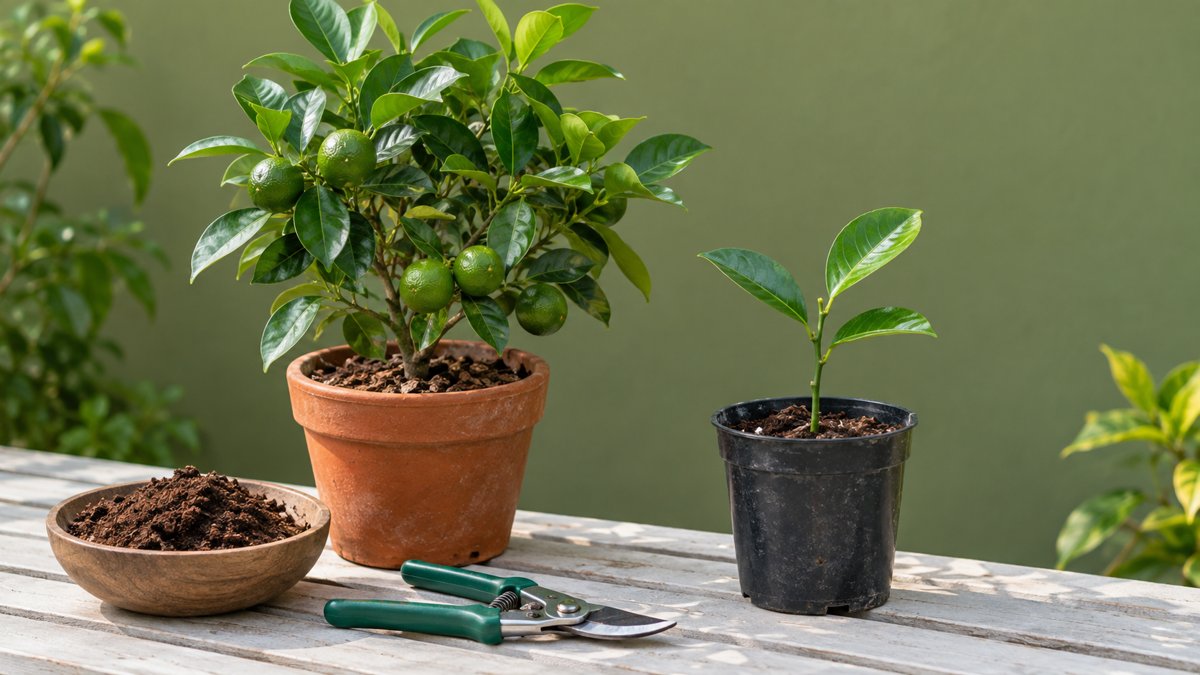
Propagating calamansi (Citrus microcarpa) from vegetative stem cuttings bypasses the prolonged juvenile phase of seed-grown plants.
Follow these proven steps for high rooting success:
- Selecting Cutting Material: Choose healthy, pest-free semi-hardwood branches that are brownish-green and about pencil-thick. Avoid soft green apical shoots or excessively woody older stems.
- Cutting Preparation: Cut a 15cm to 20cm stem section just below a leaf node at a 45-degree angle using sterilized pruning shears. Remove the lower leaves, retaining only 2 to 3 upper leaves cut in half to reduce transpiration.
- Hormone Dipping & Insertion: Dip the basal cut in commercial rooting powder (IBA) and insert 3cm to 5cm deep into a moist rooting substrate of washed river sand and cocopeat (1:1 ratio).
- Humidity Enclosure: Cover the potting pot with a clear plastic bag or inverted transparent bottle to maintain high relative humidity. Place in bright, indirect morning light away from scorching afternoon sun.
Roots emerge within 3 to 5 weeks. Once new green shoots show sustained growth, acclimatize the sapling over 7 days before outdoor transplanting.
Potting Mix Formulation and Container Management for Citrus
Potted citrus trees demand exceptional drainage and rich organic matter to thrive in tropical Malaysian conditions:
- Pot Sizing: Start rooted saplings in a 25cm container, upgrading to a 40cm to 50cm pot or heavy polybag (30 to 45 litres) as the tree expands.
- Substrate Blend: Mix 2 parts coarse topsoil, 1 part well-composted organic manure, and 1 part perlite or coarse sand.
- pH Balance: Maintain soil pH between 5.8 and 6.5. Amend with agricultural lime or dolomite if soil acidity inhibits root uptake.
Applying organic compost stimulates rhizosphere microbial flora and activates soil enzymes [source], enhancing natural phosphorus solubilization and micronutrient absorption.
Fertilizer Schedule and Micronutrient Care for Potted Limes
Citrus trees are heavy feeders requiring balanced macro and micronutrients throughout their flowering cycles. Following 4R nutrient stewardship (Right Source, Right Rate, Right Time, Right Place) formulated by the Department of Agriculture [source] optimizes tree productivity while minimizing waste amid fertilizer cost inflation of up to 120% [source].
| Tree Stage | Fertilizer Formulation | Dosage per Potted Tree | Application Frequency | Agronomic Goal |
|---|---|---|---|---|
| Transplant & Establishment | Compost + Basal Rock Phosphate | 1kg compost + 30g CIRP | Single potting application | Activates soil enzymes and root development [source] |
| Vegetative Growth (Months 2 - 6) | Balanced NPK 15:15:15 | 20g - 30g per pot | Monthly | Promotes lush canopy development per 4R [source] |
| Flowering Induction & Fruiting | High Potassium NPK 12:12:17+2MgO | 30g - 45g per pot | Every 4 - 6 weeks | Encourages bloom density, prevents fruit dropping |
| Trace Micronutrient Spray | Foliar Zinc, Boron & Magnesium | Diluted foliar spray | Every 2 months | Prevents leaf yellowing and interveinal chlorosis |
Pruning and Sunlight Management for Year-Round Fruiting
Calamansi trees require at least 6 hours of direct tropical sunlight daily to sustain uninterrupted flower bud initiation:
- Canopy Thinning: Prune internal crossing branches and vertical water shoots (suckers) growing from the base to improve airflow and sunlight penetration into the inner canopy.
- Pinching: Prune leggy branch tips after a major fruit harvest to stimulate multiple lateral fruiting spurs.
- Controlled Moisture Stress: Withholding water slightly for 3 to 4 days followed by deep watering and NPK 12:12:17+2MgO feeding triggers synchronized floral flushes.
Growing Pomelo and Honey Lime in Containers
In addition to calamansi, other citrus varieties like pomelo (limau bali) and honey lime (limau madu) can be container-grown in Malaysia:
- Pomelo in Large Tubs: Pomelo requires a larger container (minimum 60 to 80 litres) and severe canopy pruning to restrict tree height to 2.0 metres.
- Fruit Thinning: On young pomelo trees, thin fruit clusters to leave only 1 to 2 fruits per branch to avoid branch snapping.
Common Citrus Pests, Leaf Curl and Root Rot Prevention
Effective preventive pest management includes:
- Citrus Leafminer (Phyllocnistis citrella): Leaves display silvery serpentine trails and curl. Spray neem oil solution during early morning flushes when young leaves appear.
- Scale Insects & Aphids: Remove colonies with soapy water spray or horticultural mineral oil to prevent sooty mould development.
- Phytophthora Root Rot: Avoid keeping saucers filled with stagnant water underneath pots. Ensure pot drainage holes remain completely unobstructed.
Baca juga: hub baja · baja-limau-bali-en · baja khas limau
Frequently asked questions
How long do calamansi stem cuttings take to develop roots in Malaysia?
Semi-hardwood calamansi cuttings develop vigorous root systems within 3 to 5 weeks when kept in an aerated sandy medium under a plastic humidity tent.
Is growing calamansi from cuttings faster than growing from seeds?
Yes, stem cuttings inherit mature plant physiology and begin fruiting within 9 to 12 months, whereas seed-grown trees require 2 to 3 years.
What fertilizer promotes continuous flowering in potted lime trees?
Apply slow-release NPK 12:12:17+2MgO combined with organic compost and micronutrients (magnesium, zinc) per 4R guidelines to prevent chlorosis and flower drop.