
Why Are My Lettuce Seedlings Falling Over: Damping-Off, Leggy Stems & Prevention Guide
Decision details
Fits if: Home gardeners, urban balcony growers, hydroponic beginners, and nursery operators germinating salad greens in Malaysia.
Main drawback: Ensure seed trays have adequate drainage holes, provide bright indirect morning light immediately after germination, and avoid overhead heavy misting.
Compare: Sturdy upright hypocotyl stem, vibrant green cotyledon leaves, sterile porous seedling mix, and gentle bottom-watering.
In this guide
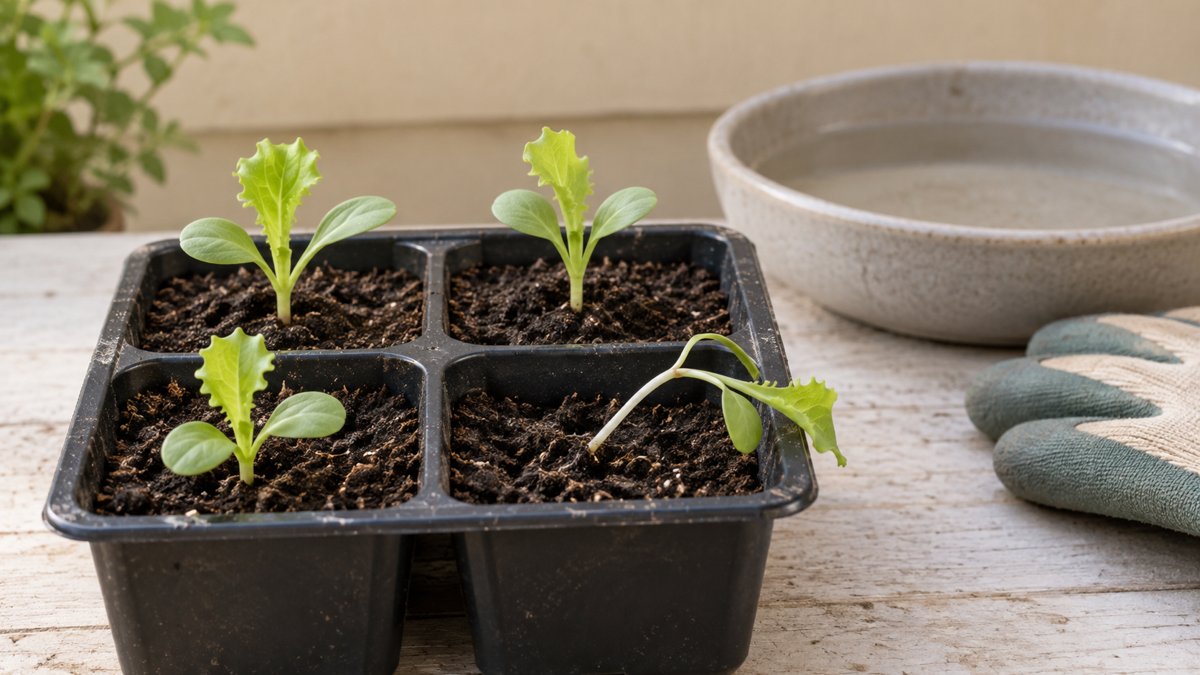
What causes young lettuce seedlings to fall over and flop in seedling trays?
Lettuce (Lactuca sativa) seeds germinate quickly, but early nursery stage management dictates whether seedlings grow into stocky transplants or collapse:
- Damping-Off Fungal Pathogens: Soil-borne fungi such as Pythium, Rhizoctonia, and Fusarium attack the tender stem tissue right at the soil surface. The stem becomes water-soaked, turns dark brown or thread-thin, and causes the seedling to collapse flat on the media.
- Etiolation from Insufficient Light: When germinated seedlings are kept in shaded areas or deep indoors, they stretch excessively toward light sources. This rapid elongation produces thin, pale, fragile stems incapable of supporting the expanding cotyledon leaves.
- Overwatering & Poor Tray Drainage: Saturated, soggy substrate suffocates developing root hairs, depriving them of oxygen and predisposing root cells to rot.
- Excess Heat Stress & Shallow Sowing: High tropical ambient temperatures combined with very shallow sowing can cause soil crusting and thermal stress around delicate root crowns.
How do seedling failure symptoms and remedial actions compare?
Diagnosing the exact root cause of seedling collapse determines the appropriate corrective measures:
| Observed Symptom | Probable Root Cause | Stem Condition & Appearance | Corrective Action Required |
|---|---|---|---|
| Soil-Line Pinching & Rot | Damping-off fungal infection | Constricted, dark brown, water-soaked base | Discard tray, sterilize containers, use sterile peat mix |
| Tall, Spindly, Leaning Stem | Etiolation (light deficiency) | Very long, pale white-green, upright stem | Move to bright indirect light, mound soil up to leaves |
| Wilting with Moist Soil | Root asphyxiation from waterlogging | Soft green stem, waterlogged roots | Improve drainage holes, allow top layer to dry |
| Apex Crispness & Heat Burn | Direct harsh afternoon sun exposure | Crispy leaf margins, collapsed green stem | Provide partial shading net during peak afternoon hours |
How can growers prevent damping-off and manage common lettuce pests?
Implementing strict nursery hygiene and pest monitoring safeguards delicate young transplants:
- Sterile Seed Starting Medium: Use commercial pre-sterilized peat moss or coco peat plugs rather than heavy garden topsoil, which often harbors fungal spores.
- Bottom-Watering Technique: Place seedling trays in a shallow basin of water for 10 to 15 minutes to allow upward capillary absorption, keeping the soil surface and seedling crowns dry.
- Air Circulation & Ventilation: Position a gentle oscillating fan near indoor seedling racks to stimulate stem thickness (thigmomorphogenesis) and prevent fungal spore settlement.
- Aphid & Snail Protection: Inspect the undersides of developing leaves for sap-sucking aphids and apply fine insect netting or physical barriers to deter garden snails.
What are the soil health and 4R nutrient guidelines for lettuce?
Once seedlings develop 4 true leaves and are transplanted into pots or raised garden beds:
- Soil Biology & Enzye Activity: Amending growing beds with well-cured compost introduces beneficial microorganisms that produce soil enzymes like cellulase and urease, accelerating organic matter breakdown and nutrient cycling [source].
- 4R Nutrient Stewardship: Apply balanced nutrients following the 4R protocol of the Department of Agriculture Malaysia—right source, right rate, right time, and right root placement [source].
- Avoid Nitrogen Overdose: Excessive quick-release synthetic nitrogen causes rapid, watery leaf expansion susceptible to tipburn and pest attack.
With commercial fertilizer market costs up by more than 120% [source], combining organic compost with balanced compound fertilizer 15:15:15 or liquid seaweed foliar spray offers high economic efficiency. Quality seed varieties (Romaine, Butterhead, Green Coral), seedling plug trays, and organic potting mixes are available from verified sellers on Shopee [source].
Baca juga: hub baja · why-are-my-lettuce-seedlings-falling-over-en · how-to-plant-lettuce-seeds-in-pots-en · romaine-lettuce-in-malay-en
Frequently asked questions
Why do lettuce seedlings suddenly pinch at the soil line and collapse overnight?
This classic symptom of damping-off is caused by soil-borne fungal pathogens (*Pythium* or *Rhizoctonia*) thriving in waterlogged, poorly ventilated seedling trays.
Can collapsed or leggy lettuce seedlings be saved and recover?
Seedlings afflicted with fungal damping-off cannot recover and should be discarded, while leggy seedlings with intact stems can often be rescued by gently mounding loose soil around the stem and increasing light exposure.
How much sunlight do newly germinated lettuce seedlings need?
Seedlings require 4 to 6 hours of bright, diffused sunlight or dedicated LED grow lighting to prevent them from stretching toward distant light sources.