
How to Grow Chayote and Squash in Pots in Malaysia: Trellising, Soil Mix & Fertilizer Guide
Decision details
Fits if: Ideal for Malaysian home growers and smallholders with limited ground space seeking high-yield vine vegetables.
Main drawback: Requires vigorous vertical trellising, consistent moisture without waterlogging, and balanced potassium during fruit set.
Compare: Container volume, drainage efficiency, trellising stability, and adherence to 4R nutrient application.
In this guide
How to Sprout and Plant Chayote (Labu Siam) in Pots
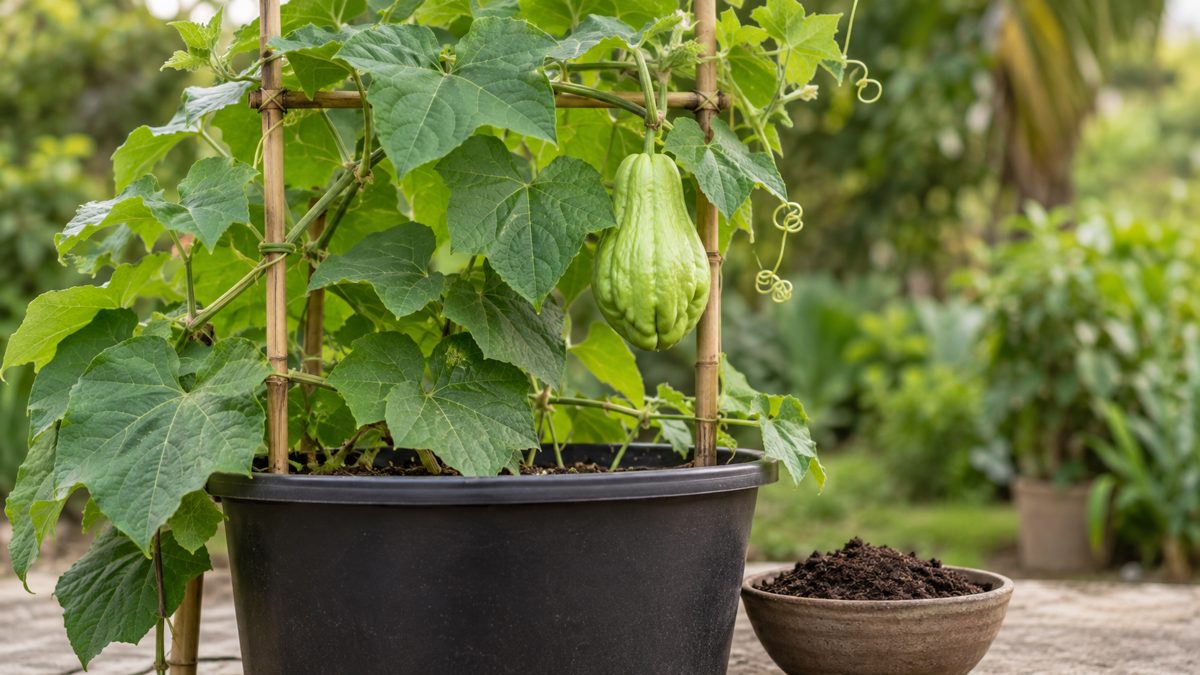
Chayote (Sechium edule), locally known as labu siam or sayur jepun, is unique because it propagates from the whole mature fruit rather than isolated individual seeds.
To establish container chayote successfully:
- Fruit Selection: Choose a firm, mature green chayote with visible furrowing at the bottom where the embryonic shoot emerges.
- Pre-Sprouting: Keep the fruit in a cool, shaded indoor spot for 1 to 2 weeks until the green sprout reaches 5cm to 10cm in length and root nubs appear.
- Potting Placement: Fill a large planter with moist potting mix. Lay the fruit at a 45-degree angle with the sprouted apex pointing upwards, leaving the top half of the fruit exposed above the soil line to prevent fungal rotting.
Potting Mix Formulation and Container Selection
Because cucurbit vines develop extensive feeder root networks, small decorative pots lead to rapid root binding and moisture stress under midday Malaysian sun.
The recommended container setup includes:
- Container Volume: Heavy-duty fabric grow bags or rigid plastic containers holding at least 40 to 50 litres (minimum 40cm depth and diameter).
- Soil Formulation: A loose, well-aerated blend of 2 parts fertile topsoil, 1 part washed cocopeat, and 1 part well-rotted compost or vermicompost.
- Drainage Layer: Drill extra drainage holes along the lower container base to ensure free drainage during heavy tropical rainstorms.
Adding bio-organic compost activates indigenous microbial populations and soil enzyme mechanisms [source], ensuring efficient nutrient uptake throughout the extended harvest period.
Trellising and Pruning Techniques for Container Vines
Chayote is a vigorous climber whose tendrils can easily cover 3 to 5 metres of canopy space within months.
- Vertical Trellis Construction: Erect a robust A-frame trellis, overhead wire mesh, or bamboo pergola at least 1.8 to 2.0 metres high securely anchored inside or beside the pot.
- Lateral Shoot Stimulation: Once the main vine reaches 1.5 metres along the trellis, pinch the leading apical tip. This encourages productive secondary and tertiary side laterals where female flowers develop.
- Lower Defoliation: Regularly trim yellowing lower leaves near the soil surface to improve air circulation and prevent fungal spore buildup.
Fertilizer Schedule and 4R Nutrient Management for Squash
Container vegetables exhaust substrate nutrients rapidly. Implementing the 4R nutrient stewardship principles (Right Source, Right Rate, Right Time, Right Place) formulated by the Department of Agriculture [source] maximizes fruit yield while curbing input expenses during fertilizer price spikes of up to 120% [source].
| Growth Stage | Nutrient Formula / Type | Application Rate per Pot | Frequency | Agronomic Focus |
|---|---|---|---|---|
| Pot Media Preparation | Organic Compost + Rock Phosphate | 2kg compost + 50g CIRP | Single basal application | Establishes root rhizosphere enzymes [source] |
| Vegetative Vine Growth (Weeks 2 - 6) | Balanced NPK 15:15:15 | 15g - 20g per pot | Every 2 weeks | Promotes vigorous vine and tendril growth per 4R [source] |
| Flowering & Fruit Set (Weeks 7+) | High Potassium NPK 12:12:17+2MgO | 25g - 30g per pot | Every 10 - 14 days | Prevents flower drop and boosts fruit swelling |
| Continuous Harvest Maintenance | Compost Top-Dress + NPK 12:12:17 | 1kg compost + 20g NPK | Monthly | Maintains long-term vine stamina amid inflation [source] |
Growing Butternut Squash and Bottle Gourd from Seed
Beyond chayote, other popular climbing gourds such as butternut squash (labu madu) and bottle gourd (labu air) thrive in Malaysian container gardens:
- Seed Germination: Sow seeds 2cm deep in seedling plug trays using peat moss. Germination occurs in 4 to 7 days.
- Transplanting: Move sturdy seedlings with 3 to 4 true leaves into the final 40-litre container.
- Hand Pollination: In urban balconies with low insect activity, hand-pollinate female flowers (identifiable by the miniature fruit behind petals) using fresh male pollen during early morning hours.
Pest Prevention and Common Container Growing Mistakes
Common challenges when cultivating squash in containers include:
- Fruit Fly Damage (Bactrocera cucurbitae): Bag developing young fruits with breathable non-woven sleeves immediately after flower petal drop.
- Powdery Mildew: Spray diluted baking soda solution (5g per litre of water) or horticultural neem oil during cool late afternoons.
- Water Management: Avoid letting potting media dry out completely, which causes blossom end rot and fruit splitting upon re-watering.
Baca juga: hub baja · baja-mali-knindza-labude-en · gemilang-baja-labuan-en
Frequently asked questions
What pot size is needed to grow chayote (labu siam) in Malaysia?
Use a pot or heavy-duty polybag of at least 40cm to 50cm diameter (40 to 50 litres) with multiple drainage holes to support deep root expansion.
How do you sprout a whole chayote fruit for planting?
Select a mature, unblemished chayote showing an emerging sprout at the base, and place it at a 45-degree angle half-buried in moist potting mix.
What fertilizer is best for container-grown squash and gourds?
Apply balanced organic compost with NPK 15:15:15 during early vine development, switching to NPK 12:12:17+2MgO during flowering and fruiting per 4R principles.