
Malaysian Iced Coffee (Kopi Ais) Pricing & Coffee Tree Farming: Kopitiam Tiers, Formats & Soil Nutrition
Decision details
Fits if: Coffee consumers, beverage stall operators, home baristas, and Liberica/Robusta coffee tree growers across Malaysia.
Main drawback: Beware of low-quality blended coffee powders containing excessive cereal fillers when calculating beverage cost per cup.
Compare: Roast bean origin, condensed milk ratio, packaging convenience, coffee berry borer pest management, and balanced NPK fertilizer schedules.
In this guide
What is the typical market pricing for iced coffee (harga kopi ais) across Malaysian outlets?
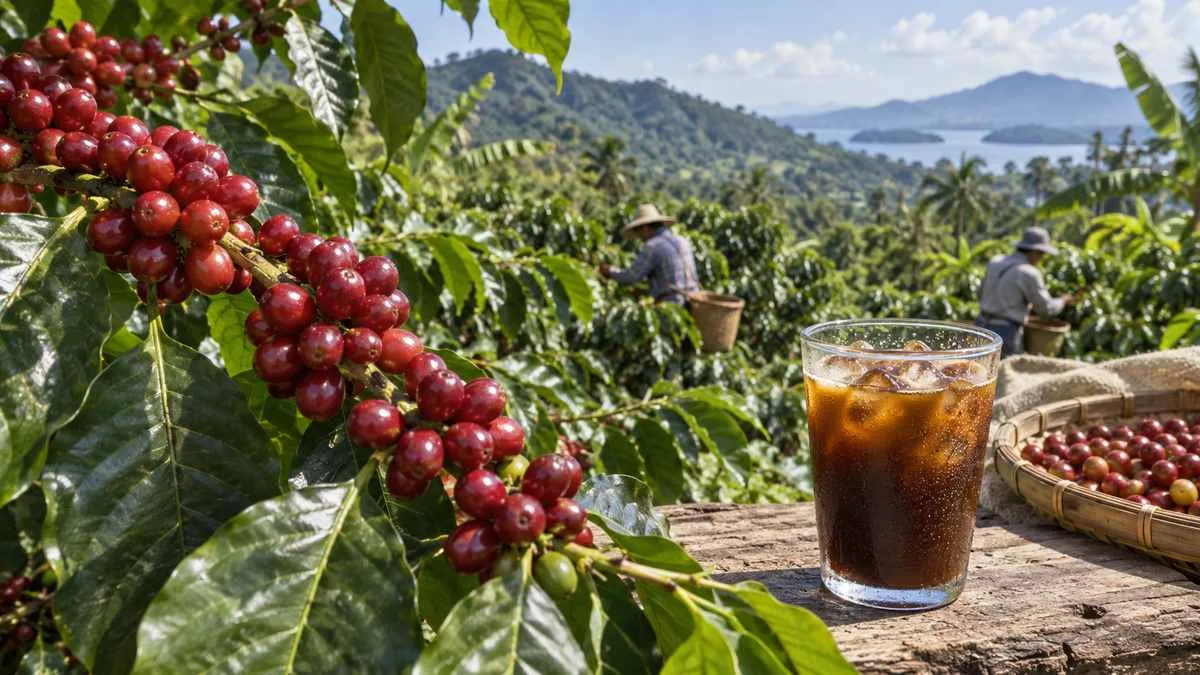
A classic glass of Malaysian kopi ais—freshly brewed dark-roasted robusta coffee extracted through a cloth filter sock, blended with condensed milk and evaporated milk, and served over crushed ice—is a daily cultural staple:
- Neighborhood Kopitiams & Food Stalls: Traditional warungs and coffee shops serve entry-level, pocket-friendly cups that provide accessible daily refreshment.
- Kiosk & Takeaway Chains: Modern grab-and-go kiosk brands occupy an intermediate casual price tier, combining dark-roasted Vietnamese or regional beans with sealed takeaway cups.
- Specialty Cafes & Espresso Bars: Air-conditioned cafes feature single-origin espresso-based iced coffees at a premium price point, reflecting higher retail overheads and specialized extraction equipment.
- Home Brewing Economy: Purchasing traditional ground coffee powder in bulk or multipack dipping bags (kopi uncang) reduces the cost per serving to a fraction of shop prices.
How do packaged coffee brands and retail formats compare in Malaysia?
Malaysian grocery shelves and e-commerce platforms offer diverse ground roasts, instant mixes, and wellness blends:
| Coffee Brand / Category | Packaging Format | Primary Channel | Market Segment & Role | Value Assessment |
|---|---|---|---|---|
| Kopitiam Fresh Kopi Ais | Prepared glass / takeaway cup with ice | Warung, kopitiam, food court | Ready-to-drink daily staple | Highest daily convenience; low ready-to-drink cost |
| Traditional Ground (e.g. Cap Gantang) | Loose coarse-ground powder pouch | Sundry shops, local markets, Shopee | Regional northern heritage roast | Economical volume staple for home filter pots |
| Fine-Ground Robusta (e.g. Kapal Api) | Fine powder sachet / 3-in-1 pack | Supermarkets, grocery stores, Shopee | Everyday unfiltered robusta staple | Accessible pricing; consistent bold dark brew |
| Functional Herbal Coffee (e.g. JRM) | Boxed single-serve sachets | Authorized stockists, online stores | Botanical wellness formulation | Premium specialty tier reflecting herbal extracts |
| Imported Freeze-Dried (e.g. Moccona) | Glass jar (various roast intensities) | Hypermarkets, modern grocers | Premium instant black coffee | Upper grocery tier; economical cost per cup |
What agronomic and pest management practices protect local coffee plantations?
Cultivating local Liberica and Robusta coffee trees in Malaysia requires proactive canopy and pest management:
- Coffee Berry Borer (Hypothenemus hampei): Female beetles bore into the tip of ripening coffee cherries to lay eggs, destroying bean embryos. Regular sanitation, collecting fallen mummified berries, and deploying ethanol-baited traps keep pest populations low.
- Canopy Pruning & Sunlight Penetration: Pruning dead twigs, water shoots (chupons), and overcrowded foliage allows sunlight to reach main flowering nodes and discourages sooty mold fungi.
- Organic Matter Recycling: Composting discarded coffee pulp and husks and spreading them beneath tree canopies recycles vital potassium and enhances soil enzyme mechanisms [source].
What fertilizer practices sustain healthy coffee trees and heavy cherry yields?
Productive coffee trees extract substantial nitrogen and potassium from the soil to develop plump, high-density cherries:
- DOA 4R Stewardship: Follow Department of Agriculture Malaysia 4R principles (Right source, Right rate, Right time, Right place) to ensure cost-effective nutrient uptake [source].
- Young Trees (Years 1–2): Supply balanced compound fertilizers such as
15:15:15in split quarterly applications to develop robust branching. - Mature Fruiting Trees (Years 3+): Transition to high-potassium compound fertilizers such as
12:12:17+2MgOduring flowering and berry swell to prevent premature cherry drop and optimize bean size.
Against widespread farm fertilizer cost inflation exceeding 120% [source], combining mature organic compost with targeted mineral fertilizers protects farm viability. Certified compound fertilizers, soil amendments, and pruning shears are readily available through verified merchants on Shopee [source].
Baca juga: hub baja · kopi-keluarga
Harga kopi ais
What is the standard harga kopi ais across Malaysian kopitiams and stalls?
A glass of classic Malaysian kopi ais—freshly brewed robusta coffee pulled through a fabric filter sock, sweetened with condensed milk and evaporated milk, and served over crushed ice—remains one of the most accessible daily beverages across the country. In neighborhood kopitiams, mamak stalls, and roadside food stalls, a standard glass is priced at an entry-level pocket-friendly rate, making it a reliable staple for breakfast and tea breaks.
When you order kopi o ais (black iced coffee with sugar only) or hot kopi o panas, the cost is slightly lower because it omits dairy ingredients. Conversely, specialty iced coffee drinks served at air-conditioned modern cafes, drive-through kiosks, and regional retail chains sit at a higher tier due to higher overheads, branded cup packaging, and specialized espresso extraction equipment.
For household consumption and small roadside stalls, brewing kopi ais at home or for bulk catering uses coarse-ground coffee blends roasted with sugar and margarine (kopi kampung style). Buying traditional coffee powder in bulk or standard retail packets keeps the cost per cup down to a fraction of shop prices, giving consumers high value for everyday refreshment.
How much is traditional Kopi Cap Gantang in the market?
Kopi Cap Gantang is a well-known heritage coffee brand originating from Alor Setar, Kedah. Renowned for its distinctive aromatic dark roast and traditional northern Malaysian kopitiam flavor profile, Cap Gantang remains a household favorite among those who appreciate rich, full-bodied black coffee and kopi susu.
In the retail market, Kopi Cap Gantang is available in several practical formats:
- Loose Ground Coffee (Serbuk Kopi Campuran): Packaged in recognizable yellow or red plastic bags, this coarse-ground mix is formulated for traditional cloth strainers and home coffee pots. It is priced as a high-value commodity staple, making it an economical choice for families and beverage stall owners.
- Coffee Bag Sachets (Kopi Uncang): Convenient dipping sachets packed in multi-piece pouches. These allow single-serve brewing without needing a separate strainer, priced slightly higher per gram than bulk powder to account for individual packaging.
- Kopi O Premix: Pre-sweetened 2-in-1 sachets designed for quick morning preparation.
You can readily purchase authentic Kopi Cap Gantang from sundry shops across northern Peninsular Malaysia, major supermarkets nationwide, and authorized merchant storefronts on Shopee.
What is the current market pricing for Kopi Kapal Api?
Kopi Kapal Api is a prominent regional brand originally from Indonesia that has established strong retail distribution across Malaysia. Known for its ultra-fine grind and bold aroma derived from selected robusta beans, Kapal Api caters to drinkers who prefer a strong, unfiltered brew (kopi tubruk) where the fine grounds settle naturally at the bottom of the cup.
The pricing of Kopi Kapal Api in Malaysia depends on the product line:
- Kapal Api Special / Special Mix: The flagship black coffee powder, sold in small single-serve packets as well as larger family bags. It sits firmly in the budget-friendly grocery category, offering accessible pricing for everyday caffeine needs.
- Kapal Api Kopi Susu & 3-in-1: Premixed instant sachets combining coffee, creamer, and sugar for instant preparation. These multi-sachet pouches provide convenience for workplace pantries and travel.
- Kapal Api Kaw / Grande Varieties: Enhanced blends featuring darker roasts or premium creamer formulations, positioned at a modest step above standard black coffee sachets.
Kopi Kapal Api products are widely available on Malaysian supermarket shelves, local neighborhood convenience stores, and online sellers on Shopee, providing consistent value across urban and rural markets.
What is the price and value of Kopi Ratu JRM by Jamu Ratu Malaya?
Kopi Ratu JRM, formulated by Jamu Ratu Malaya, occupies a specialized wellness and botanical herbal coffee segment. Unlike standard commercial ground coffee intended solely for daily caffeine intake, Kopi Ratu is marketed as a functional women’s health and vitality beverage infused with traditional herbal extracts, including ginkgo biloba, ginseng, bacopa monnieri, and black cohosh.
Because of these proprietary active ingredients and specialized food processing standards, Kopi Ratu is positioned at a premium price tier compared to conventional supermarket 3-in-1 coffees. Key details regarding its packaging and purchasing include:
- Packaging Format: Sold in boxes containing individual single-serve sachets, pre-portioned for daily hot or iced consumption.
- Distribution Model: Distributed through registered Jamu Ratu Malaya stockists, official wellness kiosks, and certified digital storefronts on Shopee.
- Value Proposition: Consumers buy Kopi Ratu for its combined herbal formulation, smooth creamy taste profile, and convenience, accepting the higher price per sachet in exchange for targeted botanical supplementation.
Buyers should always purchase from verified JRM agents and authorized digital shops to ensure product authenticity and proper batch freshness.
How do commercial chains and specialty brands compare in Malaysia?
The Malaysian coffee landscape has expanded rapidly beyond traditional kopitiam brews into a broad spectrum of commercial brands, ready-to-drink options, and premium imports. Consumers comparing prices across this landscape encounter several distinct tiers:
- Vietnamese-Style Iced Coffee Chains (e.g., Kopi Saigon): Offering rich, sweetened condensed milk iced coffee brewed with dark Vietnamese robusta, these kiosk-based brands provide accessible grab-and-go cups positioned comfortably between traditional roadside warungs and high-end international cafes.
- Contemporary Indonesian & Regional Chains (e.g., Kopi Kenangan): Serving contemporary iced coffee drinks sweetened with palm sugar (gula aren) and fresh milk, these lifestyle chains operate at a modern casual price band.
- Instant Premium & Freeze-Dried Coffees (e.g., Moccona): Imported freeze-dried coffee jars available in supermarkets offer smooth, aromatic black coffee for home preparation, sitting at an elevated jar price that translates to an economical cost per individual cup.
- Specialty Functional & Herbal Blends (e.g., Moringa Coffee): Formulations incorporating moringa leaf extract, spirulina, or traditional herbs target wellness-focused shoppers, priced similarly to premium functional beverage sachets.
- Ultra-Premium Rare Coffees (e.g., Kopi Luwak): Genuine civet coffee represents an ultra-luxury novelty category, commanding high prices per batch due to labor-intensive harvesting and limited global supply.
This wide array illustrates the barbell dynamics of the Malaysian coffee market [source], where high-volume commodity powders provide maximum daily affordability, while specialty functional and branded RTD beverages capture lifestyle and wellness demand.
Malaysian coffee price and format reference comparison
To help navigate the diverse options available across local grocery shelves, beverage stalls, and e-commerce platforms, the table below outlines the primary product categories, common packaging formats, retail distribution channels, and relative market tiers.
| Coffee Brand / Category | Common Packaging Format | Primary Channel | Market Segment & Role | Pricing & Value Assessment |
|---|---|---|---|---|
| Kopitiam Kopi Ais | Single freshly prepared glass / takeaway cup | Warung, kopitiam, food court | Ready-to-drink daily staple | Lowest ready-to-drink cost; high daily convenience |
| Kopi Cap Gantang | Loose ground powder bag / uncang sachets | Sundry shops, Shopee, local markets | Traditional northern roast staple | Budget commodity staple; economical for home brewing |
| Kopi Kapal Api | Fine ground pouch / 3-in-1 multi-packs | Supermarkets, hypermarkets, Shopee | Everyday robusta grocery staple | Accessible volume pricing; consistent daily brew |
| Kopi Ratu JRM | Box with pre-portioned single sachets | JRM authorized stockists, Shopee | Functional herbal botanical blend | Premium wellness tier; reflects herbal ingredients |
| Kiosk RTD Kopi Ais (e.g., Kopi Saigon) | Sealed plastic takeaway cup with ice | Shopping mall kiosks, street booths | Modern casual takeaway coffee | Mid-tier ready-to-drink; positioned between kopitiam and cafes |
| Imported Freeze-Dried (e.g., Moccona) | Glass jar (various roast profiles) | Hypermarkets, specialty grocers | Premium instant black coffee | Upper grocery jar tier; low cost per individual serving |
| Functional Blends (e.g., Moringa Coffee) | Multi-sachet boxed pouch | Health food retailers, Shopee | Herbal wellness supplement | Value-added specialty tier; barbell premium segment [source] |
Buying guide: choosing the right coffee format for your budget
Selecting the best coffee format depends on whether you prioritize instant speed, traditional flavor depth, or specific functional ingredients:
- For Everyday Family Consumption: Traditional ground roasts like Kopi Cap Gantang or fine-milled powders like Kopi Kapal Api offer maximum volume economy when brewed with a reusable filter pot or cloth sock.
- For Quick Workday Convenience: Pre-portioned dipping sachets (uncang) or quality 3-in-1 mixes eliminate the need for strainers while keeping preparation mess-free.
- For Targeted Lifestyle & Wellness: Functional botanical blends such as Kopi Ratu JRM or moringa coffee provide curated herbal extracts in measured single-serve portions.
- For Refreshment On The Go: Local kopitiams and street vendors deliver freshly pulled kopi ais at wallet-friendly prices without requiring home equipment.
When stocking up on packaged ground coffee or specialty wellness boxes, purchasing multi-packs from verified sellers on Shopee often secures bundle savings and guarantees reliable stock availability.
Frequently asked questions
What factors primarily determine iced coffee (kopi ais) prices in Malaysia?
Prices reflect the serving environment (neighborhood kopitiam vs air-conditioned cafe), bean roast blend (traditional margarine-roasted robusta vs premium single-origin), and packaging format.
What is the market difference between traditional kopitiam coffee and functional herbal blends?
Traditional ground coffee is an affordable volume commodity staple, whereas functional blends incorporate specialty botanicals like ginseng or moringa, occupying a premium wellness tier.
How should coffee growers fertilize mature coffee trees in Malaysia?
Apply balanced NPK 15:15:15 during vegetative growth and shift to potassium-rich 12:12:17+2MgO with organic compost during flowering to prevent berry drop and ensure heavy bean weight.
What factors cause the price variation in Malaysian iced coffee?
Price differences stem from the preparation setting, whether served fresh at a neighborhood stall or brewed in an air-conditioned chain, alongside milk choices and blend quality.
Where can consumers purchase regional heritage blends like Cap Gantang?
Heritage roasted coffee packets are widely distributed across regional grocery shops, local markets, and authorized merchant stores on Shopee.
Why is herbal coffee priced differently from regular roasted robusta coffee?
Herbal coffee formulations include specialized botanicals such as ginseng and ginkgo extracts, which involve extra extraction processes and individually portioned packaging.