
How to Grow Water Spinach in Plastic Bottles: DIY Hydroponic Wicking & Bottle Gardening
Decision details
Fits if: Urban gardeners, balcony growers, community garden volunteers, and home growers seeking simple, high-yield vegetable cultivation in confined spaces.
Main drawback: Stagnant nutrient water exposed to direct sunlight can heat up excessively and promote mosquito breeding unless screened or refreshed regularly.
Compare: Wicking fabric capillary action, water reservoir aeration, balanced nutrient dilution, and full sunlight exposure.
In this guide
cara tanam kangkung di botol aqua
Water spinach (kangkung) is among the fastest-growing and most resilient leafy green vegetables cultivated across Southeast Asia. In dense urban areas across Malaysia where landed garden space is limited, growing kangkung in repurposed plastic mineral water bottles provides a practical, low-cost solution for household food production, complementing retail purchases where market guide prices for fresh kangkung average RM5.23/kg [source].
1. Advantages of Container and Bottle Cultivation
Repurposing plastic bottles (such as standard 1.5-liter drinking water containers) offers distinct benefits for urban vegetable cultivation:
- Zero-Waste Recycling: Diverts post-consumer plastic bottles into productive food-growing vessels.
- Space Efficiency: Bottle planters can be placed along balcony railings, windowsills, or suspended vertically on fences.
- Water Conservation: The inverted wicking design creates a closed reservoir, minimizing evaporation and eliminating water waste.
- Root Zone Protection: Controlled media prevents soil-borne nematodes and weeds from invading the young root system.
2. Step-by-Step DIY Bottle Hydroponic Setup (Wicking Method)
Step 1: Bottle Preparation
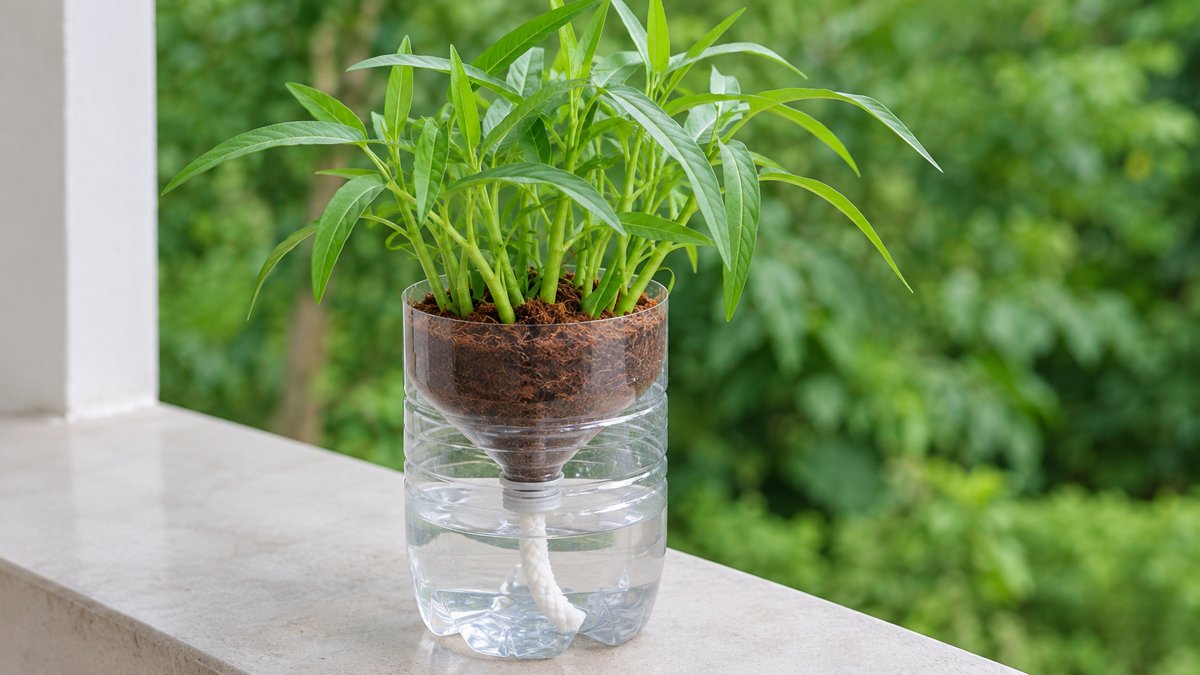
- Take a clean 1.5-liter plastic beverage bottle and cut it horizontally into two sections, approximately one-third from the top funnel.
- Invert the top funnel section upside down and place it inside the lower base section to form a two-tier self-watering container.
- Drill or pierce small holes (around 3 to 5 mm) through the bottle cap, or remove the cap entirely.
Step 2: Wicking Fabric Insertion
Thread a strip of absorbent cotton cloth, flannel fabric, or synthetic felt wick through the bottle mouth. The bottom half of the wick extends into the lower water reservoir, while the top section rests inside the upper funnel to draw water upward via capillary action.
Step 3: Planting Media and Sowing
- Fill the upper funnel with washed cocopeat, fine burnt paddy husk, or a blend of perlite and sponge cubes.
- Moisten the media thoroughly with clean water.
- Place 4 to 6 healthy kangkung seeds approximately 1 to 2 centimeters deep into the media, spaced evenly apart.
- Keep the media damp in light shade until seeds germinate, which typically occurs within 2 to 4 days.
3. Alternative Soil-Based Bottle Container Method
For growers who prefer organic soil culture over hydroponics:
- Punch several small drainage holes around the bottom rim of the plastic bottle base to prevent waterlogging.
- Fill the container with a fertile potting blend consisting of 4 parts loamy soil, 3 parts washed cocopeat, and 3 parts mature organic compost.
- Adding mature organic compost enhances natural soil enzyme activity, accelerating organic matter breakdown and nutrient cycling [source].
- Sow seeds directly and water lightly each morning to maintain consistent moisture.
4. Nutrient Feeding and 4R Management
Water spinach is a heavy consumer of nitrogen for rapid leaf and succulent stem development. Under current market conditions where commercial compound fertilizer prices have risen by over 120 percent [source], small-scale growers should practice disciplined 4R nutrient principles (Right Source, Right Rate, Right Time, Right Place) [source]:
- Hydroponic Nutrient Solution: Once seedlings develop their first set of true leaves, fill the lower reservoir with diluted hydroponic solution (such as AB nutrient mix at half strength) or filtered compost tea.
- Concentration Control: Avoid over-concentrating the nutrient water, as high salt levels cause leaf tip burn and stunt root development.
- Label Standards: When purchasing packaged soluble fertilizers, ensure products carry statutory labeling and guaranteed nutrient analysis [source].
5. Sunlight, Maintenance, and Harvesting
- Sunlight: Place bottle planters in a location receiving at least 4 to 6 hours of direct tropical sunlight daily.
- Reservoir Monitoring: Inspect the lower reservoir weekly. Refill with fresh nutrient solution as water levels drop, and clean the container if algae forms.
- Mosquito Prevention: Ensure the inverted top funnel fits snugly into the lower base to prevent female Aedes mosquitoes from accessing standing reservoir water.
- Harvesting: Kangkung is ready for harvest in 25 to 30 days. Harvest by cutting stems 3 to 5 centimeters above the base, allowing new lateral shoots to regrow for a second and third harvest cycle.
| Cultivation Method | Media & Setup | Watering & Nutrient Delivery | Key Advantages | Management Considerations |
|---|---|---|---|---|
| Passive Hydroponic Wick | Inverted funnel with cotton wick; cocopeat or sponge | Continuous capillary feeding from lower reservoir | Self-watering; ideal for busy urban growers; minimal daily care. | Keep reservoir shaded to prevent algae buildup; follow 4R nutrient guidelines [source]. |
| Soil-Based Container | Perforated bottle base; soil, cocopeat & compost mix | Daily top watering with diluted organic tea | Stimulates soil enzyme activity; resilient against temperature swings [source]. | Requires daily watering check; ensure adequate base drainage holes. |
| Floating Raft Micro-Setup | Perforated cup suspended in bottle opening | Roots submerged directly in aerated solution | Rapid root growth; zero solid media required. | Inspect solution levels frequently to avoid root drying. |
| Cost & Input Management | Repurposed 1.5L plastic mineral bottles | Controlled dilution of verified inputs | Zero container cost; buffers against input price spikes [source] and market prices [source]. | Verify statutory label analysis on commercial soluble nutrients [source]. |
Baca juga: hub baja · cara-tanam-kangkung-di-botol-aqua-en · npk-cair-untuk-kangkung-en · harga-kangkung-1-ikat-di-pasar-en
Frequently asked questions
How long does water spinach take to grow in recycled plastic bottles?
Water spinach grows rapidly in warm tropical conditions, generally reaching harvestable mature stems within three to four weeks from seed sowing.
Can water spinach grow in plastic bottles without an electric air pump?
Yes, using a passive wicking system with a cotton or flannel strip allows the plant roots to draw nutrient water naturally from the lower reservoir without electricity.
What is the best nutrient solution for growing kangkung in plastic bottles?
A diluted liquid hydroponic fertilizer or compost tea applied according to Department of Agriculture 4R nutrient guidelines provides balanced nitrogen and essential minerals for lush leafy growth.