
Ginger Prices in Malaysia & Sabah: Halia Tua, Halia Bara & Young Ginger Market Guide
Decision details
Fits if: Commercial ginger growers, tamu market traders, food processors, herbal formulators, and restaurant procurement teams.
Main drawback: Inspect rhizomes closely for bacterial soft rot water-soaking and fungal lesions, which cause rapid storage loss in humid tropical conditions.
Compare: Rhizome plumpness, skin thickness, pungency level, fiber concentration, and compliance with statutory input quality standards.
In this guide
Harga halia 1kg sabah: Sabah ginger market dynamics & highland cultivars
The ginger market in Sabah (Zingiber officinale) has distinct geographical and logistical dynamics that shape local pricing:
- Highland Growing Origins: Inland districts such as Tambunan, Ranau, and Keningau provide cool valley climates and well-drained soils, producing dense, highly pungent rhizomes with strong market reputations.
- Tamu Market Channels: Weekly open-air district markets (pasar tamu) offer direct farmgate-to-consumer trading, whereas urban supermarkets in Kota Kinabalu incorporate grading, washing, and cold-chain transport costs.
- Statutory Input Regulations: Agricultural operations in Sabah operate under local fertilizer enactments that enforce statutory label standards to protect soil health and input integrity [source].
- Official Price Benchmarking: Daily agricultural price bulletins published by FAMA serve as standard market references for wholesale and retail transactions across regional centers [source].
| Ginger Variety / Category | Rhizome & Visual Characteristics | Aroma, Heat & Fiber Profile | Primary Market & Processing Use |
|---|---|---|---|
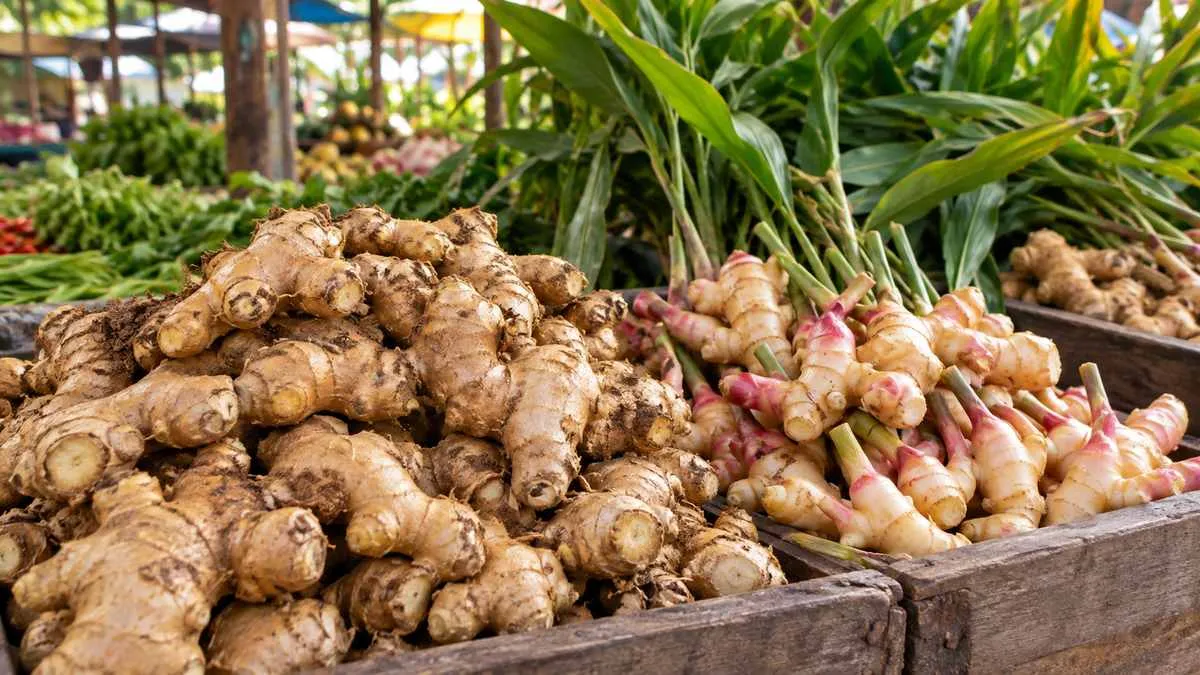
| Sabah Tambunan Ginger | Plump yellowish-tan rhizomes, tight nodes | High pungency, rich spicy aroma, dense fiber | Culinary cooking, traditional teas, local wet markets |
| Halia Bara (Red Ginger) | Small slender fingers, pinkish-red node blushes | Very sharp biting heat, concentrated essential oils | Herbal tonics, jamu, pharmaceutical extraction |
| Young Ginger (Halia Muda) | Translucent skin, bright pink shoot tips, juicy | Mild refreshing heat, tender fiber-free flesh | Pickled ginger (jeruk / gari), fresh stir-fries |
| Bentong Old Ginger | Large chunky hands, golden skin, thick flesh | Strong aromatic heat, low water content | Premium restaurant cooking, confinement herbal soups |
Harga halia bara sekilo: red ginger pricing & herbal market economics
Red ginger (Zingiber officinale var. rubrum), known locally as halia bara, trades at a substantial premium over standard culinary ginger due to its unique agronomic and market characteristics:
- Lower Biomass Yield Per Plant: Unlike bulky culinary cultivars, halia bara produces slender, highly branched rhizomes with smaller overall weight per planting station.
- High Bioactive Concentration: Halia bara contains elevated levels of gingerols, shogaols, and volatile oils, making it the preferred raw material for traditional wellness tonics, massage oils, and botanical extracts.
- Polybag and Controlled Cultivation: Commercial production often takes place in polybag fertigation systems or raised beds with cocopeat and rice husk media to prevent bacterial wilt (Ralstonia solanacearum).
- Extended Harvest Cycle: Achieving peak essential oil content requires a full maturity cycle of 9 to 11 months, increasing cumulative farm management and irrigation costs.
Harga halia muda 1 kg malaysia: young ginger harvest timing & culinary uses
Young ginger (halia muda) occupies a fast-turnaround commercial category across Malaysian fresh produce markets:
- Short Harvest Window (5 to 6 Months): Harvested before tough vascular fibers harden, offering growers faster cash-flow turnaround than full-term 9-month old ginger.
- High Moisture and Perishability: With high natural water content, young ginger has delicate skin and requires fast distribution or cool storage to prevent dehydration and fungal mold.
- Culinary Applications: Prized for pickled ginger (jeruk halia), fresh julienne garnishes, and beverage extraction where woody stringiness is undesirable.
- Agronomic Nutrient Discipline: Applying balanced NPK formulas during vegetative expansion and monitoring soil fertility prevents premature skin hardening. Department of Agriculture guidelines emphasize that excessive fertilizer applications do not improve rhizome quality and only increase production costs [source] in the face of elevated fertilizer prices [source].
Baca juga: hub baja · baja-subur-halia-en · harga-halia-1kg-sabah
Harga halia 1kg sabah
What Drives Fresh Ginger Pricing Per Kg in Sabah Markets?
Several core production and logistical factors shape ginger pricing across Sabah districts:
- Highland Growing Origins: Tambunan and Ranau valleys provide optimal elevation and rainfall, producing dense rhizomes with robust market reputations.
- Tamu and Central Market Dynamics: Weekly district open markets (pasar tamu) offer direct farmgate-to-consumer pricing, while urban supermarkets add grading, packaging, and cold-chain markups.
- Maturity Stage: Young ginger (halia muda) carries higher water content and shorter shelf life, whereas fully aged mature ginger (halia tua) commands steady demand due to superior shelf stability.
- Input and Soil Care: Fertilizer input costs and strict bacterial wilt management required for disease-free rhizome cycles influence farm production overheads.
How Does Sabah Ginger Compare with Other Malaysian Commercial Varieties?
Different commercial ginger varieties serve distinct culinary and functional culinary profiles:
| Ginger Variety / Origin | Rhizome Characteristics | Aroma & Pungency Level | Primary Market Usage |
|---|---|---|---|
| Sabah Tambunan Ginger | Plump yellow-tan rhizome, firm dense nodes | High pungency, rich spicy aroma | Fresh culinary cooking, traditional teas, local dishes |
| Bentong Ginger (Pahang) | Large chunky hand, low wateriness, golden skin | Intense heat, prominent gingerol content | Premium restaurant cooking, confinement herbal broth |
| Halia Bara (Red Ginger) | Smaller compact reddish rhizome, thin skin | Extreme fiery heat, strong herbal bite | Traditional jamu, essential oils, medicinal extracts |
| Standard Commercial Old Ginger | Medium size, fibrous skin, standard branching | Moderate heat, balanced aroma | Everyday household seasoning, catering bulk use |
Young Ginger vs Old Ginger: How Maturity Affects Buyer Selection
Harvest timing dictates both physical properties and culinary applications:
- Young Ginger (5 – 6 Months): Delicate pink tips, translucent skin, crisp juicy texture, and low stringy fibre. Best suited for vinegar pickling, sushi condiments, and light stir-fries.
- Semi-Mature Ginger (7 – 8 Months): Moderate fibre development, developing skin toughness, balanced heat profile.
- Old Mature Ginger (9 – 10 Months): Thick corky epidermis, high oleoresin and gingerol density, low moisture content. Ideal for long-simmering herbal soups, spice paste blending, and ginger oil distillation.
Smallholder Quality and Post-Harvest Handling Checklist
To prevent value loss between farm harvest and retail display in Sabah, observe these handling rules:
- Gentle Washing: Remove adhering soil using low-pressure clean water spray without bruising the epidermal skin layer.
- Air Curing: Shade-dry freshly washed rhizomes for several hours to cure surface nicks before crate packing.
- Ventilated Packaging: Store and transport in slotted plastic crates or mesh bags to maintain airflow and prevent moisture sweating.
- Disease Culling: Immediately discard rhizomes showing soft rot discoloration or foul sour odors to protect healthy stock.
Frequently asked questions
Why is Tambunan ginger in Sabah highly valued in local markets?
Tambunan highland ginger is renowned for its thick rhizome fingers, dense aroma, and high pungency nurtured by fertile valley soils and cool highland microclimates.
Why does halia bara (red ginger) command a premium price per kg?
Halia bara produces smaller rhizome biomass per plant and requires an extended 9 to 11-month growing cycle, but contains concentrated bioactive gingerols and essential oils prized by herbal manufacturers.
What is the key commercial difference between young ginger and old ginger?
Young ginger (harvested at 5 to 6 months) has thin skin and juicy, low-fiber flesh ideal for pickling and fresh cooking, while mature old ginger (harvested after 9 months) has dense fiber and concentrated heat for spice and herbal use.
What is the difference between young ginger and old ginger pricing in Sabah?
Young ginger harvested at 5 to 6 months is juicy and tender for pickling and fresh cooking, while mature old ginger harvested after 9 months contains concentrated fibre and oils for medicinal and culinary spice use.