
Batang Saderi in English: Celery vs Daun Sup Explained
Decision details
Fits if: For cooks and gardeners distinguishing the two celery types sold in Malaysian markets.
Main drawback: They substitute imperfectly — daun sup is a leaf garnish, batang saderi a crunchy stalk; growing conditions also differ.
Compare: Stalk thickness, leaf aroma, culinary role, and climate tolerance.
In this guide
What is Chinese celery called in Malay and how does it differ from Western celery?
In Malaysian wet markets and supermarkets, understanding the local culinary terminology prevents confusion:
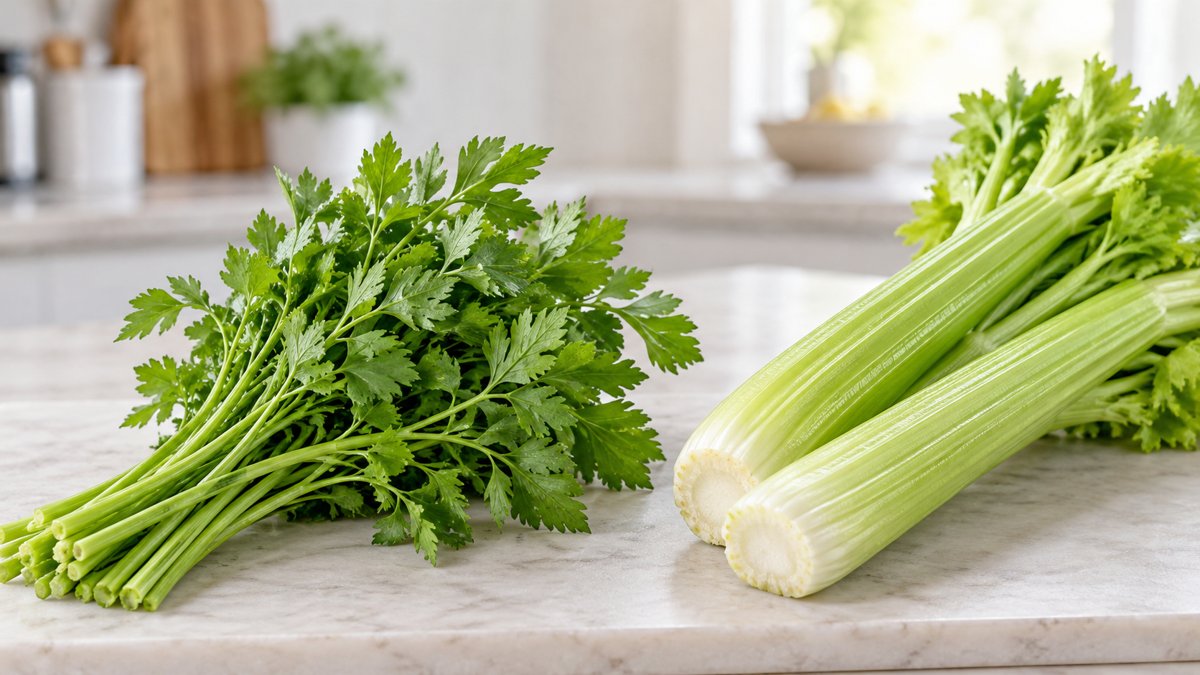
- Daun Sup (Chinese Celery): Slender, hollow green stems with jagged, tooth-edged leaves. Its concentrated aroma and peppery flavor infuse hot broths (sup ayam, sup daging) and fried noodles (mee goreng).
- Batang Saderi (Western Pascal Celery): Thick, juicy, ribbed stalks grown primarily in highland regions or imported. It is commonly eaten raw in salads, juiced, or used in Western stews.
| Herb / Vegetable | Malay Name | Stem & Leaf Characteristics | Common Kitchen Use |
|---|---|---|---|
| Chinese Celery | Daun Sup / Saderi Daun | Slender hollow stems, dark green jagged leaves | Sup ayam, laksa garnishing, stir-fried dishes |
| Western Celery | Batang Saderi / Saderi Batang | Thick juicy ribbed stalks, pale green | Fresh vegetable juicing, salads, Western stews |
| Coriander / Cilantro | Daun Ketumbar | Soft delicate fronds, rounded lobes | Tom yam, salsa, herbal marinades, curry garnish |
How to store celery and daun sup in the fridge to keep them crisp longer?
Fresh culinary herbs deteriorate quickly in tropical ambient humidity. Storing daun sup and celery correctly preserves moisture without encouraging rot:
- Damp Towel Wrap: Trim slimy bottom foliage, wrap the roots and stem bases in a damp paper towel, and place the bunch inside an airtight food storage container.
- Water Jar Technique: Place whole stem bases upright in a glass jar with an inch of fresh water, loosely cover the top leaves with a plastic bag, and refrigerate.
- Aluminum Foil Wrap for Western Stalks: Wrap whole Western celery ribs tightly in aluminum foil. This allows natural ethylene gas to disperse while locking in crisp moisture.
Can you regrow Chinese celery from kitchen stalk bottoms?
Regrowing daun sup from market scrap bases is a practical home gardening activity:
- Base Preparation: Cut off the bottom two inches of the celery bunch with the root plate intact.
- Water Rooting: Place the base cut-side up in a shallow saucer of clean water on a bright windowsill. Refresh the water every two days until tiny pale roots and new central shoots appear within a week.
- Potting Up: Transfer the rooted cutting into a pot filled with rich, well-draining potting soil, keeping the newly emerged crown above the surface.
What potting soil and sunlight conditions suit homegrown daun sup?
Chinese celery prefers cool, moisture-retentive soil conditions:
- Pot and Drainage: Use a container with bottom drainage holes to prevent anaerobic water buildup around fine root hairs.
- Soil Conditioning: Blend loamy soil with rich organic compost and perlite. Incorporating compost stimulates soil microbial enzyme activity [source], ensuring steady nutrient release.
- Sunlight Management: Position pots in bright morning sunlight and provide filtered shade during hot afternoon hours to prevent leaf scorching.
What organic fertilizers support lush Chinese celery leaves?
Because Chinese celery is harvested for leafy foliage, gentle nitrogen-rich nutrition is essential. With rising commercial fertilizer prices [source], applying balanced feeding aligned with Department of Agriculture 4R nutrient guidelines [source] sustains leaf quality:
- Compost Top-Dressing: Apply a small handful of well-rotted leaf compost or vermicompost around the plant base every fortnight.
- Liquid Organic Feeds: Drench the root zone with diluted fish amino acid or compost tea to enhance soil enzymes [source] and promote vibrant green stems.
Frequently asked questions
What is Chinese celery called in Bahasa Melayu?
Chinese celery is commonly called 'daun sup' (soup leaf) or 'pokok saderi daun' in Malaysia, valued for its aromatic herbal stems and leaves.
How do you distinguish daun sup (Chinese celery) from daun ketumbar (coriander)?
Daun sup has serrated, glossy leaves with thicker grooved stems and a peppery celery aroma, while daun ketumbar has rounded, delicate fronds with a distinct pungent citrus aroma.
What is the best way to store fresh daun sup in the refrigerator?
Wrap the clean, dry roots and stems in a damp paper towel and place them inside an airtight container or sealable plastic bag in the vegetable crisper.