
Papaya Market & Agronomy Guide: Market Pricing, Green Papaya Demand & Orchard Management
Decision details
Fits if: Commercial papaya orchardists cultivating Sekaki, Eksotika, and Hong Kong varieties for domestic retail, wholesale, and culinary processing channels.
Main drawback: Never plant papayas in waterlogged, poorly drained soils, which causes rapid Phytophthora root rot and total tree collapse.
Compare: Fruit brix sweetness and skin coloration indices, green fruit firmness, drainage bed height, and balanced potassium-to-nitrogen nutrition.
In this guide
Harga betik di pasaran
Fresh table papaya (Carica papaya) is among the most widely consumed tropical fruits in Malaysia, sustained by consistent year-round domestic consumption and selective export trade:
- Commercial Cultivars: Market supply is dominated by popular commercial varieties including Sekaki (Hong Kong / ‘Betik Sekaki’), known for its cylindrical shape and firm transportable flesh, and Eksotika, prized for intense sweetness and aromatic orange flesh.
- Price Surveillance Benchmarks: The Federal Agricultural Marketing Authority publishes daily market price guides that establish benchmark pricing for agricultural produce across wholesale and retail hubs [source].
- Input Inflation Pressures: Orchard operational margins are continuously influenced by rising agricultural input expenses, including global fertilizer raw material price increases [source].
- Maturity Index Grading: Fruits for fresh wholesale are harvested at early color break (traces of yellowing along skin furrows) to allow controlled ripening during logistics and prevent transit bruising.
That benchmark is specific to Sekaki in FAMA’s general wholesale/public-market guide; it does not set another variety’s price or the net amount a grower receives [source]. Before comparing a buyer offer, align variety, maturity/grade, date, location, accepted weight, deductions and who pays transport.
Harga betik muda sekilo
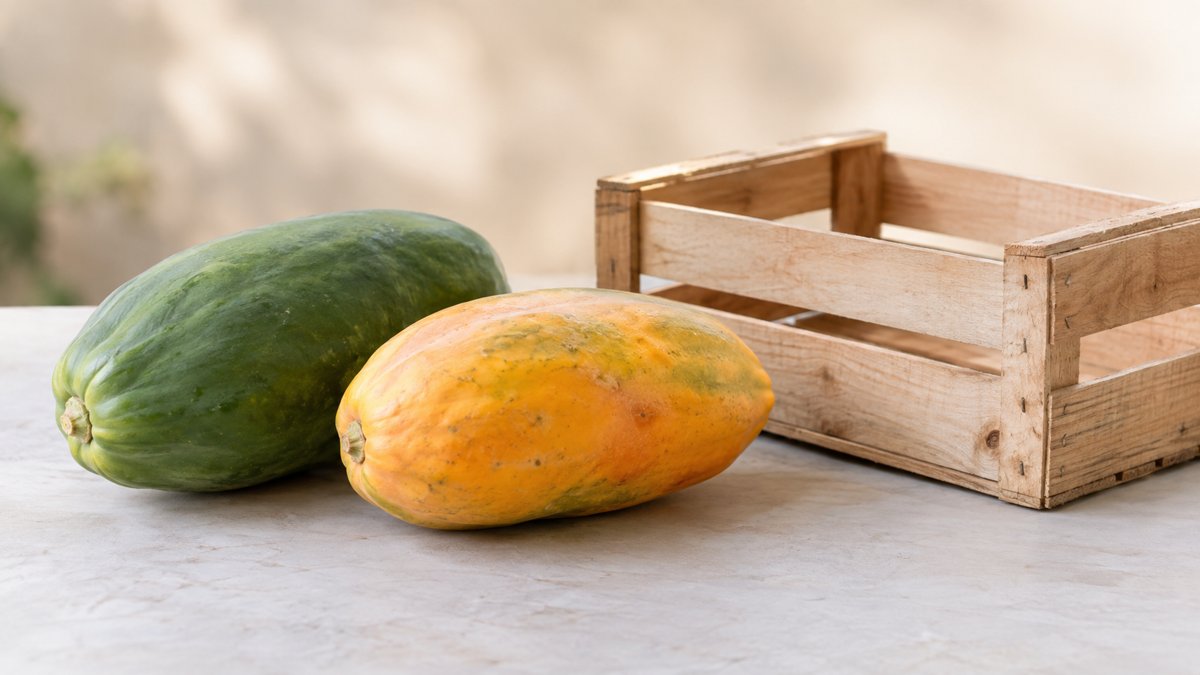
Unripe green papaya (betik muda) commands an active, specialized market segment distinct from table-ripe fruit:
- Culinary and Commercial Demand: Green papaya is widely procured by food service operators, restaurants, and food processors for traditional kerabu salads, Thai som tam dishes, sweet-sour pickles, and culinary meat tenderizing.
- Harvesting Specifications: Green papayas must be harvested fully developed in size but completely unripe, featuring solid, crisp white-green interior flesh without any internal orange coloring or flesh softening.
- Handling and Latex Management: Pickers handle green fruit carefully to avoid skin scratches and latex staining, which downgrade wholesale appearance and reduce post-harvest shelf life.
Comparison of commercial papaya varieties and market end-uses
Evaluating key market segments and grading criteria in Malaysian papaya production:
| Commercial Segment | Primary Varieties | Harvest Maturity Stage | Primary Market Channel |
|---|---|---|---|
| Table Fresh (Standard) | Sekaki (Hong Kong) | Color break index with yellow trace | Supermarkets, wet markets, fruit stalls |
| Table Fresh (Premium) | Eksotika I / II | Color break index with smooth skin | Specialty fruit retailers, hotels, export |
| Culinary Green Papaya | Sekaki / Local Green | Fully grown, zero ripening color | Restaurants, salad bars, pickle processing |
| Processing Grade | Mixed Commercial | Fully ripe or oversized | Juice extraction, purees, fruit pastes |
Soil biological conditioning and nutrient balance in papaya orchards
Papaya trees are fast-growing, heavy-bearing plants that require continuous nutrient replenishment. According to the Department of Agriculture Malaysia, applying fertilizer in excess does not automatically yield better crop performance; following right source, right rate, right time, and right place principles is vital for balanced orchard productivity [source].
Integrating matured organic composts enhances soil enzyme activity and supports beneficial microbial communities around the rootzone [source]. This biological buffering improves root vitality and enhances soil aeration, reducing tree susceptibility to root rots in humid tropical environments.
Baca juga: hub baja · cara-tanam-betik-cepat-berbuah-en · kenapa-daun-pokok-betik-jadi-kuning-en
Frequently asked questions
What is the commercial difference between table-ripe papaya and green young papaya?
Table-ripe papayas are harvested when color breaks for direct fresh consumption, whereas green young papayas are picked fully mature but completely unripened for culinary salads, pickling, and food processing.
How do farmers protect papaya trees from root rot during heavy rains?
Planting on raised mounded beds with deep perimeter drainage trenches prevents water stagnation around sensitive taproots.
What fertilizers are essential for sweet, high-yielding papaya fruit?
High-potassium and boron-enriched fertilizer schedules support continuous fruit expansion, high sugar accumulation, and uniform shape.