
Why Spinach (Bayam) Should Not Be Reheated: Nitrate Science
Decision details
Fits if: Home cooks, food handlers, healthy-eating practitioners, and urban growers raising green and red bayam in Malaysia.
Main drawback: Serve freshly cooked bayam within 4 to 6 hours, and refrigerate leftovers immediately if not finished.
Compare: Freshness of dark green leaves, absence of wilting, correct cold-storage practice, and organic soil nutrients.
In this guide
Summary: bayam should not be reheated repeatedly because natural nitrate in its leaves can convert to nitrite under heat and bacterial action at room temperature. In Malaysia, FAMA monitors the quality and price movement of fresh green leafy vegetables [source]. Growers keep leaves safe and nutrient-rich under the Department of Agriculture’s 4R feeding principle [source], building dense leaf tissue without excess nitrate.
Why cooked bayam should not be reheated: the nitrate science
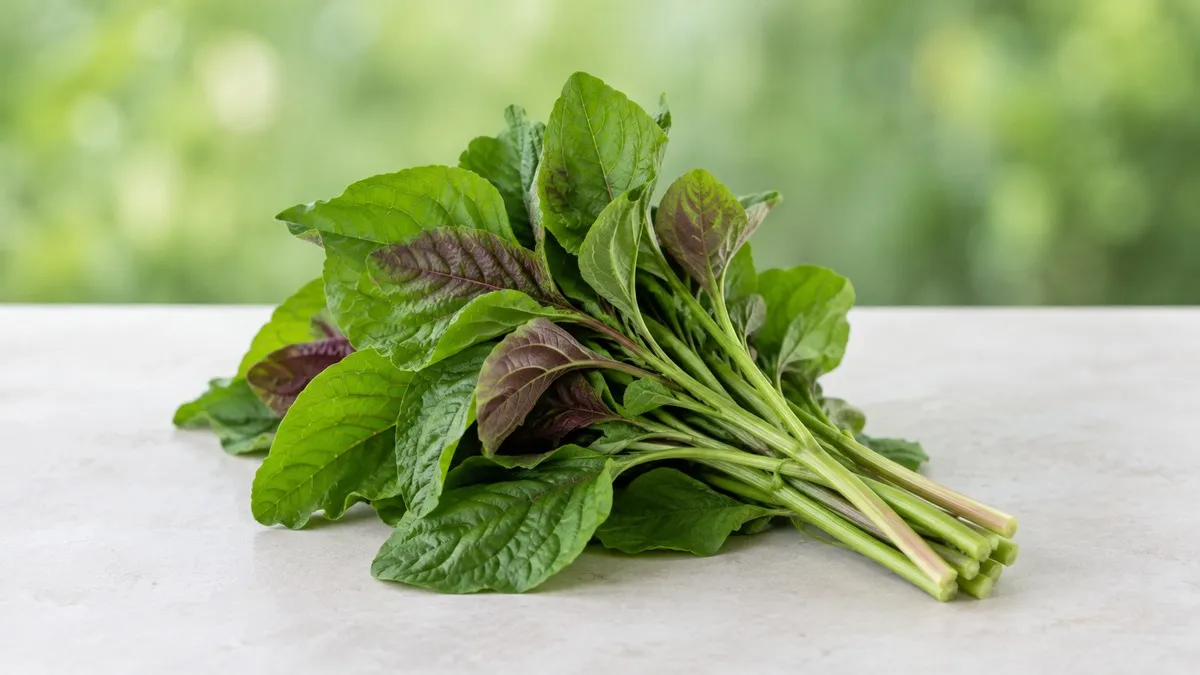
Bayam (Amaranthus spp.) is rich in iron, calcium, fibre and vitamins. Food safety in handling cooked bayam matters:
- Nitrate-to-nitrite conversion: bayam leaves carry natural nitrate. When cooked bayam sits long at humid ambient temperature, bacterial enzymes convert nitrate to nitrite, which can form nitrosamines if reheated hot.
- Thermal nutrient damage: vitamin C and folate are highly sensitive to repeated heat — the vegetable loses value, darkens, goes soft.
- Optimal serving window: finish bayam dishes within 4 to 5 hours of cooking; chill leftovers immediately and store below 4°C for a maximum of 24 hours.
Handling comparison: kitchen safety at four stages
| Handling Stage | Recommended Practice | Risk If Mishandled | Main Preventive Step |
|---|---|---|---|
| After Cooking (Room Temperature) | Serve and finish within 4 hours | Bacterial activity converting nitrate to nitrite | Cook just enough for one meal |
| Leftover Storage | Store in a cold refrigerator | Green pigment oxidation and vitamin loss | Use tightly sealed airtight containers |
| Reheating | Avoid repeated reheating | Formation of carcinogenic nitrosamine compounds | Reheat once only, moderately, if necessary |
| Raw Leaf Preparation | Wash clean under running tap water | Soil, sand, or pest insect-egg residue | Soak briefly in salted water before rinsing |
Main pests and safe garden control: three threats
- Leaf-eating caterpillars: armyworms and moth larvae chew blades full of holes; manual picking or neem-oil sprays reduce them.
- Snails and slugs: they feed on young seedlings at night; crushed eggshell or wood ash around the bed is a natural barrier.
- Flower drop and bolting: heat-stressed or water-short bayam bolts prematurely, turning leaves tough and bitter; keep organic mulch on the soil.
Fertilizing and soil practice: the 4R base
- The 4R principle: right nutrient type, dose, timing and placement at the root zone, per the Department of Agriculture [source].
- Soil biological health: mature compost stabilizes bed structure and raises soil-enzyme activity (dehydrogenase, phosphatase) in the bed [source].
- Input cost control: with fertilizer costs up more than 120% [source], kitchen-waste compost plus a balanced
15:15:15compound saves real money.
Green bayam seeds, red bayam, seedling trays and organic soil improvers are available on Shopee [source].
Choosing a feeding program: label first, promotion last
Decide whether your bayam grows in beds or containers, and check the soil condition. Read the label for target crop, content, usage method and safety steps; if suitability is unclear, ask the manufacturer or an agriculture officer — never choose on promotion or leaf colour alone. No bayam-specific schedule is verified here: follow label instructions and local guidance, and record the condition, product and response. Do not change several things at once.
Pale leaves or slow growth: check water, roots and pests first
Check soil moisture, drainage, light, roots and pest signs before concluding nutrient shortage, comparing affected parts with healthy areas. If symptoms persist or spread, get a qualified diagnosis and avoid input blends of unclear content. In short: choose a program whose label and basis can be checked; the gain is avoiding irrelevant inputs and judging response, the limit is that this page gives no specific measure.
Leaf problems: read the pattern before acting
See whether one leaf or many are affected. Holes, spots and yellowing give clues but confirm nothing; check leaf undersides for insects, check whether the medium is too dry, too wet, or not draining, and note any change before symptoms appeared. Avoid unidentified treatments.
| Item | Note |
|---|---|
| Leaves involved | Young, old, or the whole plant |
| Pattern | Holes, spots, or colour change |
| Medium | Dry, moist, or waterlogged |
| Timing | When it started; spreading? |
The DOA BAYAM package (epengembangan; site updated 15 Sep 2023) — feeding by soil type (tons/ha/season): Bris (Rudua/Baging): chicken manure 5.0 + NPK 15:15:15 0.6; ex-mining sand: chicken manure 15.0-20.0 + NPK 15:15:15 1.0; peat: chicken manure 20.0 + NPK 15:15:15 0.8; mineral: NPK 15:15:15 0.7 and 3.0-5.0 (two rows). Timing: week -1 (before planting) and weeks 1, 2, 3 after planting; method: broadcast on soil / between plants / mixed in. Spacing 0.08 m x 0.1 m. Printed note: 15:15:6:4 foliar spray if needed. Printed source: Vimala & Chan. PEST/DISEASE CONTROL (2023): cutworm (Agrotis ypsilon) cuts seedlings at soil level at night — trichlorfon-and-bran bait 1:20 or chlorfluazuron/fenvalerate spray; armyworm (Spodoptera litura) eats leaves in groups — trichlorfon/permethrin/fenvalerate, destroy insects and attacked leaves; white rust (Cystopus bliti) white spots under leaves — benomyl plus rotation; damping-off (Pythium butleri) — captan seed treatment, avoid damp spots, benomyl if needed. [source]
If damage spreads, bring photos and notes to the agriculture office. This page deliberately sets no fertilizer, rate or treatment because this unit carries no evidence for such recommendations. See how to grow bayam for planting context.
Read also: fertilizer hub · why bayam cannot be reheated · how long until bayam harvest · how long cooked bayam keeps
Frequently asked questions
Why can't cooked bayam be reheated repeatedly?
Reheating and long room-temperature storage activate bacteria that convert the bayam leaf's natural nitrate into nitrite, which can impair the blood's oxygen-carrying capacity if taken in excess.
How long is cooked bayam safe to eat?
Bayam is best eaten fresh once cooked, or within 4 to 5 hours at room temperature, or stored immediately in an airtight container in the refrigerator for no more than 24 hours.
How do you prevent bayam from flowering too early in the garden?
Keep soil consistently moist and supplied with sufficient nitrogen under the Department of Agriculture's 4R guidance, to avoid the heat stress that triggers premature flowering.
What fertilizer suits bayam?
No specific rate or formula is verified here. Check labels and get advice for your bayam type and planting system.
When should bayam be fertilized?
This page sets no schedule. Follow product instructions and agricultural guidance that references your crop's condition.
Pale bayam leaves — is it lack of fertilizer?
Leaf colour alone is not a diagnosis. Check water, drainage, roots and pests before changing the program.
Why do bayam leaves have holes?
Check the leaf undersides for insects or bite marks. Holes alone do not identify the cause.
Yellowing bayam leaves — should I fertilize?
Not necessarily. Check water, drainage and plant condition before considering fertilizer.
How do I start investigating a bayam problem?
Record when symptoms started, which leaves are affected and the medium's condition; take photos and seek advice if it spreads.