
Bawang Daun or Daun Bawang? Same Spring Onion — Term Guide
Decision details
Fits if: Urban gardeners, commercial market gardeners, and home cooks cultivating alliums in pots, raised beds, or open ground in Malaysia.
Main drawback: Avoid waterlogged planting media which quickly causes root rot and basal stem rot in allium species.
Compare: Stalk firmness, white stem elongation (blanching depth), pest resistance, and balanced nitrogen-to-potassium feeding.
In this guide
Bawang daun atau daun bawang: terminology, botanical characteristics and culinary uses
The terms “bawang daun” and “daun bawang” are frequently interchanged across Southeast Asian markets and recipe literature:
- Linguistic and Regional Usage: In standard Malaysian Malay, “daun bawang” is the universally accepted terminology in grocery markets, whereas “bawang daun” is often found in regional trade catalogs, botanical literature, and Indonesian agricultural manuals. Both denote the same bunching green onion.
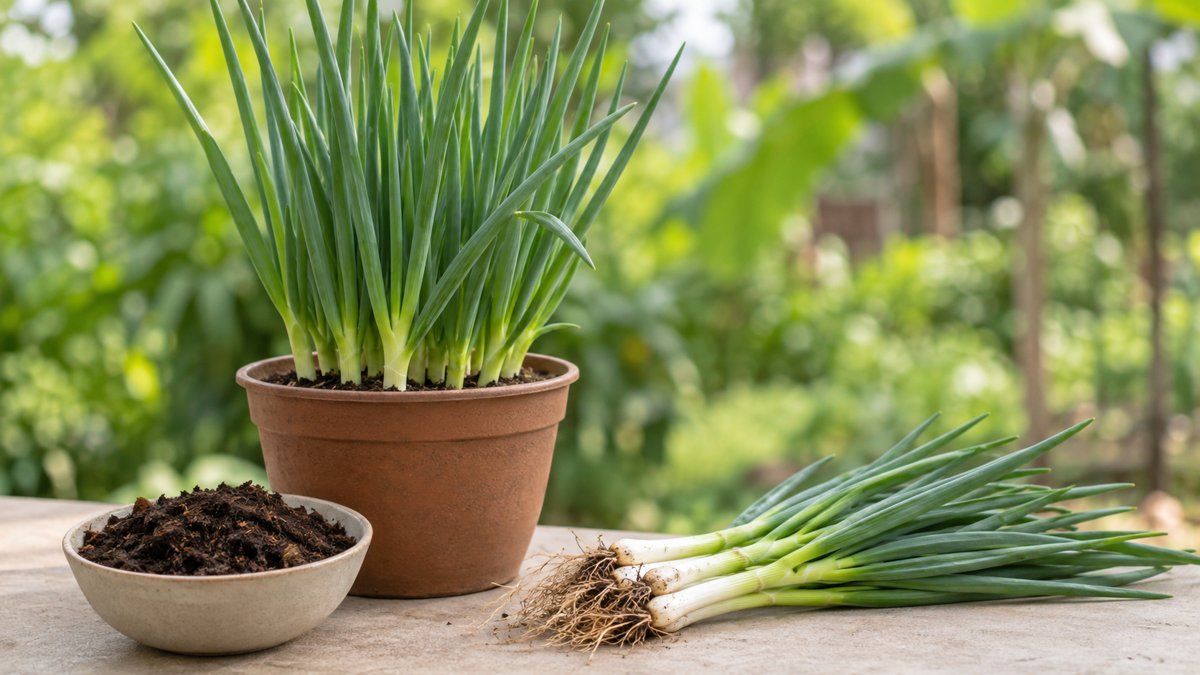
- Botanical Identity: The primary species is Allium fistulosum (bunching onion / Japanese Welsh onion), which does not form a bulbous round root like red onions (Allium cepa), but instead develops an elongated white shank topped by succulent cylindrical green leaves.
- Culinary Significance: Widely used as an aromatic garnish in Malaysian soups, fried noodles (mee goreng), murtabak fillings, and stir-fries, providing a fresh, slightly pungent flavor.
| Allium Category | Botanical Name & Form | Growth Habit & Structure | Cultivation & Market Benchmark |
|---|---|---|---|
| Daun Bawang / Bawang Daun | Allium fistulosum (Bunching onion) | Hollow cylindrical leaves, non-bulbing white base | Matures in 60–75 days; container or raised bed friendly |
| Daun Sup (Chinese Celery) | Apium graveolens (Umbellifer family) | Solid grooved stems, serrated aromatic leaves | Often paired with daun bawang in local soup bundles |
| Kucai (Garlic Chives) | Allium tuberosum | Flat solid strap-like leaves, distinct garlic aroma | Perennial cut-and-come-again crop for hawkers |
| Shallot Greens | Allium cepa var. aggregatum | Shoots sprouted from small red shallot bulbs | Mild flavor, thinned out during field bulb development |
| Market Price Tracking | Sold in bunches / per kg | Wholesale and wet market daily surveillance | FAMA daily benchmark price guide [source] |
Troubleshooting leaf pests and diseases on green onions
Allium crops are vulnerable to specific chewing and sap-sucking pests that target their tender tubular foliage:
- Leaf-Eating Caterpillars & Armyworms: Caterpillars (such as Spodoptera species) often bore inside the hollow tubular leaves, eating the tissue from within. Early morning handpicking and biological sprays like Bacillus thuringiensis help protect crops safely.
- Thrips and Aphids: Tiny sap-sucking insects pierce the waxy leaf surface, causing silvery-white streaks, leaf curling, and stunted growth. Installing yellow sticky cards and providing adequate spacing ensures good ventilation.
- Basal Stem & Root Rot: Overwatering or planting in compacted, poorly draining soil encourages fungal soil-borne pathogens. Improving drainage and adding porous organic compost prevents root suffocation.
Soil conditioning and 4R nutrient management for alliums
Cultivating vigorous, deep-green scallion leaves requires disciplined soil management:
- Department of Agriculture Malaysia 4R Stewardship: Applying nutrients based on Right Source, Right Rate, Right Time, and Right Place ensures allium plants receive adequate nitrogen for leaf expansion without inducing fertilizer burn [source].
- Organic Conditioning & Soil Enzymes: Incorporating matured organic matter and bio-compost activates critical soil enzymes (such as urease and phosphatase) and stimulates beneficial rhizosphere microorganisms that enhance trace mineral bioavailability [source].
- Input Inflation Mitigation: Escalating global fertilizer input prices exceeding 120% encourage growers to integrate composted farm manures and bio-stimulants to optimize production costs [source].
Baca juga: hub baja · bawang-daun-atau-daun-bawang
Frequently asked questions
What is the difference between 'bawang daun' and 'daun bawang'?
They refer to the same culinary allium crop (scallions / spring onions / green onions / Allium fistulosum), with 'daun bawang' being the standard everyday term in Malaysia and 'bawang daun' used interchangeably in regional botanical and regional references.
How do you manage common pests on spring onion leaves?
Inspect leaves regularly for caterpillars, thrips, and aphids; introduce sticky traps, maintain good plant spacing for airflow, and apply organic neem-based preventative sprays.
What fertilizer schedule produces thick and healthy green onion stalks?
Follow Department of Agriculture Malaysia 4R principles by applying compost enriched with organic nitrogen during early vegetative growth, followed by potassium to build strong fibrous cell walls.