
Why Does My Basil Keep Dying: Basil Wilting Causes, Pruning & Soil Care Guide
Decision details
Fits if: Home herb growers, culinary kitchen gardeners, and container patio planters.
Main drawback: Do not let basil flower if you want continuous leaf harvests; avoid heavy unamended clay soil in pots.
Compare: Potting soil aeration, regular apical tip pinching, and balanced organic top-dressing.
In this guide
Why does your basil plant keep wilting, drooping, or dying?
Sweet basil is one of the most popular culinary herbs in Malaysian home gardens, yet growers frequently struggle with sudden plant collapse. Basil has a shallow, delicate fibrous root system that is highly sensitive to extreme moisture fluctuations.
The most common reasons behind chronic basil mortality include:
- Overwatering and Poor Drainage: When potted in dense clay soil without adequate drain holes, saturated conditions cause anaerobic root suffocation, leading to fungal pathogens like Fusarium and Pythium.
- Underwatering Shock: During hot tropical afternoons, broad basil leaves lose moisture rapidly through transpiration. If potting soil dries out completely, cell turgor pressure collapses, causing severe wilting.
- Cold Night Drafts or Water Chill: Applying ice-cold tap water directly to hot roots or placing pots in air-conditioned drafts shocks vascular transport.
- Depleted Soil Enzymes: In continuous potting culture, the absence of organic matter reduces microbial rhizosphere enzyme activity [source], limiting the uptake of vital micronutrients.
| Basil Diagnostic Symptom | Underlying Environmental Trigger | Agronomic Mechanism | Corrective Management Action |
|---|---|---|---|
| Limp Stems in Moist Soil (Root Rot) | Waterlogged soil & anaerobic conditions | Fungal infection destroys fine feeder roots, cutting water uptake | Repot into a high-porosity mix (coco coir, perlite, compost) and reduce watering |
| Woody Stems & Bitter Small Leaves | Unchecked floral bud development | Flowering hormones trigger senescence and lignification of lower stems | Prune flowering tops down to the nearest leaf node weekly |
| Curled, Wrinkled Leaves with Sticky Residue | Aphid and whitefly infestation | Sap-sucking insects extract phloem fluids and inject toxic saliva | Spray foliage with dilute horticultural soap and rinse under leaves |
| Lower Foliage Yellowing (Chlorosis) | Nitrogen depletion & root crowding | Plant reallocates nitrogen from older foliage to support new shoots | Top-dress with mature compost or balanced 4R organic fertilizer |
What happens when basil flowers and how do you stop it?
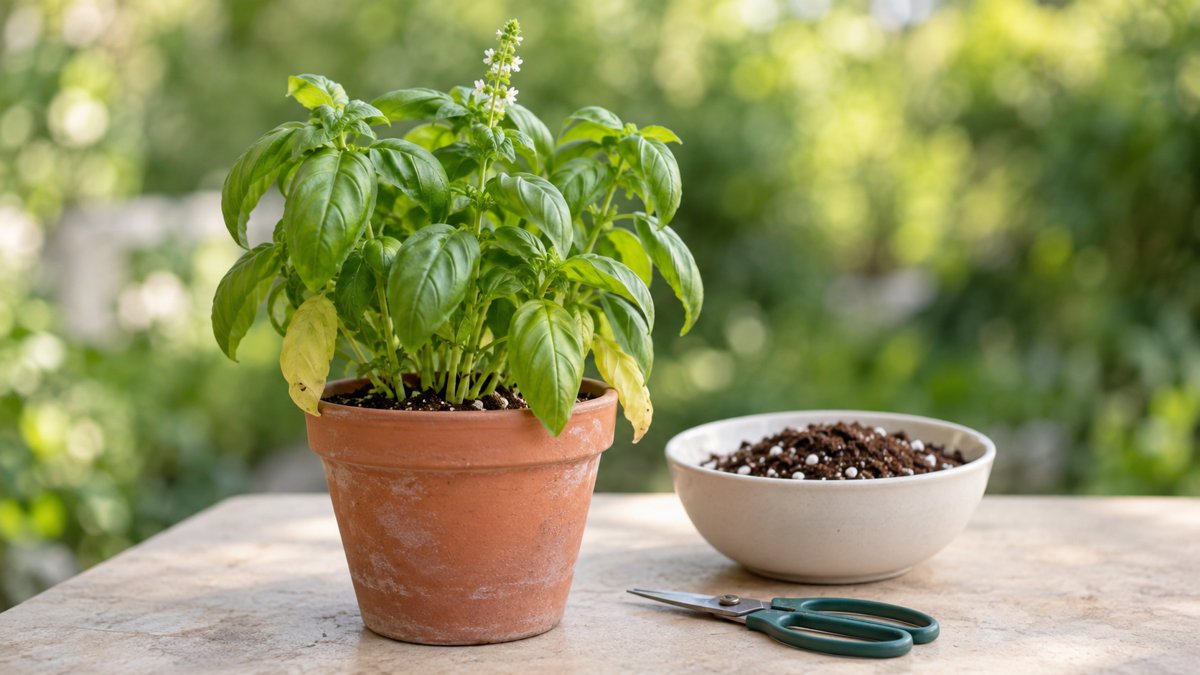
Allowing basil to flower is the leading cause of premature plant decline. As soon as the terminal shoot produces floral buds, the plant switches its physiological phase from vegetative growth to reproduction.
During this transition, three distinct changes occur:
- Flavor Degradation: Essential oils (eugenol and linalool) decrease, while bitter chemical compounds increase, giving leaves a harsh, medicinal taste.
- Stem Woodiness (Lignification): The succulent green stems turn brown, fibrous, and woody, stopping new lateral branch formation.
- Foliage Senescence: Lower leaves yellow and drop as the plant devotes its remaining energy into setting seed before dying naturally.
To keep basil alive and productive for months, pinch out the top terminal cluster as soon as tiny bud nodes appear. Always cut just above a pair of healthy leaves; this forces two new lateral branches to sprout, transforming a single lanky stem into a dense, bushy herb.
Why are your basil leaves turning yellow, wrinkled, or dropping?
Leaf discoloration provides a clear roadmap of underlying potting and nutritional issues. When older leaves turn yellow while the veins stay green, the plant is struggling with nutrient mobility or root compaction. In container settings, rapid growth quickly depletes available minerals.
Gardeners facing commercial fertilizer price pressures [source] should utilize balanced organic amendments applied according to Department of Agriculture 4R nutrient stewardship principles [source] (Right Source, Right Rate, Right Time, Right Place). Applying compost tea or worm castings delivers gentle, non-burning nitrogen and micronutrients directly to the rhizosphere.
Wrinkled and cupped leaves, on the other hand, typically point to localized pest activity or severe moisture stress during hot mid-day sun.
How do you control aphids and sap-sucking pests on basil?
Because basil is an edible culinary herb, chemical pesticide sprays should be avoided. Pests like aphids (Aphis gossypii) and greenhouse whiteflies colonize the tender undersides of young leaves, causing distorted leaf growth and dropping:
- Mechanical Water Spray: Use a firm water jet in the early morning to dislodge aphid colonies from stem crevices.
- Mild Horticultural Soap: Dilute 5 ml of pure castile soap or potassium soap in 1 liter of clean water, spraying the underside of leaves thoroughly once a week.
- Neem Oil Application: Apply cold-pressed neem oil at dusk to disrupt insect feeding cycles without burning delicate leaf tissues under midday sun.
How do you revive potted basil using 4R organic soil conditioning?
If your basil plant is wilting or dropping leaves, take swift remedial action before root death becomes irreversible:
- Assess Root Condition: Gently remove the plant from its container. Trim away any mushy, blackened root tips with sanitized scissors.
- Rebuild Potting Medium: Prepare a light, porous blend of well-aerated coco peat, organic compost, and perlite or coarse river sand to support beneficial soil enzyme activity [source].
- Perform Apical Pruning: Prune back the upper portion of the plant, removing all flowers and woody tips to reduce transpirational water demand.
- Feed with 4R Precision: Top-dress the fresh soil with slow-release organic pellets following 4R application guidelines [source] and place the pot in bright, indirect morning light for 3 days before returning to full sun.
Baca juga: hub baja · whats-wrong-with-my-basil-plant-en · why-did-my-basil-plant-die-en
Frequently asked questions
Why is my basil plant drooping even when the soil feels wet?
Drooping in wet soil is a classic sign of root rot, where waterlogged conditions suffocate feeder roots, preventing water uptake to the upper leaves.
What should I do if my basil starts flowering?
Pinch off the flowering spikes down to the next set of leaves immediately to redirect hormonal energy back into branching vegetative leaf production.
Why are my basil leaves turning yellow between the veins?
Interveinal or lower leaf yellowing indicates nutrient depletion or poor root aeration as container soil nutrients are consumed.