
How to Cultivate Bananas in Malaysia: Planting, Sucker Care, Fertilizer & Diagnosing Dying Banana Plants
Decision details
Fits if: Smallholders, homesteaders, and fruit garden growers in Malaysia planting local banana varieties like Pisang Berangan, Pisang Cavendish, and Pisang Raja.
Main drawback: Waterlogged soils combined with soil-borne fungi (Fusarium/Panama disease or Moko bacterial wilt) can rot the corm underground; sterile tools and clean planting stock are non-negotiable.
Compare: Sword sucker selection, planting pit prep, soil enzyme activation via compost, 4R potassium fertilisation, and corm scratch diagnostic tests.
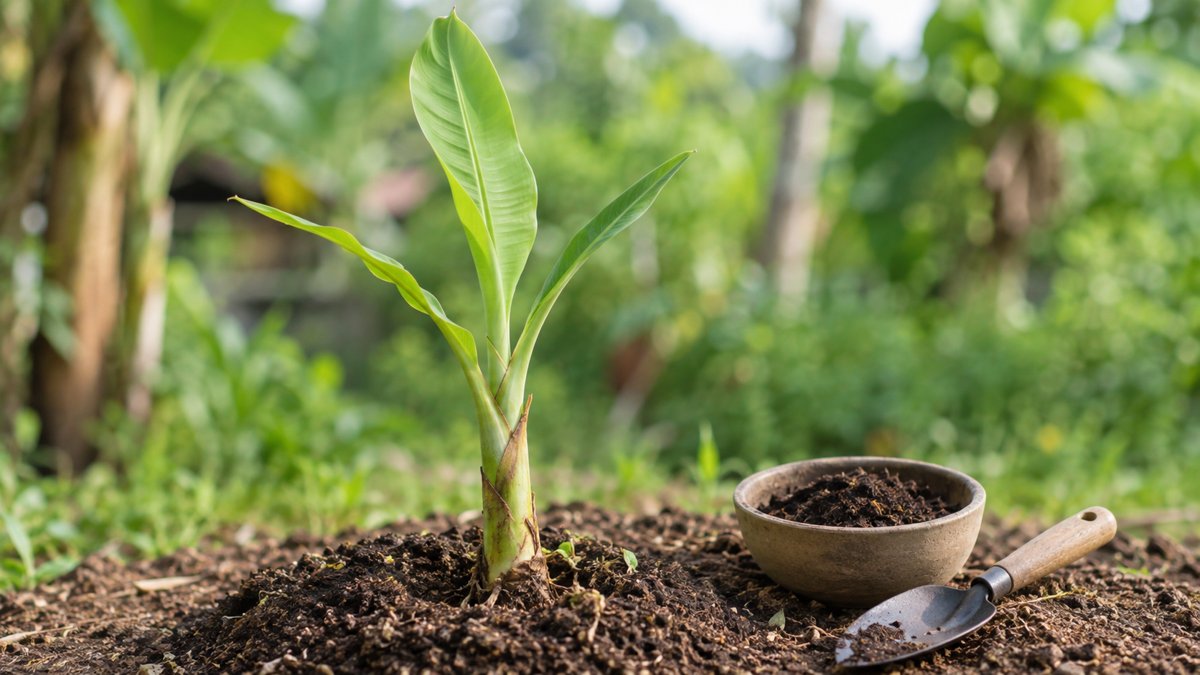
how to cultivate banana
A systematic agronomic guide to planting and managing banana crops in tropical Malaysia:
- Selecting Planting Material: Always use disease-free sword suckers (narrow leaves and large, tapered corms) rather than water suckers. Alternatively, certified tissue-cultured plantlets offer uniform growth and disease-free starts.
- Land Preparation & Planting Pits: Dig planting holes measuring sixty by sixty by sixty centimeters. Mix topsoil with well-rotted animal manure and agricultural lime (dolomite) to neutralize acidic tropical soils. Incorporating organic compost stimulates soil enzyme activity (phosphatase and dehydrogenase), fostering healthy root establishment [source].
- Planting Spacing & Canopy Management: Maintain a spacing of two to three meters between plants. As the mother plant grows, perform sucker de-suckering: retain only one primary mother plant, one strong daughter sucker, and one emerging granddaughter sucker per mat (follower system) to channel nutrients into bunch development.
- Fertilizer Program (4R Principle): Bananas are heavy potassium feeders. Apply balanced NPK fertilizers in monthly splits around the canopy drip line according to Malaysian Department of Agriculture 4R rules [source], ensuring nutrients are delivered at the right stage from vegetative expansion to bunch emergence.
- Bunch Protection: When the bell (banana flower) finishes opening its last hand, cut off the male flower bud below the last fruit hand. Wrap the bunch with blue or perforated polyethylene bags to protect fruits from fruit flies, scarring beetles, and sunburn.
| Stage / Symptom | Key Biological Observation | Malaysian Field Condition | Diagnostic & Corrective Management |
|---|---|---|---|
| Sucker Planting | Sword sucker with narrow leaves & firm corm | Tropical high rainfall requires mounding | Incorporate compost to stimulate soil enzymes [source] |
| Bunch Nutrition | High potassium requirement during fruiting | Leaching in porous tropical soils | Split applications adhering to 4R fertilization [source] |
| Drought / Heat Stress | Outer leaves yellow and fold downwards | Intense equatorial midday sunshine | Heavy mulch around base; deep weekly irrigation |
| Fatal Corm Rot (Fusarium/Moko) | Pseudostem vascular browning & soft foul corm | Waterlogged heavy clay or infected tools | Perform scratch test; rogue out infected plants |
is my banana plant dead
Determining whether a declining banana plant can be salvaged or if the corm has suffered irreversible mortality:
- The Banana Growth Mechanism: Banana “trees” are giant herbaceous plants with a true stem located entirely underground as a starchy corm. The trunk above ground is a pseudostem composed of tightly rolled leaf sheaths. Even if the above-ground foliage dies, the plant remains alive as long as the corm survives.
- Key Diagnostic Signs of Life:
- Central Heart Spear (Emerging Leaf): Look straight down into the center of the pseudostem. If the emerging rolled leaf is green, firm, and slowly pushing upward, the plant is actively growing.
- Corm Scratch Test: Gently scrape back a small patch of topsoil at the base of the plant. Nick the outer corm tissue with a clean knife. If the tissue is crisp, firm, and white or light cream, the corm is healthy.
- Basal Sucker Emergence: If the main stem has broken or snapped, look for fresh green pointed shoots pushing up from the perimeter of the root zone.
- Indicators of Irreversible Death:
- Mushy, Foul-Smelling Corm: If digging reveals a soft, black or dark brown, foul-smelling corm, bacterial soft rot (Dickeya / Erwinia) or advanced root rot has killed the plant.
- Vascular Discoloration: Slicing the pseudostem reveals internal red-brown vascular rings indicative of lethal Fusarium wilt (Panama disease) or Moko disease.
- Revival and Recovery Protocol:
- Cut back dead, mushy outer leaf sheaths down to clean, firm tissue.
- Clear standing water and improve perimeter drainage ditching immediately.
- Apply a light top-dressing of compost and aerate the surrounding topsoil to encourage new follower sucker development.
Baca juga: hub baja · how-to-cultivate-banana-en · is-my-banana-plant-dead-en
Frequently asked questions
What is the best type of sucker to plant when growing banana trees in Malaysia?
Select vigorous 'sword suckers' that possess narrow, spear-like leaves and a strong, heavy corm base, rather than 'water suckers' with broad leaves and weak root systems.
How do you check if a wilting or yellowing banana plant is truly dead?
Inspect the central heart leaf and scratch the base of the pseudostem/corm; if the underground corm is firm and creamy-white, the plant is alive and will regenerate new suckers.
What fertilizers are essential for heavy banana bunch production?
Banana plants require high potassium and nitrogen balanced with organic matter; apply fertilizers in circular bands around the drip line following DOA 4R guidelines.