
Harga genset tenaga surya
Affiliate links: we may earn a commission. Disclosure
Decision details
In this guide
What determines the price and capacity of solar generator systems in Malaysia?
The pricing structure of portable solar generators reflects several core engineering components integrated into a self-contained power package:
- Battery Cell Chemistry and Storage Capacity: Lithium Iron Phosphate (LiFePO4) chemistry commands a modest premium over standard ternary lithium polymer due to its superior thermal resilience in tropical climates and extended charge cycle longevity.
- Inverter Architecture and Surge Capacity: Heavy-duty pure sine wave inverters capable of delivering smooth electrical waveforms for delicate instrumentation and inductive motor starting currents increase system value.
- Solar Charge Controller Efficiency: Advanced Maximum Power Point Tracking (MPPT) microprocessors harvest maximum solar energy under variable tropical cloud cover compared to basic pulse-width modulation controllers.
- Expansion Ports and Bi-directional Fast Charging: High-grade units incorporate high-speed bidirectional alternating current charging circuitry that rapidly tops up the internal battery without requiring bulky external power bricks.
| Capacity Class | Primary System Hardware | Typical Workloads & Appliances | Portability & Deployment |
|---|---|---|---|
| Compact Field Station | Integrated lithium pack, light pure sine inverter | Mobile phones, drones, camera gear, LED lighting, laptops | Hand-carried grab-and-go handle, zero setup required |
| Mid-Tier Utility Generator | LiFePO4 battery pack, medium continuous inverter | Mini fridges, power drills, agricultural mist blowers, Wi-Fi routers | Luggage handle design, compact trunk fit |
| Heavy-Duty Cabin Generator | High-capacity LiFePO4 bank, high-wattage inverter | Submersible water pumps, domestic refrigeration, power saws | Wheeled trolley chassis, heavy-duty frame |
| Fixed Rooftop Solar Array | Rooftop photovoltaic strings, hybrid grid inverter | Whole-building daily electricity offsetting | Fixed structural rooftop installation with electrical wiring |
While full residential rooftop photovoltaic grid installations benchmark around RM3000 [source] to RM4200 [source] per kWp installed, portable solar generators provide plug-and-play independence without structural roof modifications, electrical rewiring, or utility grid approval processes.
How do portable solar power stations compare against conventional fuel generators?
Choosing between solar energy storage and combustion generators involves evaluating ongoing maintenance, fuel logistics, and operational constraints:
- Emissions and Indoor Safety: Fuel generators produce dangerous carbon monoxide and exhaust particulates, restricting operation to well-ventilated outdoor locations. Solar generators generate zero exhaust gases, enabling safe operation inside bedrooms, tents, and enclosed farm storage sheds.
- Acoustic Noise Footprint: Petrol and diesel engines generate continuous mechanical clatter and exhaust roar. Solar power stations operate in near-total silence, with only variable-speed cooling fans engaging under heavy continuous loads.
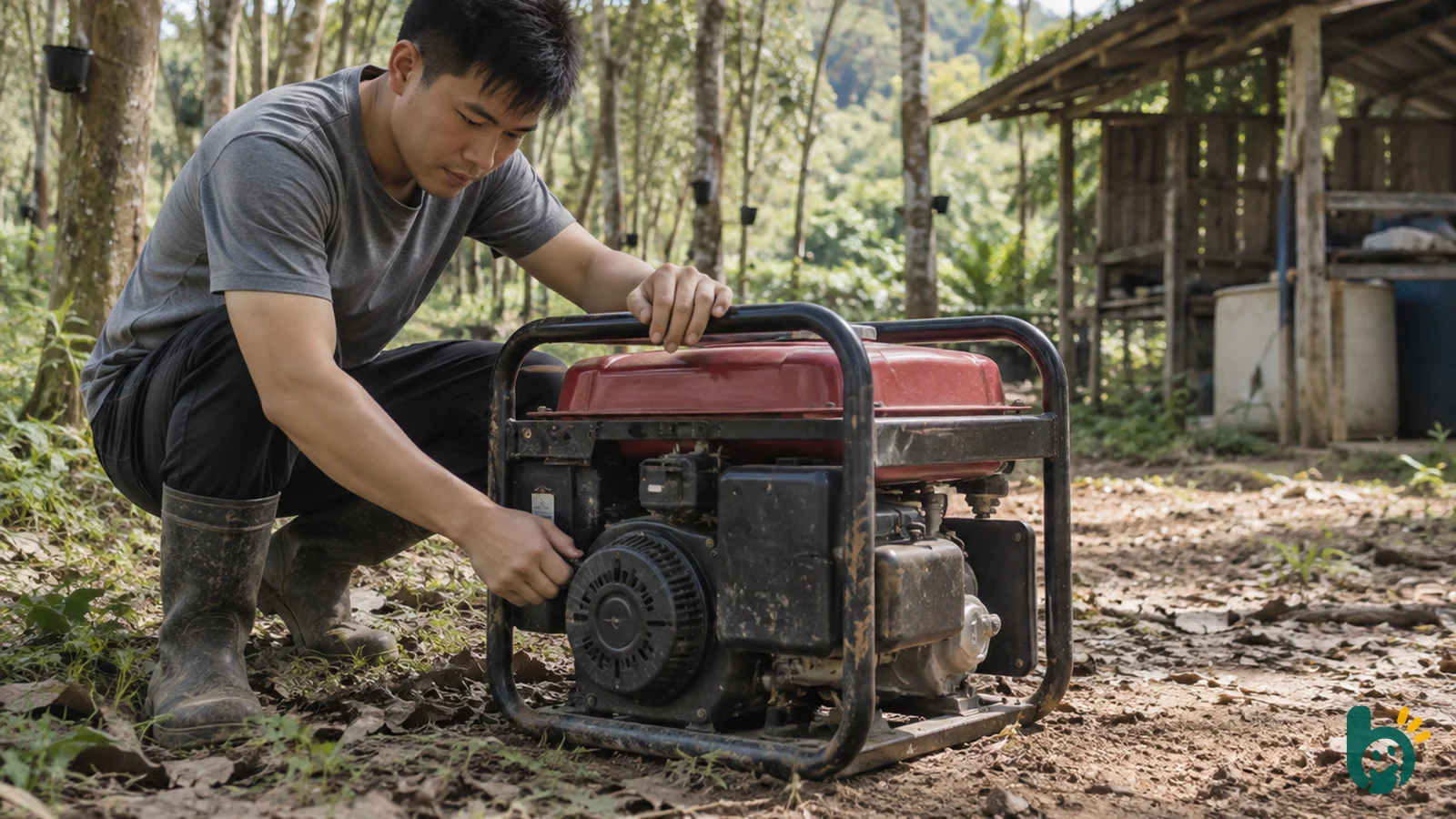
- Fuel Logistics and Ongoing Operating Expenses: Petrol gensets require fresh fuel storage, two-stroke oil mixing, routine oil changes, spark plug replacements, and carburettor cleanouts. Solar stations eliminate fuel purchasing and mechanical wear parts entirely.
- Continuous Heavy-Load Demands: For uninterrupted multi-day heavy equipment operation during prolonged grid collapse, combustion generators provide continuous power as long as fuel is supplied, whereas solar generators depend on daytime sunshine or alternating current recharging access.
What battery capacity and inverter output do you need for farm appliances and backup?
To determine the ideal solar generator configuration for your specific setup, calculate your continuous power draw and surge headroom:
- Calculate Running Wattage: List every appliance intended for simultaneous operation and sum their continuous wattage consumption figures.
- Account for Motor Starting Surge: Inductive loads containing electric motors or compressors (such as water pumps and freezers) draw substantial surge currents upon startup before settling down to continuous running levels. Ensure the inverter surge rating exceeds this initial spike.
- Determine Desired Runtime: Multiply total continuous wattage by the number of operational hours required between charging cycles to identify required battery capacity.
- Factor In Inverter Efficiency: Inverters experience slight thermal conversion losses during direct current to alternating current power conversion.
Appliance Sizing Rules:
- Electronics & LED Lighting: Minimal draw, extended runtime on compact stations
- Power Tools & Saws: High continuous demand, requires medium to heavy inverters
- Refrigeration & Pumps: Requires high inductive surge headroom
- Heating Appliances: Rapidly depletes battery reserves, reserve for essential use
How long does it take to recharge solar generators using folding photovoltaic panels?
Recharge duration depends on total battery storage capacity, solar panel wattage, angle of sunlight exposure, and atmospheric conditions:
- Photovoltaic Panel Orientation: Aligning portable solar panels perpendicular to direct overhead sunlight maximises energy harvesting. Adjust panel tilt angles throughout the day during morning and afternoon fieldwork.
- Tropical Weather Variability: High cloud cover and monsoon downpours reduce solar harvest rates. Pairing high-efficiency monocrystalline solar panels with advanced MPPT controllers recovers maximum available ambient light during overcast spells.
- Hybrid Dual-Input Charging: Premium solar power stations support simultaneous recharging via solar panels and alternating current wall sockets or automotive auxiliary ports, cutting recharge times significantly.
What are the essential maintenance and safety practices for lithium solar generators?
Adhering to proper maintenance protocols protects battery longevity and maintains optimal energy storage capacity over extended service years:
- Thermal Management: Avoid leaving battery stations exposed to direct scorching midday sun inside enclosed vehicle boots. Operate the station in shaded, well-ventilated areas to prevent thermal throttling.
- Storage Charge Levels: If storing the solar generator for extended idle periods between harvesting seasons, maintain battery charge levels between medium and high storage levels rather than leaving the pack fully depleted.
- Clean Port Connections: Keep alternating current outlets, direct current barrel ports, and ventilation fan grilles free of agricultural dust, soil particles, and moisture.
- Cable Inspection: Inspect solar extension cables and Anderson connectors regularly for insulation cracking, pin corrosion, or mechanical wear before connecting high-voltage solar strings.
What are the most practical agricultural and nursery applications for solar power stations?
Modern farm operators and nursery owners deploy solar power generators to solve practical power supply challenges across remote plots:
- Automated Drip Irrigation and Solenoid Valves: Powering micro-irrigation timers and low-voltage water booster pumps in isolated vegetable beds or fruit tree plots without running expensive underground cables.
- Electric Fencing and Perimeter Security: Keeping battery energisers continuously charged along farm boundaries to deter wild boars and stray animals from entering orchards.
- Night Light Trapping and Pest Monitoring: Operating ultraviolet light traps and surveillance cameras throughout orchard perimeters to monitor nocturnal insect populations without relying on noisy combustion generators.
- Cordless Power Tool Charging Hubs: Providing an on-site charging depot for cordless pruning shears, battery chain pruners, and handheld backpack sprayers directly in the field, eliminating the need to return to base facilities for battery swaps.
What key features should buyers check before purchasing a solar power station?
Before finalizing a solar generator purchase for rural property or domestic backup, verify these practical equipment specifications:
- Inverter Waveform Integrity: Confirm the manufacturer specifies true pure sine wave alternating current output rather than modified sine wave to protect variable-speed fan motors and sensitive electronic control boards.
- Expansion Battery Port Availability: Look for models that accept modular stackable expansion battery packs, allowing you to increase overall energy storage capacity over time as operational power demands grow.
- Integrated Uninterruptible Power Supply (UPS) Functionality: Premium power stations feature sub-millisecond automated transfer switching, allowing the station to act as an instant emergency backup when connected between wall sockets and critical appliances.
- Warranty Support and Local Servicing: Ensure the supplier provides responsive local warranty coverage and access to replacement inverter modules or battery management system firmware diagnostics in Malaysia.
Baca juga: hub alat · berapa-harga-sewa-genset-en · cara-beli-solar-untuk-genset-en
Frequently asked questions
Can a solar generator run heavy appliances like air conditioners and water pumps?
High-capacity solar power stations equipped with heavy-duty pure sine wave inverters can start and run refrigeration or air conditioning, provided battery storage and surge wattage ratings are adequate.
How are portable solar generators recharged during rainy or overcast weather?
Most modern power stations support multiple charging inputs including standard domestic alternating current wall outlets, automotive auxiliary sockets, and direct solar panels.
What battery chemistry offers the longest service life in solar power stations?
Lithium Iron Phosphate battery cells provide superior thermal stability and thousands of full charge cycles compared to older ternary lithium or traditional lead-acid batteries.
Is a solar generator cheaper to operate over several years than a petrol generator?
While initial purchase costs are higher, solar generators eliminate ongoing fuel purchases, oil changes, spark plug replacements, and engine carburettor repairs.